The Conquest of the Dark Spaces: An Experimental Approach to Lighting Systems in Paleolithic Caves
June 21, 2021
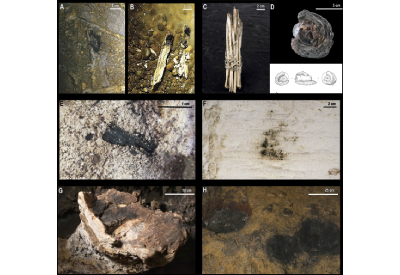
Artificial lighting was a crucial physical resource for expanding complex social and economic behavior in Paleolithic groups. Furthermore, the control of fire allowed the development of the first symbolic behavior in deep caves, around 176 ky BP. These activities would increase during the Upper Paleolithic, when lighting residues proliferated at these sites. The physical peculiarities of Paleolithic lighting resources are very poorly understood, although this is a key aspect for the study of human activity within caves and other dark contexts. In this work, we characterize the main Paleolithic lighting systems (e.g., wooden torches, portable fat lamps, and fireplaces) through empirical observations and experimental archeology in an endokarstic context. Furthermore, each lighting system’s characteristic combustion residues were identified to achieve a better identification for the archaeological record. The experiments are based on an exhaustive review of archaeological information about this topic. Besides, we apply the estimated luminous data of a Paleolithic cave with Paleolithic art (Atxurra in northern Spain) in 3D through GIS technology to delve into the archeologic implications of illumination in Paleolithic underground activities.
Humans cannot see in the dark; therefore, they need light to enter the deep parts of caves, and their visits to those places depend on the physical characteristics of their lighting systems. The luminous intensity, radius of action, type of radiation, and color temperature of the light determine the perception of the environment and the human use inside (such as the execution of art, funerary activities, and cave exploration). The light duration restricts the time spent inside the cave and defines whether the visit will be a long stay or a short exploration. Moreover, the optimal management of some of the produced gases (i.e., the smoke of lighting tools) is essential to carry out prolonged subterranean frequentation.
This study aims to a better understanding of the lighting systems used in caves by Paleolithic societies through an empirical, experimental study at an endokarst site. The replicated and assessed lighting systems are based on the archaeological evidence found in the deep parts (named the “internal archaeological context”) of the Paleolithic caves in Southwest Europe. According to M Álvarez and D. Fiore, experimentation and the archaeological record must be connected by a dialectic link; research questions that arise from the archaeological evidence lead and determine the design of the experiments. And the results obtained through the latter are tools that provide a new type of knowledge about the former.
This internal archaeological context corresponds specifically to caves with Paleolithic art. This is because these types of studies for this period have been mainly directed toward decorated caverns. There have been very few studies concerning caves’ internal archaeological context without Paleolithic graphic activity [5]. We will focus on the deep parts of caves to track the Paleolithic lighting systems because we can ensure in those sites that the fire had a functional purpose related to lighting without excluding other additional types of activities.
A better understanding of the Upper Paleolithic lighting used to access and utilize the deep parts of caves will enable a more precise comprehension of the activities carried out, which are closely linked to the origins of human symbolic and artistic behavior. This study has quantitatively characterized, for the first time, the main luminosity aspects of Paleolithic lighting systems based on archaeological and empirical data. This information is of great interest to the scientific community. It is essential for the sensorial analysis of frequented deep spaces in Paleolithic caves through different technological solutions (geographical information systems and three-dimensional replications, among others), including the realistic dissemination of the cultural heritage located in those sites.
Go HERE for the full research article