Tunable White Applications Go Beyond Aesthetics
May 6, 2019
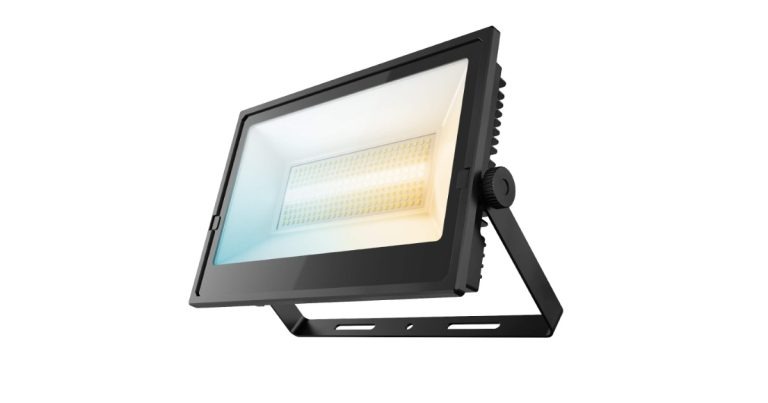
Tunable white light technology provides the ability to control a light source’s colour temperature and intensity. It has been used to support the aesthetic design visions of a space, but today this technology is also at the forefront of health and wellness applications directly affected by light.
Basics of CCT and intensity of light
To understand how tunable white works, you need to understand correlated colour temperature (CCT) and light intensity:
- CCT is the colour temperature of white light and is measured in degrees using the Kelvin (K) scale. Candlelight is at the warm (yellow) end of the spectrum (1800K) while daylight is at the spectrum’s cool (blue) end (7000K). Incandescent lighting, for example, is “warm white” light and is typically around 3000K.
- Light intensity is the strength or amount of light produced by a lamp source. It is essentially the level of brightness and is measured in lumens or candelas — the rate at which the light energy is delivered to a unit of surface. Different wavelengths of light have different energy levels and correspond to different colours. Shorter wavelengths are more energetic than longer wavelengths and correspond with cooler blues and purples, while longer wavelengths correspond with warmer oranges and reds.
In terms of nature’s daily light cycle, cool light occurs during active times of the day and warm, less intense lighting naturally occurs in the early hours of the morning and early hours of the evening, at dawn and dusk.
For maximum flexibility and integration with an automated lighting control system, a tunable white solution will independently control the CCT separate from the intensity level.
Tunable white applications
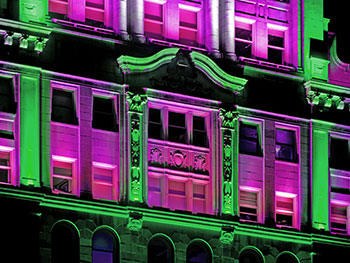
Aesthetics — there are a number of applications for tunable white that are based purely on aesthetics. Some interior design is best matched with light that is a warm white colour (usually 2,700K to 3,000K), while other designs and finishes may be better supported using a cool white colour (usually 5,000K to 6500K). The colour of the white light will bring the architecture and space to its fullest realization by enhancing certain aspects of the design while creating a level of cohesiveness. In retail, tunable white lighting can help sell products by visually enhancing their presentation to buyers.
Museums are very particular about the colour and intensity levels used to light artwork. An artist will want his/her work displayed “in its best light” — the colour and intensity level that will best preserve the artwork itself, as well as showcase the piece as the artist intended. Some museums will consider the time of day artists typically worked on the piece or how lighting changed naturally throughout the day as they worked on it. Tunable white technology enables museums to replicate this lighting for visitors to experience the art as the artist did during creation.
Health and Wellness — the most obvious effect of light on humans is vision but light also impacts our biology. Light affects our hormones, alertness, attention and fatigue, and also determines our body clock or circadian rhythm. Human centric lighting takes these effects into consideration to provide a holistic approach to lighting by balancing the visual, emotional and biological needs of humans.
Tunable white technology is now at the forefront of health and wellness applications in a range of market segments, including healthcare, education and commercial offices. Tunable white solutions have a profound effect on humans beyond providing an aesthetically pleasing space. Cool white with its higher proportions of blue light can have a stimulating effect on people; warm white with higher proportions of yellow can have a calming effect.
Research has shown that the impact of exposure (or lack of exposure) to natural light has a direct impact on our body’s natural circadian rhythm. The state of our circadian rhythm can have a positive or detrimental impact on our general health and wellness, our alertness and productivity levels, and more. Tunable white technology mimics nature’s 24-hour light cycle and focuses on the biological, emotional, health and wellness effects on people.
Many studies have proven the positive effects that human centric lighting has on cognitive functions including improved concentration and sustained attention, higher performance speed, reduced error rates, and improved memory functions. Similarly, studies have also found effects of human centric lighting on physiology, including positive impacts on sleep and well-being:
- in a classroom setting, a tunable white solution can provide a daily light cycle that aims to approximate the natural lighting outdoors, with stimulating light midday and more relaxing light in the evening hours.
- in a healthcare setting such as a patient hospital room or eldercare residence where occupants have little exposure to natural light, poor sleep can be a problem and trigger additional physical problems such as a weakened immune system or mental health problems such as anxiety and depression. By mimicking nature’s circadian rhythm, a tunable white solution can help maintain a patient’s or resident’s natural biological clock and sleep/awake cycle.
- human centric lighting is also important in commercial office space. Since the WELL Building Standard was launched several years ago, there’s been an explosion of interest in the idea of using buildings as health intervention tools. The WELL light concept promotes exposure to light and aims to create lighting environments that are optimal for visual, mental and biological health.
Osram tunable white system
Osram offers a digital tunable white (TW) system based on DALI-2 designed for human centric lighting (HCL) applications in educational, commercial office and healthcare settings. The system consists of an optotronic tunable white two-channel programmable LED driver, Osram tunable white wallstation, PrevaLED tunable white light engine, and optional Osram control power pack.
The TW wallstation sends preset scene commands to the OPTOTRONIC TW LED Driver which is preprogrammed to specific correlated colour temperatures between 2700K-6500K and light intensities between 1-100%. Wallstation lighting scenes can be reprogrammed by the end user offering the flexibility that some customers require. The PrevaLED TW light engine is recommended as part of this solution for optimal performance. However, the optotronic TW LED driver can be paired with third-party tunable white light engines.
The TW system can be used as a standalone system or as part of a connected solution.
This article was first published online by Osram as a blog: info.osram.us/blog/tunable-white-applications-go-beyond-aesthetics.