What is the Connection between Smart Lighting and IoT?
March 25, 2018
The term “Internet of Things” is a growing topic of conversation. What exactly is the Internet of Things (IoT) and what does smart lighting have to do with it?
The internet is a worldwide system of computer networks that until now, has been about giving people access to information upon request. We do a search in Google or another search engine to find information, or send a request to a specific site to consume content of interest. The content posted to the web is created by humans, for humans. We have a question. We get an answer. When we want to connect with someone or share something with them, we go to LinkedIn or Facebook or another social media platform. The traditional internet has become so ubiquitous and so transformative that it is a digital fabric woven into our everyday lives.
With the IoT, content is in the form of data that is generated by a device or a machine (i.e., a “thing”). The transfer of data is primarily between ‘things’ with embedded sensors and a central system that collects and organizes the data from those sensors. Content is typically pushed out as a notification that something of interest has happened, and this then triggers an action on the part of another thing, group of things or a process tied to things connected on the network.
What is the value of the IoT? Timely communication of data when it is detected. Timely actions based on that data. Enhanced efficiencies of systems and processes that benefit humans, the spaces we live and work in, the environment, and more.
Emerging applications, some of which haven’t been dreamed of yet, will make the IoT ubiquitous and so transformative that it will become a newer version of the digital fabric that is woven into our everyday lives.
IoT is already here
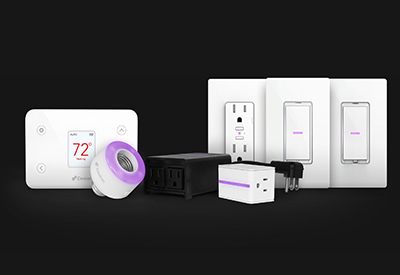
From a consumer perspective, many of us already have a wearable such as a smartwatch that tracks our activity level and enables smartphone applications like text messages and phone calls. Many of us have installed a smart home device such as the Nest Thermostat that learns the temperatures we like and adjusts it automatically to our family’s schedule while also enabling us to control it from our smartphone from anywhere if necessary.
Both use embedded sensors to detect a change in the wearer or environment (respectively) and both take action based on the data received (they notify us to slow down our heart rate or notify the system to increase the temperature). Both are data-driven, internet-connected devices with embedded sensors, and both have a user-friendly interface. There’s a value-add for each too. The smartwatch indirectly encourages us to stay active and healthy and gives us insight into our health. The Nest helps us stay comfortable while also reducing our energy usage and related bills.
Commercial real estate applications
In commercial real estate (CRE), Passive InfraRed (PIR) sensors detect motion that identifies whether space is occupied or unoccupied. Sensor data is transferred to a central system that collects and organizes data from the space, and then notifications can be sent to the lighting system to turn the lights in the area “on” (if someone has walked into the space) or “off” (when the space is unoccupied). Data notifications can also be sent to the HVAC system to take the action of reducing or increasing the heating or cooling of that space.
Although saving energy and related costs have been the driver behind most smart building applications such as connected lighting, IoT is enabling applications with more benefits. According to Deloitte, “…the Internet of Things (IoT) is already having a significant impact on the Commercial Real Estate (CRE) industry, helping companies move beyond a focus on cost reduction. IoT applications aim to grow margins and enable features such as dramatically more efficient building operations, enhanced tenant relationships, and new revenue generation opportunities.” The data collected from ‘things’ with embedded sensors gives insight into tenant behaviour as well as building usage.
Currently, we are at the infancy stage of what the IoT will enable—today we are seeing just a sliver’s worth of applications from a very big pie of potential applications. According to analyst firm Gartner, more than 20 billion devices are expected to be connected to the internet by 2020.
In fact, the IoT has been coined ‘the next industrial revolution’ with emerging applications anticipated and many individuals and organizations looking to stay ahead of the curve. Industry leaders are adopting technologies and infrastructures they believe will support future applications.
Smart lighting and IoT
Smart lighting is playing a pivotal role, unlocking the power of the IoT and smart building applications. Lighting is ubiquitous throughout all buildings and every luminaire is connected to a source of power. It is the perfect conduit for collecting data on what is happening in the building at any given time. Sensors are embedded in the luminaire making each light point a data node on the network.
What is driving the adoption of smart lighting systems?
- Energy and operational savings — according to IBM, the day-to-day operation of a building represents over 70% of the total cost of that building over its lifespan. The immediate impact of IoT in commercial buildings is to lower operations costs, particularly in the form of energy savings.
- Building Efficiencies — by creating a digital version of a building and its internal operations including systems (lighting, HVAC, security, etc.) and occupant activities, you can visualize what is actually happening in the building, and use those insights to make better decisions. The granularity of data within a lighting system from different sensors can be analyzed to create a detailed picture of a space. These new insights enable facility executives to centrally manage systems in the building or group of buildings while improving efficiencies.
- Occupant health and well-being — according to Navigant Research, “In recent years, there has been a growing shift toward occupant health and well-being as a driver in commercial buildings. Lighting has been a leader of building technologies within this overarching goal, allowing for increased controllability. Within commercial offices for example, the increased controllability through an IoT lighting system, can help occupants improve productivity, and stay awake and more focused on tasks.”
This article was first published online by Osram as a blog: http://info.osram.us/blog/connection-between-smart-lighting-iot.