5 Reasons You Should Invest in a Building Automation System
July 6, 2021
Remember the old days, just a few years back, when the lighting “revolution” everyone talked about was the transition from traditional lighting systems to LEDs?
That’s old news now.
There’s a new revolution unfolding within the building world now—and it too is being spurred by advancements in LED technology: Building automation and lighting controls.
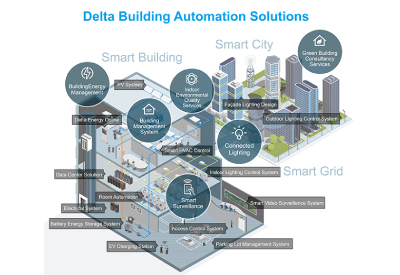
The premise that lighting should be lighting and independent from other building systems is obsolete. Today, lighting is an integral part of the future of building automation. Facility managers and building owners can now manage and integrate several types of applications. Everything from security and crowd-occupancy monitoring to HVAC and lighting is now just a click away, monitored 24/7 in real-time with building automation systems (BAS).
And the benefits are plentiful.
Just ask Joe Oberle, who serves as Vice President of Corporate Development at Delta, a $9 billion international electronics manufacturer, and Chairman of Amerlux, an award-winning design-and-manufacture lighting company.
“If you think about where the world is going today, everything is going to be connected,” Oberle said in exclusive remarks to EdisonReport earlier this year. “All of these disparate systems are coming together to form automation both inside and outside the building.”
But is investing in a “smarter” building and installing a building automation system the smart decision for you?
Are modern building automation technologies, an increasingly valuable tool for companies of all sizes, worth the cost to you right now?
It’s worth some digging.
Let’s first start with the benefits of building automation systems, and how it makes life easier and reduces costs for commercial property managers and building operations managers.
How to slash energy expenditures by nearly a third
Did you know that the buildings sector accounts for about 76% of electricity use and 40% of all U. S. primary energy use and associated greenhouse gas (GHG) emissions?
It’s true.
And most of that energy, research says, comes from two building systems: HVAC and lighting.
IHS Markit reports that buildings without building automation systems are considerably less energy efficient than their technology-advanced counterparts because they often have climate and lighting control systems that operate at times, like at nights or on weekends, when the buildings are mostly unoccupied.
“Even on workdays, the systems that lack building automation systems may be unnecessarily cool, heat or light infrequently used rooms or floors in an inefficient manner that is expensive for building owners,” the analysis concludes.
Installing a building automation system would drastically reduce this energy use and help you save on utility bills.
Building automation systems ensure that HVAC and lightings systems are appropriately managed through automatic control devices, including sensors and timers. You can also collect and store data about the building’s energy usage and efficiency, in turn helping you pinpoint areas for improvement.
The result, research suggests, would be something to celebrate. The U.S. Department of Energy, citing a Pacific Northwest National Laboratory (PNNL) report, says that investing in building automation could cut commercial energy consumption by approximately 29%, saving thousands in energy costs.
How to increase workplace productivity with building automation
Can you ramp up workplace productivity with building automation? Yes, according to a three-phase study from Canada’s National Research Council.
Per the report, a building automation system enhances three significant corporate productivity pillars: attraction, retention and engagement among employees. The findings were advantageous for building owners and facility managers looking for specific benefits such an investment in building automation brings to the table.
“Overall, the study found better performing buildings lead to lower energy costs, less maintenance, and more flexibility plus happier employees more likely to stay on,” Contractor magazine reported.
These findings should come as no surprise.
The lighting, temperature, and air quality of an office can have an enormous impact on employees’ mood, cognitive function, and overall health, all of which significantly impact their work productivity and your company’s bottom line.
Smart buildings with building automation systems utilize controls such as presets, sensors and dimmers to automatically adjust the space’s temperature levels as well as its lighting temperature and intensity level, improving comfort and reducing complaints simultaneously. And when comfort improves, so does productivity, the research underscores.
That means big bucks for you.
Moving the productivity needle even a wee bit can provide more financial and ROI gains than other cost-saving measures like decreasing energy, operational or leasing expenses. A World Green Building Council analysis says staffing expenses make up 90% of an office-based business.
“It’s information like this that makes clear the business case for people-centered investment decisions in our buildings and workspaces,” said officials at JLL, a commercial real estate firm, when they released the report.
How to cut your energy costs up to 90% with building automation
The building automation systems and controls that power today’s fleet of IoT smart buildings will help your facility’s systems run smoother, better and faster without the maintenance headaches of regular breakdowns, malfunctions or failures.
It does this by utilizing predictive analytics that allows for proactive maintenance of soon-to-be failing devices and systems before they fail, saving in repair costs and lost time.
Less wear and tear mean less repair and upkeep expenses. You’ll need less maintenance equipment. Same with personnel. That’s a lot of savings right there.
How much?
About a quarter of building costs are related to capital expenses, whereas nearly three-quarters are used to operate a building over its lifecycle, research shows.
Building automation systems decrease equipment operating costs by 15%, and the Metropolitan Energy Coalition estimates that BAS controls can yield savings between $0.20 and $0.40 per square foot for most buildings.
It gets better: Per the American Council for an Energy-Efficient Economy, smart building technologies save the average office 18% in HVAC costs, 28% in plug load and 33% in lighting energy. Meanwhile, Gartner estimates that smart lighting system installation can reduce energy costs by 90%.
How to increase your property double-digit percentages with BAS
Any investment you make in your building’s infrastructure—lighting, HVAC and control systems included—can be marked off as an asset on your balance sheet.
That alone increases your property value.
But there’s a lot more property value to be gained with the installation of smart building technology—so much more.
The European Commission report on Macroeconomic and Other Benefits of Energy Efficiency reveals that a smart, higher-performing building can conservatively add $0.10 per square foot—or as much as 11.8% in lease value. It can also yield 5% to 35% higher sale values.
Also, only 15% of commercial buildings are considered “smart.” This finding is enticing smart building owners and facility managers to seek and value the benefits of intelligent, connected building automation systems and controls to differentiate themselves from the competition with outdated systems.
Perhaps most important: Building automation systems and controls will allow you to meet—even exceed—the requirements for achieving sought-after certifications, including LEED, Energy Star and WELL.
These certifications and the smart building structures they’re award to continue to swell in value in the marketplace. For good reason, too: Energy-efficient BAS lower building’s environmental footprint, single-handedly supporting corporate responsibility, bold green initiatives and triple-bottom-line performance for profit, people and the planet.
How to keep your eye on what matters the most with smart building technology
People are the most valued asset of any building. Your structure was built with them in mind. So should your security.
An intelligent, cloud-based building automation system can double as your building’s central nervous system, increasing your situational awareness and decision-making with a holistic new view of your IoT smart building.
It does this by using BAS controls to connect to your facility’s security systems and cameras, in turn, increasing your facility’s levels of safety and backing up critical data and intelligent video. It provides much-needed peace of mind, whether it’s monitoring for suspicious activity or automating people countering to adhere to local ordinances and avoid physical threats.
Smart alerts are sent, and preset actions are implemented the moment risk is identified via sensor technology. You can also lock or unlock any part of the facility remotely at any time, as well as have sensor lighting ward off possible intrusions by brightly illuminating would-be intruders.
At the click of an app or platform control, it’s real-time supervision—a multifaceted skillset even the most exceptional security force cannot equal.
How to maximize benefits with building automation
With a BAS, you can be everything and do everything: A virtual superintendent, a savvy real estate mogul, an HVAC technician, a lighting whiz, even a number-crunching genius and motivational guru, getting the most out of your workforce.
You can shine a see-all light on every corner and aspect of your facility, fend off trespassers and give the people-counting guy at the front door, back door and every other door a deserved break.
You can give yourself a break—a financial one, a certified-winning one, something that supports your mantra of saving the planet and your company by putting people as well as the environment above all else.
Want to learn more?
To learn more about how building automation controls can help minimize energy costs and maximize utility by automating processes for facility managers, read: “Lighting Controls: The Next Frontier in Facility Management.”