How Daylight Harvesting Works in Hospitals
October 9, 2025
Daylight Harvesting: Offers Effective Lighting Energy Reductions of 20% to 60%
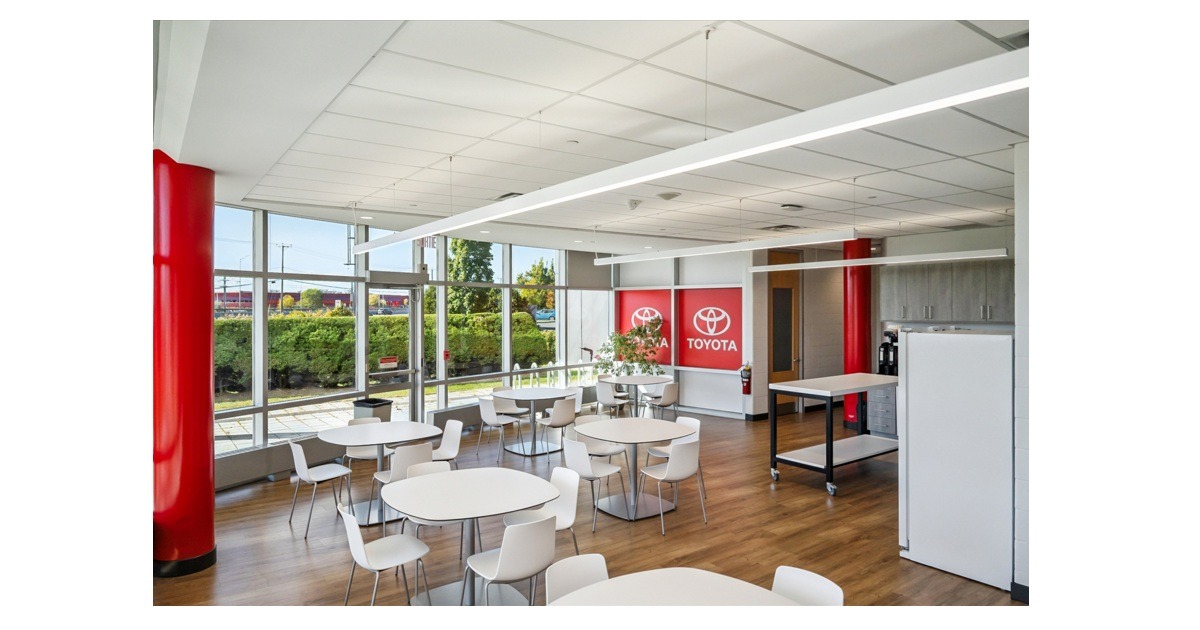
Sunlight is abundant and universally appreciated—so why not put it to work indoors? That’s exactly what daylight harvesting does. By automatically adjusting electric light in response to the natural light streaming in through windows, this strategy helps hospitals reduce energy use, lift patient and staff comfort, and stay ahead of evolving energy codes. The catalyst is compact yet powerful photosensors that continuously monitor a space and signal adjustments as conditions change.
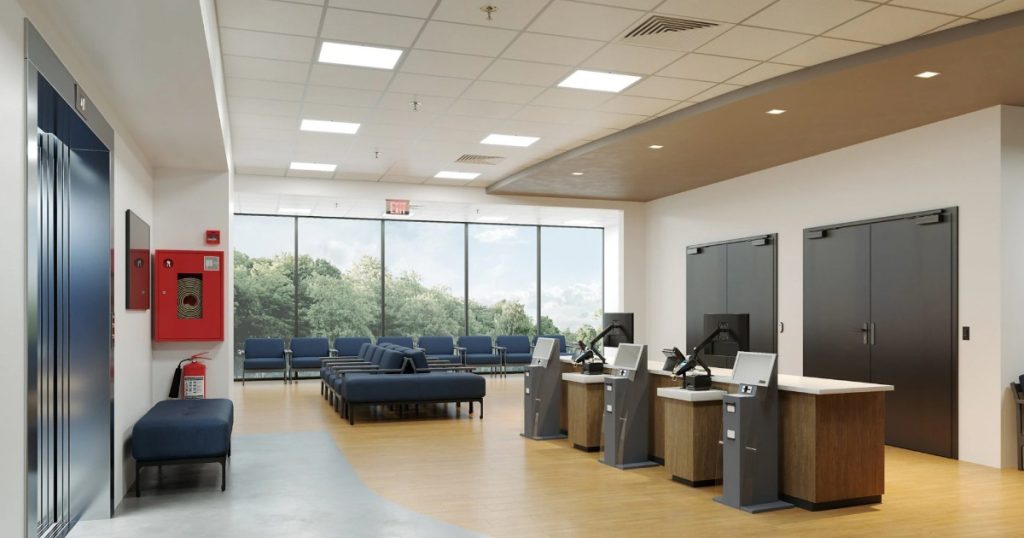
In practice, these sensors measure the amount of daylight entering patient rooms, corridors, lobbies, or other hospital zones. That data is fed into a lighting control system. When daylight is strong enough – that is, it fulfills the light levels of a space – the system dims or even switches off the electric lighting, and as natural light fades, whether from cloud cover or dusk, the fixtures brighten again. The seamless interplay ensures that spaces always feel evenly lit, no matter the hour.
The payoffs are compelling. Hospitals and healthcare facilities that adopt daylight harvesting often see lighting energy reductions of 20% to 60%, depending on the building’s design and daylight access. Beyond the dollars saved, many energy standards (e.g., ASHRAE 90.1, the International Energy Conservation Code (IECC), and California’s Title 24) now require daylight-responsive controls in certain building types. More important, there’s a human payoff: spaces with generous natural light not only look and feel better, they foster well-being.
Sunlight as a Healing Ally
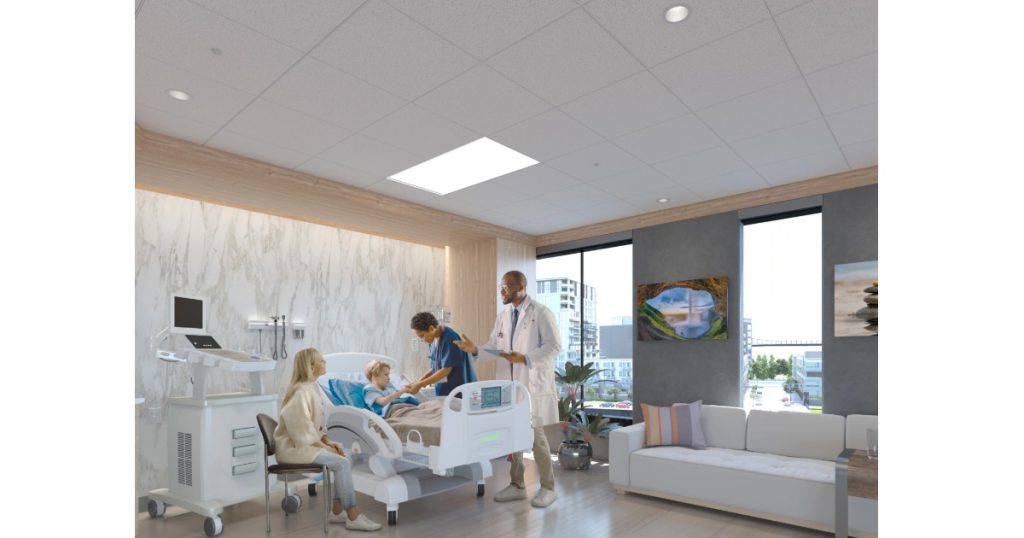
In hospitals, daylight is more than a comfort—it can become a therapeutic ally. Numerous studies point to measurable physiological and psychological benefits for patients and staff alike when exposure to natural light is optimized.
One comprehensive, long-term analysis showed that better daylight exposure was associated with reduced length of hospital stay. In another study conducted in South Korea, patient rooms oriented for better daylight (e.g., southeast exposure) saw 16% to 41% shorter stay durations compared to rooms with poorer light access.
In the cardiac ICU specifically, research has found that patients with access to daylight and window views left the unit, on average, 16.8 hours sooner than patients in rooms without those features. These results hint that even moderate shifts in light design can nudge recovery timelines.
Daylight also influences our internal biological clock. Bright natural light is one of the strongest “zeitgebers”—time cues—that keeps our circadian rhythms synchronized. In hospitals, where patients are often isolated from normal day/night cues, daylight can help restore balance and reduce sleep disturbances. In one intervention at Mount Sinai, patients under a circadian-aware lighting regime (mimicking daylight-dark cycles) reported better sleep and less fatigue over a two-week stay.
Pain, too, is affected by exposure to daylight. In an influential study of spinal surgery patients, those in brighter rooms used 22 % less analgesic medication than those in dimmer rooms. Other research links higher serotonin levels (boosted by light exposure) to lower perceived pain and better mood.
Moreover, light-mediated regulation of hormones like melatonin and cortisol helps stabilize sleep, mood, stress, and immune function—key systems that support recovery.
Why Daylight Harvesting Makes Sense in Hospitals
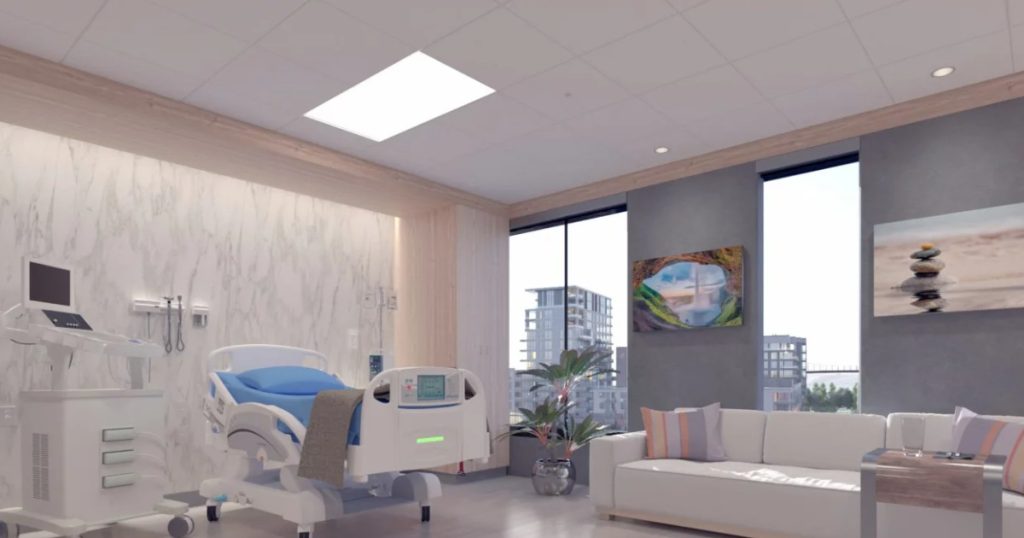
Hospitals are uniquely suited to benefit from daylight harvesting. Patient rooms with large windows are prime candidates, where the convergence of energy efficiency and healing outcomes makes for a powerful case. By smartly combining daylight and electric lighting, hospitals can:
- Use natural light in support of physiological recovery
- Maintain lighting that meets safety, task, and clinical requirements at all hours
- Reduce energy and operating costs
- Enhance staff wellbeing and performance (less fatigue, better mood)
- Help meet regulatory and sustainability goals
At its heart, daylight harvesting is about making a lighting system work smarter, not harder. In healthcare settings especially, letting the sun carry part of the load is more than a technical optimization—it’s a step toward healthful environments that actively support healing, comfort, and joy.
Learn more about Cooper Lighting Solutions BioUp, the lighting technology designed to enhance the biological impact of indoor lighting HERE

Daylight Harvesting