Ultraviolet-C (UVC) Germicidal Devices: What Consumers Need to Know
Sept 24, 2020
Consumer UVC germicidal devices are entering the market rapidly because of an increased demand for sanitizing and germicidal capabilities in the face of COVID-19. But are they all safe?
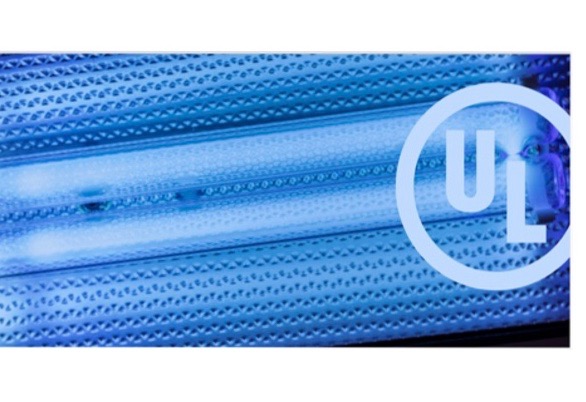
UVC radiation (the most energetic in the UV spectrum; 180nm to 280 nm) is proven to have sanitizing and germicidal effects, and first proof of effectiveness against SARS-CoV-2 is emerging. Like many high energy devices, however, there are risks due to UVC exposure. For example, UVC over-exposure can cause damage to the eyes and skin, based on wavelength, intensity, proximity to the source, and time of exposure. In certain cases, there are also risks to the lungs if the UVC germicidal device also were to generate ozone. For high intensity sources, over-exposure can occur in just seconds, but symptoms may not become apparent for a day or two. UVC lamps have little visible light output, so our natural defensive reactions to optical hazards (blinking, squinting, or trying to look away) may not be triggered to protect us adequately.
Establishing and maintaining the safety of UVC devices is a priority in the lighting industry across all sectors, including consumer, commercial and healthcare applications.
This paper has been produced as a collaboration between UL, the American Lighting Association (ALA) and the National Electrical Manufacturers Association (NEMA).
Warning: Consumers currently have no assurance against the risks of UVC over-exposure from consumer oriented UVC devices that do not provide proper containment of the UVC emissions. When used improperly, these types of devices may present an undue health risk.
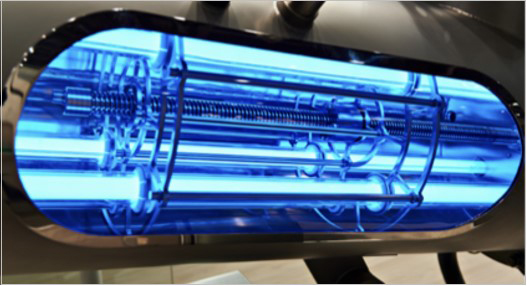
One example of an adequate safety measure for UVC germicidal products intended for consumer use is proper containment of the UVC source. Proper containment designs, or other, equivalent means that prevent exposure, help to ensure that people are not over-exposed to UVC radiation. For example, if in an air cleaner, access to the UVC lamp (for servicing purposes) would result in activation of an interlock switch which in turn disables product operation (i.e. precludes UVC emissions).
Unfortunately, the online retail market is growing rapidly with handheld and portable consumer oriented UVC germicidal devices, many of which do not employ proper containment or other equivalent means of protection. Instead, these tend to rely solely on markings or integral timers, unreliable sensors, or remote controllers, which still leave room for scenarios where humans or animals can be over-exposed to the UVC light. Without better safeguards and without consumers being more fully aware of risks and trained in proper operation, this would place an unrealistic responsibility on the user and, consequently, such products at present cannot be certified. For all UVC consumer products sold, certification is essential.
 And warning labels are not enough! Children or pets cannot be expected to follow written warnings, and home environments pose innumerable situations that could result in misuse and potential harm when the technical safeguards are inadequate.
The organizations noted in this document do not believe it is reasonable (in a consumer setting) to rely on behavioral safeguards alone to mitigate risks of personal injury from UVC products. Consequently, we recommend against purchase of products without full safety certification. Most homes cannot be assumed to be a controlled environment for correct use of these products. Even if the device works within safe ranges of operation, and warnings are followed by the person operating the unit, incidents of other members of the household (such as children, pets and certain elderly) entering an area where the device is on, should be accounted for in the safety measures of the device. For UVC germicidal devices intended for use in industrial, commercial or healthcare settings, where there is a clear understanding of the risks and necessary precautions to keep building occupants safe, a path exists that will allow those products to be certified by an Occupational Safety and Health Administration (OSHA) Nationally Recognized Testing Laboratory.
In this document, ‘certification’ only addresses device safety and does not make any statements regarding product effectiveness in sanitization and germicidal capabilities, or other manufacturer claims. As such, UL continues to work with the manufacturers of the National Electrical Manufacturers Association (NEMA) and the American Lighting Association (ALA) on standardizing effective certification requirements for product safety.
As the safety science experts, UL applies science and objective authority to help people navigate risk and complexity. The information in this paper has been collected from numerous references. Please visit these links for more information: EPA.gov, FDA.gov, OSHA.gov and WHO.int
This paper has been produced as a collaboration between UL, the American Lighting Association (ALA) and the National Electrical Manufacturers Association (NEMA); https://collateral-library-production.s3.amazonaws.com/uploads/asset_file/attachment/26057/CT_26219573_UVC-Germicidal-Devices-flyer_digital_FINAL_073020.pdf.