Cooper Lighting: Smarter Streets, Safer Cities
June 23, 2025
The Infrastructure Benefits of LEDs & Outdoor Lighting Controls
As cities and utilities modernize infrastructure for the 21st century, LEDs and outdoor lighting controls are becoming a common and critical component of their strategies to achieve energy efficiency, public safety, and operational resilience.
Here’s how lighting controls paired with high-efficiency LEDs are helping infrastructure stakeholders meet evolving demands and regulatory goals for the lighting that makes roadways, pathways, parking areas, and public spaces safer for citizens.
1. Scalable Energy Efficiency
Retrofitting with LED luminaires delivers immediate savings—LEDs consume up to 50-70% less energy than legacy fixtures.
Adding adaptive controls—such as dimming schedules, motion-based activation, and astronomical timers—cities can reduce energy consumption by up to 50% or more.
Outdoor lighting accounts for a meaningful share of municipal energy use, so these energy savings translate into measurable cost savings and quicker payback on LED retrofits. Lighting should become part of a city’s broader strategy for carbon reduction and compliance with efficiency standards—not to mention the related cost savings.
2. Enhanced Public Safety & Perception
Dynamic lighting can significantly improve both actual and perceived safety. LEDs provide better light uniformity, visibility, and color rendering compared to older high-pressure sodium or metal halide sources—making streets and sidewalks safer for pedestrians and drivers.
When integrated with smart controls, LED lighting can be programmed to automatically brighten in response to motion or time-of-day cues, enhancing security in critical areas like crosswalks, transit stops, and school zones.
3. Reduced Maintenance & Asset Longevity
LEDs have far longer lifespans—often exceeding 100,000 hours—compared to conventional lamps. When combined with controls that dim lighting during low-use periods, the service life of LED fixtures is extended even further.
Additionally, many advanced lighting systems support remote monitoring and automated alerts, enabling predictive maintenance that reduces labor hours, truck rolls, and downtime. This is particularly valuable for municipalities managing large-scale distributed lighting networks.
4. Operational Flexibility for Changing Urban Needs
From emergency response to large public events, urban infrastructure must be adaptable. With programmable lighting schedules and zoning capabilities, controls allow infrastructure teams to adjust output remotely from their mobile device without costly rewiring. LED fixtures, with their instant-on capabilities and dimmability, respond seamlessly to these changes. This agility supports dynamic urban planning and helps cities react quickly to both planned and unforeseen demands.
5. Data Integration for Smarter Cities
Modern controls platforms provide detailed analytics on energy use, fixture performance, and system status. When deployed with networked LED systems, these controls create a connected asset infrastructure that supports smart city initiatives. APIs and data sharing options allow integration with other systems—such as traffic sensors, emergency response platforms, and asset management tools—giving planners and public works departments deeper insight and control across their networks.
6. Ready for the Future
For infrastructure leaders seeking to build smarter, safer, and more responsive cities, retrofitting with LED lighting and outdoor controls is a high-impact, future-ready solution. Together, these technologies reduce energy use, enhance public safety, streamline maintenance, and provide the digital backbone for smart city innovation. The Result: Infrastructure that performs better today and adapts more easily to the needs of tomorrow.
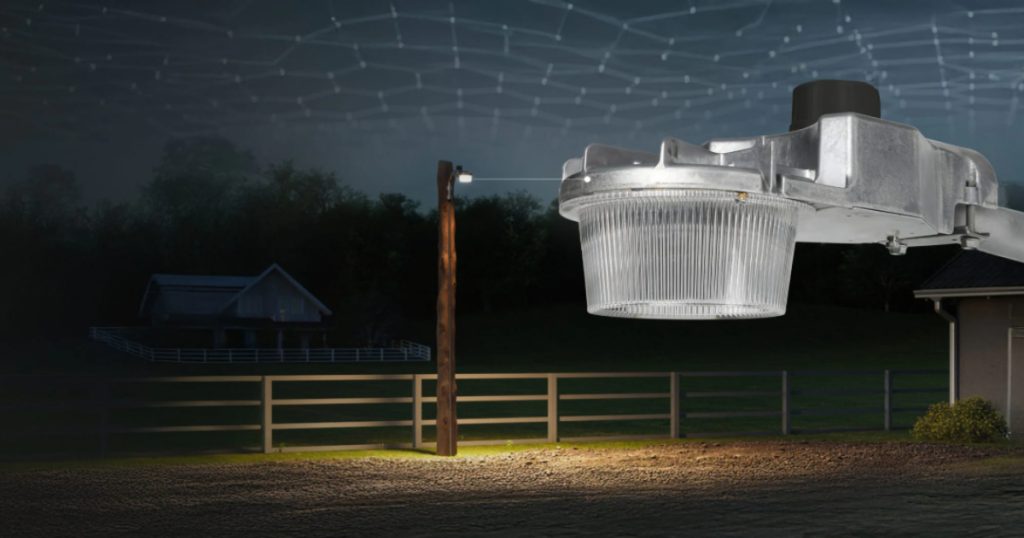
For more information about the Streetworks Caretaker Nano, an innovative outdoor luminaire with built-in control options, click HERE.