Lake Fatality Highlights Need for Electrical Safety Around Water
See part one here: What You Can Do to Prevent Electrocution and ESD
A recent incident involving a dockside electrocution underscores the dangers when water and electricity mix. In this instance, electrical current entered the water from boats or docks.
“Wet environments are particularly dangerous when it comes to electricity. It’s vital to ensure electrical connections on or near the water are properly installed with appropriate safety equipment,” explains Molly Hall, Executive Director of the American Safe Electricity program. “Your loved ones’ lives just might depend on it.”
Safety precautions for the public
Share these tips with customers who live near water and/or have boats.
1. Properly maintain docks with electrical installations. Even so, it’s safest not to swim around docks with electrical power. “Prevent deadly shocks. Check your boats and docks,” Hall adds. “If you have not checked your boats and docks yet this year, don’t wait. Take the time to do so now.”
2. Never swim in or near marinas, docks or boatyards, say experts from the U.S. Electric Shock Drowning Prevention Association (electricshockdrowning.org).
3. If you’re in the water and start to feel a tingle, swim away from any apparent electrical source and get out of the water as soon as possible without touching any metal objects (e.g., ladders).
4. For bystanders hearing of a swimmer experiencing a tingle, immediately turn off power to everything you can. Do not jump in to help. You could easily become a casualty yourself.
5. Have your boat’s electrical system checked at least once a year. Also have your boat checked when something is added to or removed from its electrical system. If you are unsure about how to install something, do not call your neighbour/electrician friend. Call a certified electrician. There are some big differences between your house and your boat. Household wire is not suitable for use on boats as houses are motionless and generally dry. Even marine-rated wire that is not supported along its length will break with constant motion stress. Do NOT use wire nuts or splice connectors. Wire nuts are for solid conductor wire, which should never be on a boat, and splice connectors cut wire strands. Fuses are rated to protect the wire, not the stereo. If a fuse blows continuously, it should NOT be replaced with a larger one just to keep it from blowing again. Something else is wrong.
6. When boating or fishing, be aware of your surroundings and potential overhead electrical hazards. Ensure a distance of at least 10 feet between your boat and nearby power lines. Always lower masts of sail boats before using boat ramps.
7. Ensure your neighbour’s dockside electrical system complies with the Canadian Electrical Code and has been inspected. All electrical installations should be performed by a professional electrical contractor. Because docks are exposed to the elements, their electrical systems should be inspected at least once a year.
Safety precautions for electricians
The Brotherhood of Electrical Workers/National Electrical Contractors Association in the U.S. offers electricians the following tips:
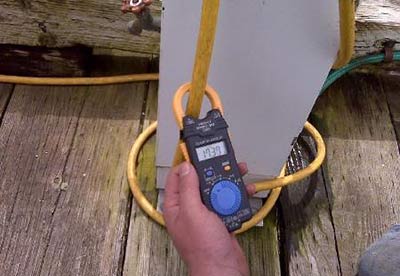
8. Ensure that all electrical installations comply, at a minimum, with the Canadian Electrical Code which mandates a GFCI on all dock receptacles. A GFCI measures the current in a circuit. An imbalance of that current, such as a discharge into the water, will trip the GFCI and cut off power.
9. Test the GFCI at least once a month or according to the manufacturer’s specifications. The GFCI should be located somewhere along the ramp to the dock so it can be easily found and tested by local fire departments as 9eeded.
10. Ensure the metal frames of docks have “bonding jumpers” on them to connect all metal parts to a ground rod on the shore. This will ensure any part of the metal dock that becomes energized because of electrical malfunction will trip the GFCI or the circuit breaker.