Study Results could Lead to a New Class of Materials for Making LEDs
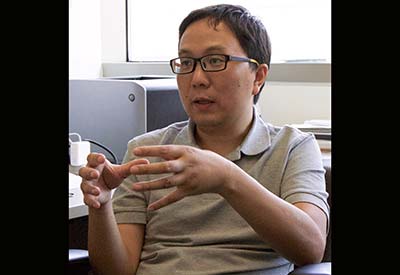
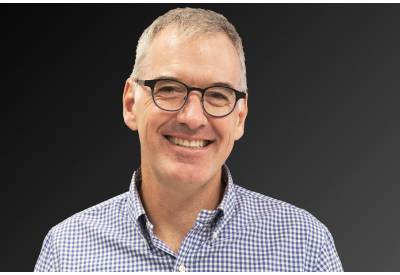
Xianfeng Duan


The California NanoSystems Institute’s Xiangfeng Duan A new study by researchers from the California NanoSystems Institute at UCLA is the first demonstration of electroluminescence from multilayer molybdenum disulfide, or MoS2, a discovery that could lead to a new class of materials for making LEDs. The study, led by Xianfeng Duan, professor of chemistry and biochemistry, was published in the journal Nature Communications on July 1, 2015.

Over the last decade, advances in LED have helped to improve the performance of devices ranging from television and computer screens to flashlights. As the uses for LEDs expand, scientists continue to look for ways to increase their efficiency while simplifying how they are manufactured. In the new study, Duan and first author Dehui Li, a postdoctoral scholar in Duan’s lab, created the first multilayer molybdenum disulfide device that shows strong luminescence when electrical current is passed through it.

In its single-layer form, molybdenum disulfide is optically active, meaning that it emits light when electric current is run through it or when it is shot with a nondestructive laser. Multilayer molybdenum disulfide, by contrast, is easier and less expensive to produce, but it is not normally luminescent.

“We were trying to make a vertically stacked light-emitting device based on monolayer MoS2, but it was difficult to get the efficiency as high as we wanted,” says Duan. “On the other hand, it was rather surprising for us to discover that similar vertical devices made of multilayer MoS2 somehow showed very strong electroluminescence, which was completely unexpected since the multilayer MoS2 is generally believed to be optically inactive. So we followed this new lead to investigate the underlying mechanism and the potential of multilayer MoS2 in light-emitting devices.”

Duan and his team used a technique called electric field-induced enhancement, which relocates the electrons from a dark state to a luminescent state, thereby increasing the material’s ability to convert electrons into light particles, or photons. With this technique, the multilayer MoS2 semiconductors are at least as efficient as monolayer ones.

Duan’s team is currently moving forward to apply this approach to similar materials, including tungsten diselenide, molybdenum diselenide and tungsten disulphide, with the goal of helping to create a new generation of light-emitting devices from two-dimensional layered materials, which are less expensive and easier to use in manufacturing.

Read the article in Nature Communications www.nature.com/ncomms/2015/150701/ncomms8509/full/ncomms8509.html


 

Related Articles


Changing Scene

  • Oct 8, 2026 - Canada Light Expo 2026 To Unite Canada’s Lighting Industry Under One Roof - CLE 2026

    Canada Light Expo 2026 To Unite Canada’s Lighting Industry Under One Roof

    Canada Light Expo 2026, the country’s premier exhibition for the lighting and LED technology sector, will return to the International Centre, Toronto, on 18–19 November 2026. Marking its 3rd edition, the event is expected to bring together more than 100 leading brands and showcase over 1,000 lighting solutions, connecting manufacturers, designers, specifiers, distributors, contractors, and… Read More…

  • Oct 7, 2026 - Eureka Wins Multiple GRANDS PRIX DU DESIGN Awards

    Eureka Wins Multiple GRANDS PRIX DU DESIGN Awards

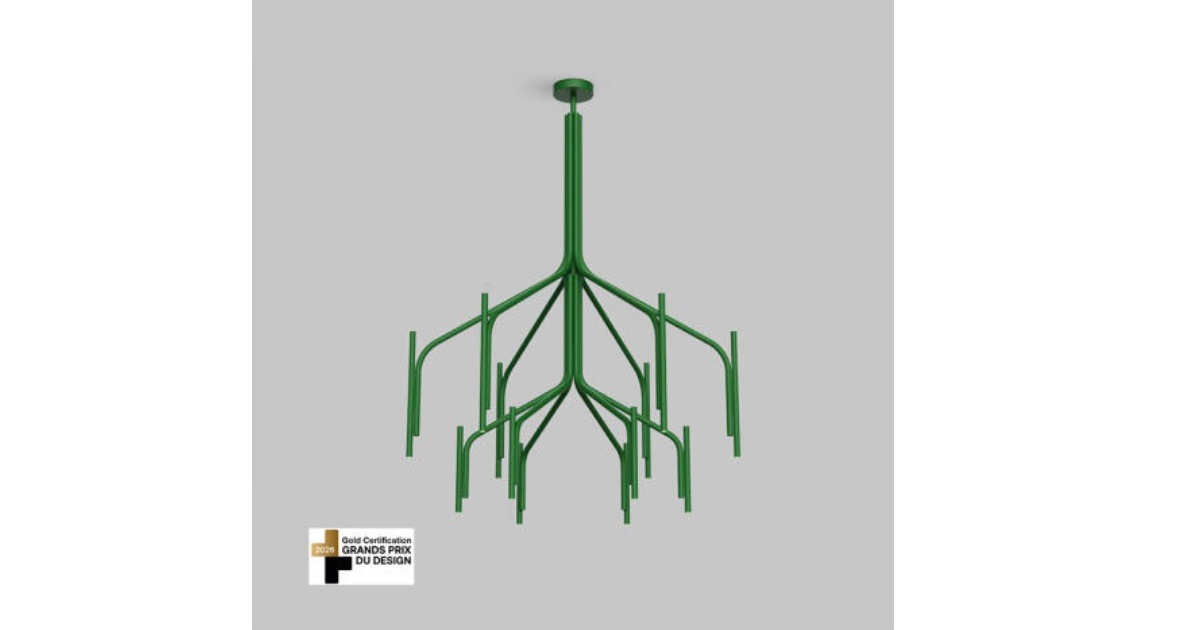
    Eureka is pleased to announce that five of its luminaire families have been recognized in the 19th edition of the GRANDS PRIX DU DESIGN Awards. Jarry, Orelia, Scout Accessories, Torno, and Tulip all received GOLD CERTIFICATION in the Product Design – Lighting/Indoor Lighting Fixture category. The GRANDS PRIX DU DESIGN Awards is an international competition… Read More…


Design

  • LEDVANCE: Toyota Lighting Case Study – Brossard, Quebec, Canada

    LEDVANCE: Toyota Lighting Case Study – Brossard, Quebec, Canada

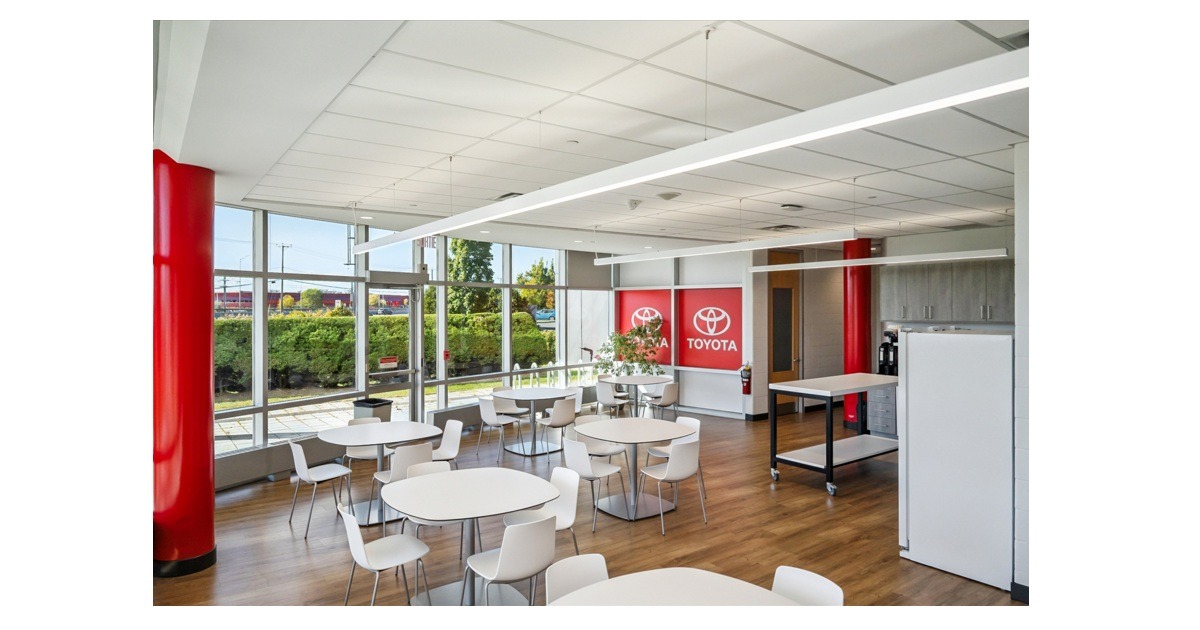
    Located 15 minutes from Montreal, Toyota’s Quebec Regional Office in Brossard, Canada houses a first-floor training and service area, and second-floor offices where financial services and dealer network operations are conducted.  With environmental sustainability representing a core pillar of Toyota’s mission, the Brossard location has long been committed to embracing products and practices that conserve… Read More…

  • CSC LED: How Product Availability Impacts Project Timelines

    CSC LED: How Product Availability Impacts Project Timelines

    When planning an LED lighting project, the focus is usually on performance, specifications, budget, and application requirements. But there is another factor that can have just as much impact on the project: product availability. A fixture may be the right choice on paper, but if it is not available when needed, it can affect installation… Read More…


New Products

  • SATCO|NUVO: Dual Head Security Lights – Bullet & Square Heads Models

    SATCO|NUVO: Dual Head Security Lights – Bullet & Square Heads Models

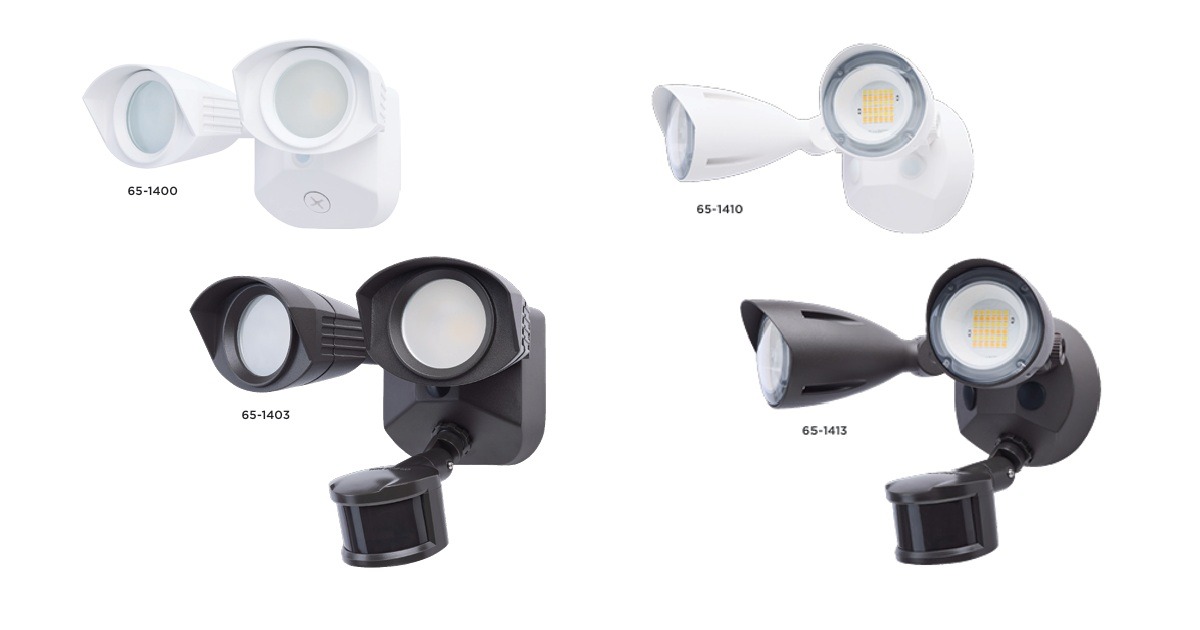
    SATCO|NUVO’s Dual Head Security Lights deliver dependable outdoor illumination for residential and commercial applications. Available in traditional bullet head designs as well as architectural square heads, these fixtures feature selectable 3000K, 4000K, and 5000K color temperatures and are offered in black, white, and bronze finishes to complement a variety of exteriors. Constructed from rugged die-cast… Read More…

  • ABB Ready-Lite: RSAUR Series – Surface-Mount Architectural Remote Fixture

    ABB Ready-Lite: RSAUR Series – Surface-Mount Architectural Remote Fixture

    The RSAUR Series surface-mount architectural remote fixture is designed specifically for installations requiring a junction box, whether recessed, surface-mounted, or suspended. Engineered for easy installation, it combines performance with simplicity and style, making it a smart choice for commercial and architectural environments. Recognized with Grands Prix du Design | Gold Certification 2026. Read More…