New LRC Study Evaluates the Blue-Light Hazard From Solid-State Lighting
October 23, 2017
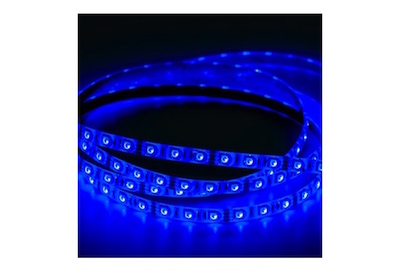
The introduction of solid-state lighting using LED technology has ignited widespread interest in the ways that lighting can offer benefits to people, including improved visibility at night, enhanced perceptions of brightness and security, and spectral tuning for management of circadian rhythms. Yet, as illustrated in a recent report from the American Medical Association (AMA), the increasing popularity of LED lighting is also raising new questions and reviving older concerns about unwanted impacts of these light sources, such as light pollution, discomfort glare, circadian disruption, and retinal damage via a mechanism known as blue-light hazard.
A new study from the Lighting Research Center (LRC) at Rensselaer Polytechnic Institute takes a practical, quantitative approach to evaluating light sources for blue-light hazard. Results of the study are published in the International Journal of Occupational Safety and Ergonomics, in an article titled, “Evaluating the Blue-Light Hazard from Solid State Lighting.”
In the study, LRC researchers John Bullough, Andrew Bierman and Mark Rea evaluate the spectral radiant power characteristics of incandescent, fluorescent, LED and daylight sources in terms of current blue-light hazard calculation procedures from the Illuminating Engineering Society and the Commission Internationale de l´Éclairage. The paper provides comparative data to allow meaningful and quantitative comparisons among light sources commonly experienced indoors and outdoors. Particular attention is given to use cases that could potentially affect blue-light hazard.
The study results showed that in the majority of use cases, LEDs do not exhibit greater risk for blue-light hazard than other light sources, including incandescent. LEDs present no special concerns for blue-light hazard over other common light sources in typical use cases because our natural photophobic responses, such as squinting and averting the gaze, limit exposure to bright light. Where photophobic responses might not occur, such as during eye surgery or with premature infants, caution is needed.
Some organizations, such as the AMA, have advised against using LEDs with correlated coloUr temperature (CCT) exceeding 3000K. However, the LRC study found that avoiding blue-light hazard is primarily related to controlling the radiance of light sources, and much less related to spectral distribution, particularly when expressed in terms of CCT. The LRC study authors note that CCT should not be used as a metric for characterizing the potential for blue-light hazard, citing the fact that an incandescent filament at 2856K within a clear bulb is associated with a greater risk for blue-light hazard than any white LED source, including one of 6500K. The spectral radiance distribution must be known to estimate blue-light hazard, particularly for those cases where photophobic responses might not occur. In these cases, and indeed for general lighting applications, the study authors recommend the use of lenses, baffles, and diffusers to mitigate glare as the primary methods for reducing the risk of blue-light hazard.
Learn more
Participants at more than 200 locations around the world took part in the LRC’s March 2017 webinar, which presented practical, scientific advice to address the issues raised in the AMA report, including blue-light hazard. A video of the webinar is available at https://youtu.be/2BcfcONrm58.The presentation slides are available at www.lrc.rpi.edu/resources/newsroom/AMA_presentation.pdf.
In June 2016, immediately following the release of the AMA report on LED lighting, the LRC issued a brief written response to inform rational discourse. The document is available at www.lrc.rpi.edu/resources/newsroom/AMA.pdf.