LEDs: Partnering Savings with Sustainability
Mention LEDs in a conversation, and what first springs to mind is low energy use. But LEDs offer plenty of other benefits, including less waste, less use of materials and resources, and greater recyclability.
As facilities across Canada seek to lower energy costs, solid state lighting can help give every building a sustainable future. The rapid development of LED technologies areis accelerating this change. Architects and building owners strive for a balance of sustainable practices that allow aesthetics and functionality to live together, while ensuring the quality of light, energy savings and long service life provide the return they want.
LED lighting is arguably the most profound change the lighting industry has witnessed since the invention of electric light itself. It is a fundamentally new kind of lighting, using new principles, materials and means of control. Whether as retrofits or new installations, LEDs are opening up new possibilities for how and where lighting can enhance the human experience.
But buyers beware: not all LEDs are equal. Because of the opportunities this new technology represents, there has been an influx of LED suppliers into the marketplace.However, The implication: do your research to ensure your investment is a sound one. For instance, going with branded products from suppliers that are fully entrenched in the lighting industry can help ensure your adoption of this new technology turns out to be a positive experience.
LED sustainability
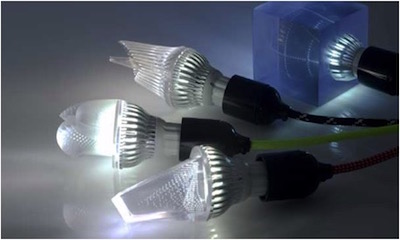
LED lighting supports sustainable design in several ways. It uses less energy than most other types of lamps, lasts longer (which means less frequent replacement and therefore less waste), generates virtually no heat, is mercury-free, and can be housed in special luminaires designed for easy disassembly and recycling. In fact, in lifecycle assessments, LED bulbs have less of an environmental footprint compared to incandescent or compact fluorescent technology. This is largely attributed to their energy savings, as it’s the electrical consumption during the usage phase of a bulb that is the most dominant environmental factor, representing nearly 95% of the entire energy impact in a cradle to grave analysis.
As a whole, benefits encompass dramatic energy savings, longevity, reduced maintenance costs and environmental impact, with superior performance.
LED efficiency
Conventional lighting products are quickly losing market share to LEDs simply because of their comparative inefficiency. Traditional incandescent lamps create light by heating a thin filament to a high temperature but are very inefficient, as over 90% of the energy produced is lost as heat. Incandescents also have a much shorter life span. Fluorescent light from CLF bulbs is created when an electrical current passes though mercury vapour, exciting the phosphor coating to produce ultraviolet light. Compact fluorescents have a longer life cycle than incandescents, but the life cycle is still in some cases one tenth of an LED bulb.
Exciting new applications
The future of lighting is here, now. In lighting solutions, LEDs can be pre-programmed, or changed at the touch of a button, to create myriad effects. The possibilities are endless.
For architects, builders and lighting designers, LEDs are unsurpassed in flexibility and diversity of lighting effects. Each of the applications below poses stringent requirements on lighting sources, but LEDs meet them all, with solutions for downlighting, cove lighting, task lighting, accent lighting, wall washing, and wall grazing. And, for facility managers in all of these below applications, the extended lifetime that LED’s offer also means less disruption to customers, employees and guests, because maintenance staff are changing out light bulbs far less often.
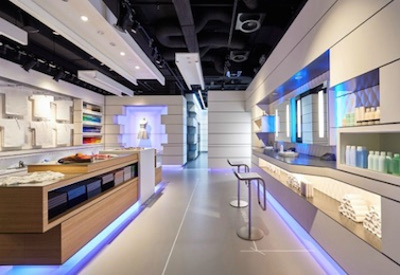
• LED in retail. Shopping today has become an experience, and lighting plays a vital role in creating that experience, whether in a trendy boutique or in a major department store. LED solutions are uniquely suited to retail outlets because they can provide a wide range of effects — from the strikingly dramatic to the intriguing and inviting — that contribute to the total shopping experience. LED solutions can highlight a product, create drama and interest, and reflect mood, helping to create the perfect environment for the shopping experience.
• LED in offices. The philosophy behind lighting an office used to be to provide a uniform level of illumination throughout. Today, however, there is a growing awareness that efficiency can improve considerably if the lighting is adapted to each function. LED lighting solutions offer flexibility, adaptability and economy.
• LED in hotels. The range of facilities — reception, restaurants, corridors, hallways, guest rooms, meeting spaces, service areas, and recreation areas, with some of these facilities operating 24/7 — make hotels a prime candidate for LED solutions. Hotels, for example, require lighting 24/7 – in such areas as corridors, hallways and reception. LED solutions can make guests feel welcome and staff more productive, while offering enormous savings in energy and running costs.
LED technology is fast becoming the industry leader in creating affordable, sustainable lighting solutions in new and retrofit applications. These lighting systems are so adaptable, so flexible, that a single lighting system can conjure up an almost limitless number of effects, moods and ambiances. And thanks to the ultra-long life of LEDs and their high efficiency, cost-savings on maintenance and energy can be very significant.
In the next issue of Electrical Industry Newsweek: Maximizing the Value of Your LED Retrofit.
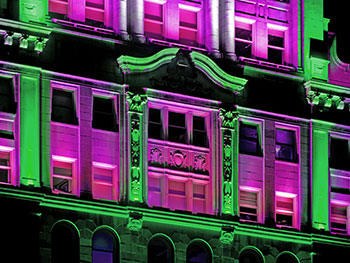
Photo, courtesy of Philips, depicts The David Building in Dallas, TX.
Learn more about the lighting project http://www.philipscolorkinetics.com/showcase/installs/Davis-Building/.