Alternatives to DMX-Controlled Tunable-White Lighting

June 23, 2020
By C. Webster Marsh
While DMX is an industry standard and a workhorse protocol for dynamic lighting controls that is agnostic to manufacturers, there can be a lot of on-site programming and additional wiring required to be effective.
Some manufacturers provide an alternative to DMX that can save time during the installation and programming phase. While these systems come with their own caveats, lighting controls designers should consider which is more important on their project: cost, speed and/or flexibility. Oftentimes these non-DMX systems allow the designer to use conventional luminaires (IE: 0-10V Drivers) and minimal controls or stay within the manufacturer’s luminaire lineup, which may limit the possible design choices.
What are the Alternatives
Most non-DMX dynamic tunable white lighting controls fall into one of three categories:
1. 0-10V
2. Proprietary Digital (wired)
3. Wireless
0-10V dynamic tunable white is usually provided for simple fixtures that have only 2 hues of white. The single driver will have two 0-10V connections and each needs to be independently controlled. The first 0-10V signal controls intensity while the second signal controls hue. The hue is controlled like a slide thermometer with the lowest setting being coolest or warmest CCT and the highest setting being the opposite CCT. Depending on the control type installed, intensity can be controlled separately from CCT with a second 0-10V dimmer. This is a less expensive but simpler option where exact CCT may not be important to the designer, but tunable white is still desired.
Proprietary digital often refers to a digital protocol that has been created and programmed by a manufacturer. These protocols can resemble DALI in function, which is also an industry standard and non-proprietary open digital protocol like DMX, but some proprietary digital systems are not inherently compatible with DALI devices. Some manufacturers have been using a proprietary digital protocol for years now on products other than tunable white. Proprietary digital protocols are very robust but only work with compatible devices and luminaires, commonly the manufacturer provided versions. This level of control can be utilized via a hard wired or wireless lighting control architecture.
The last category, wireless controls, also provides dynamic tunable white but there are several unique challenges when specifying wireless controls that mainly center around building a robust and secure wireless network. Wireless tunable white solutions are available for either 0-10V and DALI control methods, but additional care needs to be taken when specifying a wireless system, whether static or dynamic.
How to Specify Tunable White with 0-10V
Specifying tunable white with 0-10V is like specifying two zones of 0-10V control. A lighting designer should make sure there is a 10V power source, often the driver, and two independent controllers. A simple control system can be two 0-10V wallbox dimmers, but the design can be part of a larger lighting control system so long as a designer has two independently controlled zones: one for intensity and one for CCT.
How to Specify Tunable White with Proprietary Digital
Unlike DMX, where all the intelligence lives in the controller, a proprietary digital system is more distributed, housing some of the logic inside the luminaire drivers themselves. Commands from a controller contain direct communications such as “All luminaires in zone 1 go to full.” Luminaires in zone 1 listen for this command and then respond accordingly. Similarly, in a tunable white command, the command may say “All luminaires in zone 1 go to 3500K at 50%.” The luminaires are intelligent enough to know what the correct mix of hues is to create the requested CCT and intensity. This process eliminates the need for profiles for each type of luminaire to be programmed into the controller; the luminaires have the profiles inside.
Despite all the benefits of specifying a proprietary digital lighting controls system, it comes with challenges that DMX does not have. The first and most cumbersome challenge is specifying a single manufacturer or a thoroughly vetted lineup of three equal manufacturers, which may need to address special applications that have various luminaire types. This type of tunable white may require greater manufacturer provided programming and testing prior to shipping the luminaires, which is why these systems work best when the manufacturer is included early in the project’s design. When starting the design, the lighting controls designer should meet with the manufacturer to ensure that their products can achieve the design intent.
When to Specify What
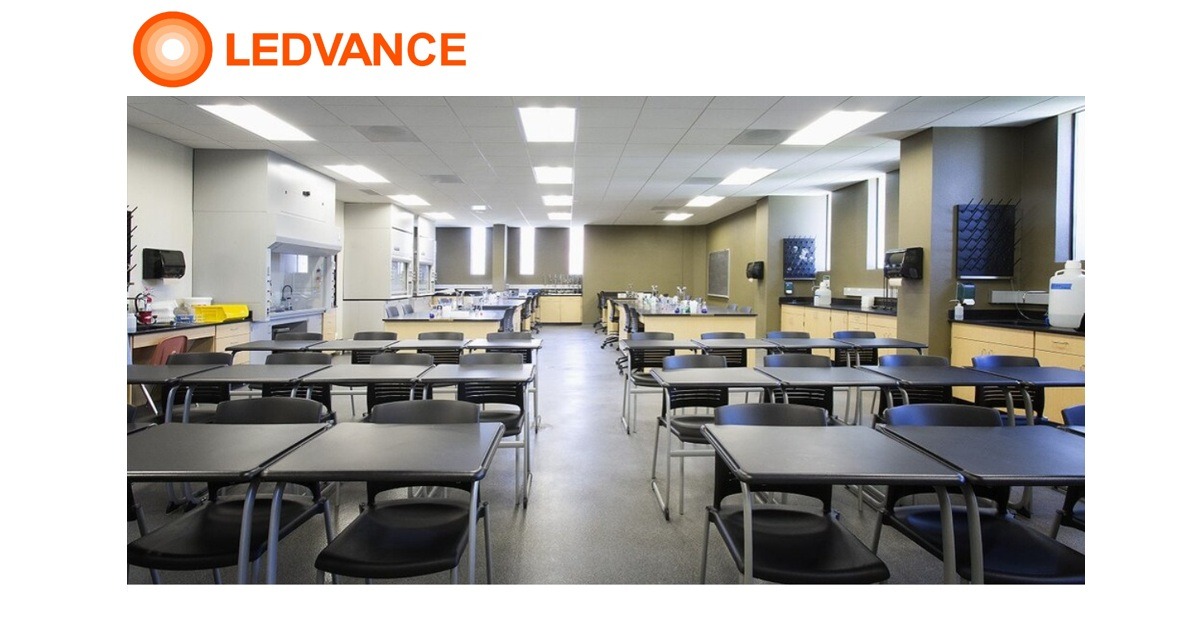
A good rule of thumb when deciding between DMX and another system is whether the design is a typical or atypical design. Typical designs, such as offices and classrooms, lend themselves to the ease of a proprietary or 0-10V system. Luminaires that work “out-of-the-box” provide an inexpensive and quick solution for tunable white designs. Atypical designs, such as custom applications or designs with complex programming (color chases or event based “shows”), lend themselves to the greater flexibility of DMX. Luminaires of different manufacturers working together in a cohesive design provide a more dynamic and customizable solution for tunable white. When it comes to dynamic tunable white lighting, much like any other controls design, there is no one-size-fits-all solution.
C. Webster Marsh is a lighting design controls specialist at HLB Lighting Design. His views do not necessarily reflect those of HLB.
This article was first published in Lighting Controls Association and is shared with the permission of the author and the organization.