Understanding Melanopic Lighting for Improved Indoor Environments
November 27, 2025
Melanopic Lighting: Cooper Lighting Solutions Insights on Its Dynamic Benefits to Human Wellbeing
Light plays a crucial role not only in our ability to see but also in regulating our internal body clock, sleep patterns, and overall well-being. Traditional lighting design primarily focuses on visual comfort and task illumination. However, recent advancements have shed light on the concept of melanopic lighting, which specifically targets the non-visual effects of light on human health.
The Science Behind Melanopic Lighting
Human eyes contain special light-sensitive cells called intrinsically photosensitive retinal ganglion cells (ipRGCs). These cells contain a photopigment called melanopsin, which is most sensitive to blue-green light wavelengths. When stimulated by light, melanopsin triggers various non-visual responses in the body, including:
- Regulation of the Circadian Rhythm: The circadian rhythm is our internal 24-hour cycle that governs sleep-wake patterns, hormone production, and other physiological processes. Melanopic light exposure helps synchronize the circadian rhythm with the external light-dark cycle.
- Alertness & Cognitive Function: Studies suggest that exposure to melanopic light during daytime can improve alertness, focus, and cognitive performance.
- Sleep Quality: Suppressing melatonin production in the evening through reduced melanopic light exposure can promote better sleep quality.

New Metrics for Lighting Design
To quantify the non-visual effects of light, two new metrics have been introduced:
- Melanopic Equivalent Daylight Illuminance (Melanopic EDI): This metric measures the stimulating effect of light on melanopsin-based photoreception. A higher melanopic EDI indicates a stronger potential to influence non-visual responses.
- Melanopic Daylight Efficacy Ratio (Melanopic DER): This metric compares the melanopic effectiveness of a light source to standard daylight (D65). A light source with a higher melanopic DER can achieve the same melanopic effect with less energy compared to a source with a lower melanopic DER.
Benefits of Melanopic Lighting in Offices
Implementing melanopic lighting strategies in offices can offer several potential benefits, including:
- Improved Employee Alertness & Productivity: By supporting a healthy circadian rhythm and promoting daytime alertness, melanopic lighting can enhance worker focus and performance.
- Enhanced Sleep Quality: By minimizing evening exposure to melanopic light, offices can contribute to better sleep quality for employees, leading to increased energy levels and well-being.
- Increased Occupant Satisfaction: A well-designed lighting system that considers both visual and non-visual effects can create a more comfortable and stimulating work environment.

Designing with Melanopic Lighting in Mind
While research on melanopic lighting is ongoing, some initial recommendations can guide office lighting design:
- Maximize Melanopic EDI During Daytime: While prioritizing visual comfort and safety, aim to provide sufficient melanopic light exposure during work hours to support the circadian rhythm and alertness.
- Consider Dynamic Lighting Solutions: Implement lighting systems that adjust color temperature and intensity throughout the day, mimicking natural daylight patterns.
- Minimize Melanopic Light Exposure in the Evening: For areas used in the evening, consider lighting with lower melanopic content to promote relaxation and sleep preparation.
By incorporating melanopic lighting principles, people can create healthier and more productive indoor environments. As research progresses, understanding of melanopic lighting’s impact on human health will continue to evolve, informing further advancements in lighting design for improved well-being.
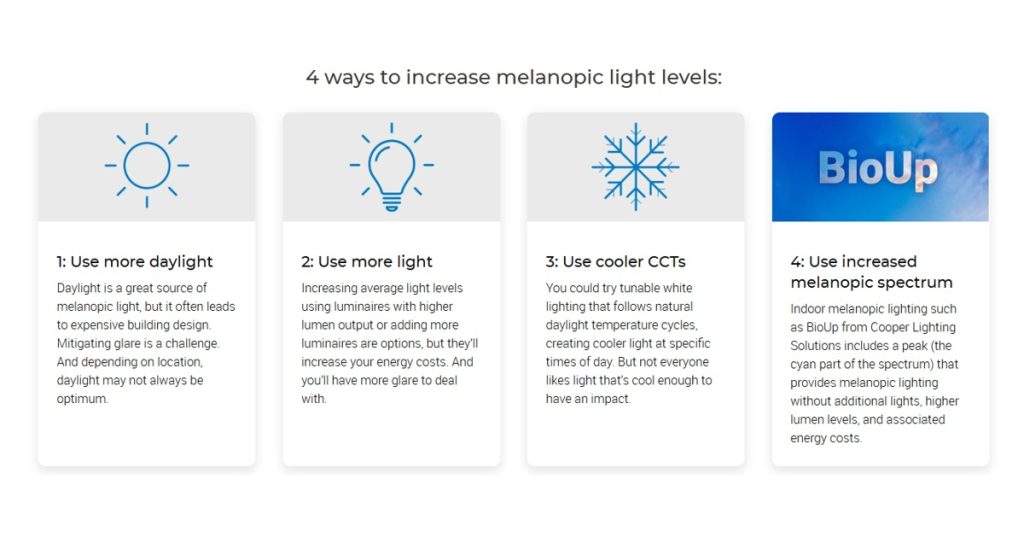
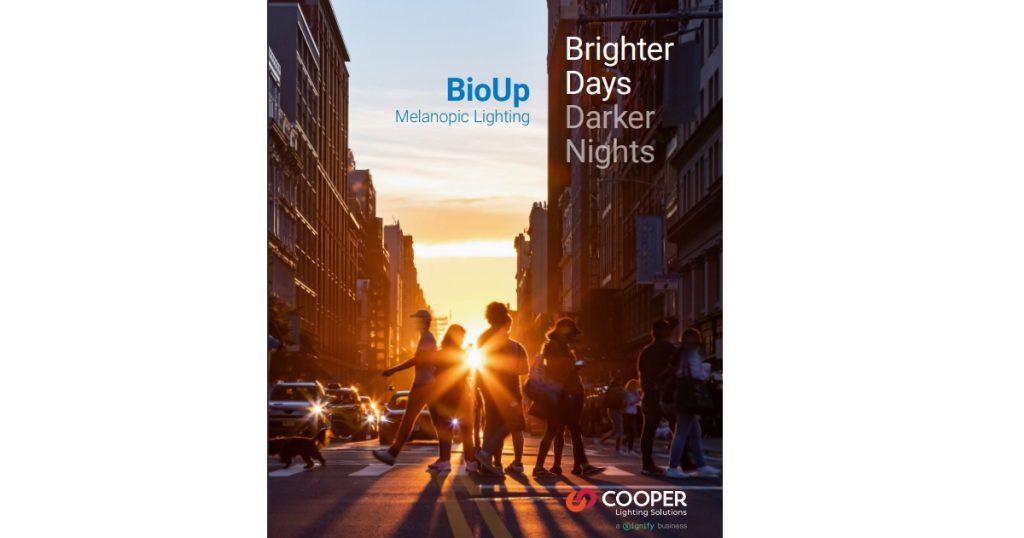
Learn how BioUp technology from Cooper Lighting Solutions uses cyan light to provide melanopic lighting without the need for additional lights and higher lumen levels, and their associated energy costs.