Isabelle Lessard, Engineer Responsible for Urban lighting in Montreal — a Passion that Looks Beyond Prejudices

October 16, 2018

Line Goyette

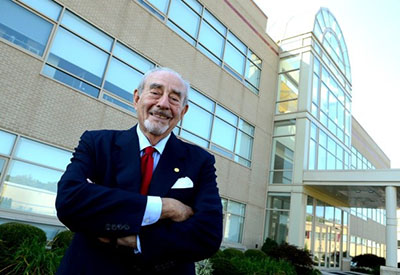
The title is a bit long, but it provides an immediate idea of the person behind the installation and management of intelligent lighting in Montreal, a project that has received awards and nominations since its commissioning and collected a following. Montreal is converting over 134,000 streetlights to LEDs and also implementing an intelligent lighting management system. Behind this revolution, a young electrical engineer, Isabelle Lessard. Read on to learn more about her journey, the challenges she has identified, and how she sees the future of urban lighting. 

A graduate of the School of Advanced Technology (ETS), it was by chance that Isabelle Lessard fashioned a career in lighting. “I loved science, was leaning towards astronomy, and came across a smart home project at the Institute Teccart. That’s when I turned to electronics, then to ETS, for electrical engineering. At the end of my studies I was hired at Nortel, which as we know went into a resounding bankruptcy one year after my arrival. We were then thousands of engineers looking for a job. The City of Montreal was looking for an outstanding specialist. I was assigned to traffic lights and street landscaping, which included electricity and lighting. Retirements and reallocations of human resources meant that in 2005 I had become the city’s only lighting professional.” 

It might seem difficult to navigate between political and administrative objectives in a public administration, but Isabelle tells us, “I had opportunities and bosses who trusted me completely and offered me freedom and the necessary latitude in my work. I proposed the lighting conversion project in 2010, and my employer gave me carte blanche.” 

Challenges at the height of her passion for lighting awaited her in this project to convert streetlamps to LED and intelligent lighting. Some were specific to a public administration: in-depth studies of best practices, pilot projects, feasibility study, and presenting a $100 million project to municipal leaders. 

“The project started in 2015 with a tender for the intelligent lighting system. “Our feasibility study was at 4000 degrees Kelvin and it was at this point that the controversy over blue light and health made headlines and became controversial. The public health direction notice delayed and the municipal government decided to go to 3000 K.” 

The tender for the luminaires was issued in 2017 and the first installations took place in the fall. The intelligent system was developed in parallel.

“We were bold in the system we chose. We made a bet that turned out to be a winner. For me it was unthinkable that the city would attach itself to a single manufacturer for the next 20 years. We needed more than promises of interoperability to control 135,000 luminaires. We have attracted the market to our vision and demanded the proven interoperability of three manufacturers. The market has met the needs of the city. We have won our bet and it is now a model that can be replicated by other cities. It’s a world premiere.”

Where is the smart city headed?

Cities need a robust infrastructure to allow the passage of all types of data, cameras, motion detectors. There will be fibre cohabitation, radio frequencies, wireless, the platforms are interconnected. Urban lighting fixtures will also have to evolve. One of our challenges now is to maintain the aesthetics of a lamppost while grafting the multiple sensors and systems necessary to provide services and meet the city’s needs. By day the lamppost is an architectural element; in the evening it provides lighting and safety functions. We need to integrate intelligence and meet the needs of all the city’s services while keeping in mind that Montreal is a UNESCO City of Design. 

Another challenge is to keep people informed. Sensationalist headlines about blue light have created feelings of anxiety among citizens. We need to teach people that our way of designing lighting with LED technology is more efficient, that we need less light for the same lighting, and that 100% of the light is directed where it is desired. Standards and recommendations lag behind the technology; we need to review the photometric studies. 

“Lighting control systems will be imposed everywhere,” says Isabelle. “It’s just a matter of time, and systems will have to be adaptive. The infrastructure we are putting in place today will eventually be used for other services.”

Isabelle has fought prejudices in public administration and public health, married aesthetics to intelligence, and guaranteed system interoperability. What about being a woman in her community? 

Her biggest challenge was to graduate from the ETS. There were very few women. Before us we lived in a world of men, but in the new generation there is little difference between men and women. Lighting is not taught in school, it is a new profession that we learn together by investing time, energy and a large dose of passion.


Line Goyette is Managing Editor of EIN; linegoyette@kerrwil.com
Related Articles

  • |

    Artika: Spring Kitchen Lighting Tips

    After a long winter, spring is finally here to make our world feel bright and full of life, and some well-thought-out tweaks to your kitchen lighting can do the same for your home! These relatively simple changes can not only make your kitchen more functional but can also bring together the overall look and feel of the space. Let’s dive into Artika’s spring kitchen lighting tips. Learn how the right blend of task, ambient, and accent lighting can bring the functionality and atmosphere of your kitchen to another level!

  • |

    Modern High Ceiling Lighting Ideas 

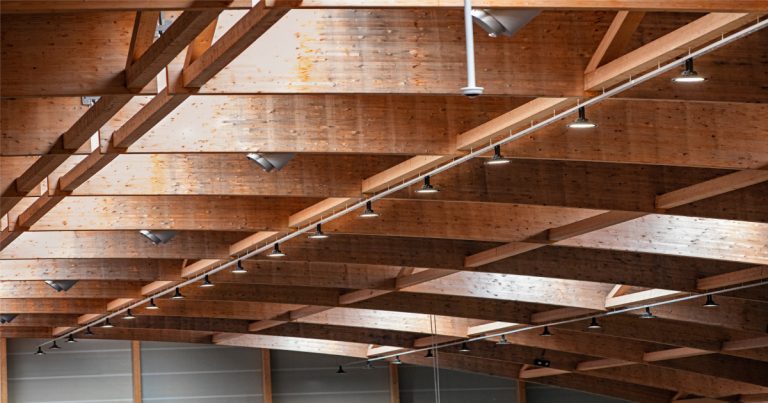
    High ceilings, distinctive in contemporary architecture, create a sense of spaciousness and timeless ambiance. However, lighting these elevated spaces presents unique challenges. Whether you need a cozy light for your bedroom or a practical solution for your kitchen, Ledvance can provide inspiration and guidance to effectively illuminate your high-ceilinged space.​ High ceilings pose intricate lighting challenges, from achieving uniform light dispersion to balancing practicality and warmth. Addressing these challenges requires careful design considerations. Traditional configurations struggle to achieve uniform light dispersion, complicated by issues like light path and scattering. This complexity underscores the importance of creating a comfortable lighting environment in high-ceiling spaces. Diverse spaces further intensify the challenge due to varying lighting needs. In high-ceiling environments, designers must carefully allocate light to accommodate specific activities, balancing practicality and the creation of a warm atmosphere. Despite the range of available high-ceiling lighting products, limitations persist, including affordability and the ability to meet nuanced lighting requirements. Achieving a harmonious balance between functionality, aesthetics, and cost remains a crucial consideration for designers and customers alike.

  • |

    How Daylight Harvesting Works in Hospitals

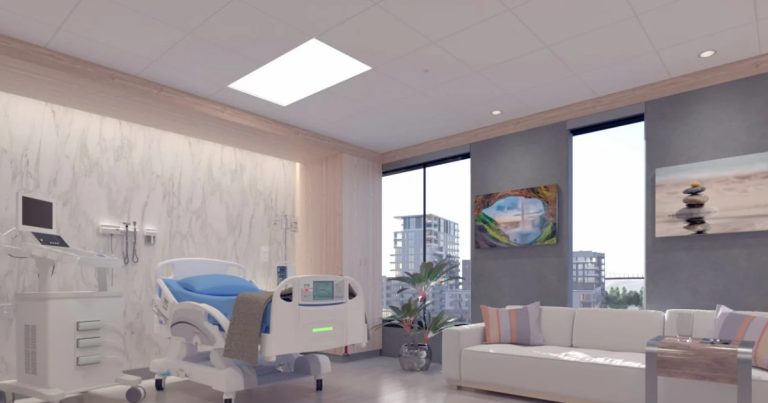
    Sunlight is abundant and universally appreciated—so why not put it to work indoors? That’s exactly what daylight harvesting does. By automatically adjusting electric light in response to the natural light streaming in through windows, this strategy helps hospitals reduce energy use, lift patient and staff comfort, and stay ahead of evolving energy codes. The catalyst is compact yet powerful photosensors that continuously monitor a space and signal adjustments as conditions change. In practice, these sensors measure the amount of daylight entering patient rooms, corridors, lobbies, or other hospital zones. That data is fed into a lighting control system. When daylight is strong enough – that is, it fulfills the light levels of a space – the system dims or even switches off the electric lighting, and as natural light fades, whether from cloud cover or dusk, the fixtures brighten again. The seamless interplay ensures that spaces always feel evenly lit, no matter the hour.

  • | |

    D4i: Standardizing Luminaire-Level Control

    November 23, 2022 By Craig DiLouie The DALI Alliance recently extended DALI-2, which standardizes interoperability and control of LED drivers and sensors, with a version that more finely addresses the needs of the Internet of Things, which calls for individual device addressability, connectivity, and two-way data exchange. Called D4i, the standard enables real-time data acquisition for measuring…


Changing Scene

  • Omnilumen Announces Representation of Teron Lighting

    New to Omnilumen’s line card! They are excited to represent Teron Lighting, bringing specification-driven architectural lighting solutions designed for commercial, hospitality, healthcare, education, and multi-family spaces. Built on decades of lighting expertise, they deliver reliable performance, versatile designs, and solutions made for today’s projects. Read More…

  • August 18, 2026 - Symmetry Lighting Announces Ella Schmohl as New Specification Sales Rep

    Symmetry Lighting Announces Ella Schmohl as New Specification Sales Rep

    Meet Ella Schmohl, Symmetry Lighting’s new Specification Sales Rep!⁠Ella holds an Interior Design Certificate with Distinction from BCIT and has over eight years of experience in the lighting industry. With a strong background in specification sales, project coordination, and customer service, Symmetry Lighting is very excited to have Ella join their team. Read More…


Design

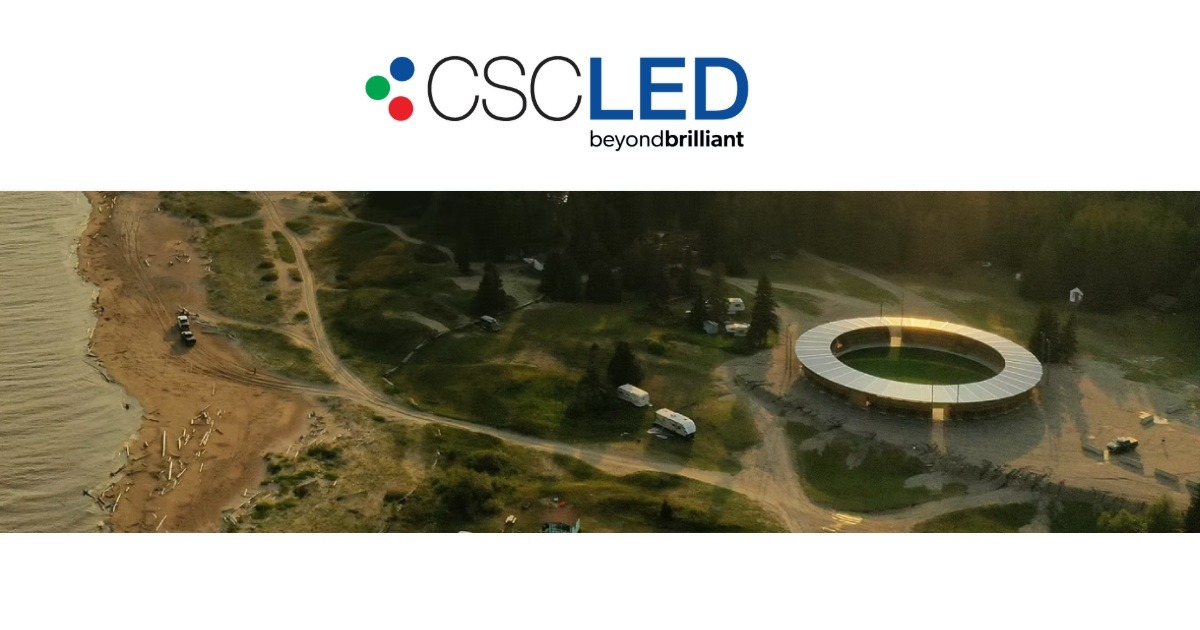
  • CSC LED: Case Study – Lighting the Biigtigong Nishnaabeg Arbour for Community & Culture

    CSC LED: Case Study – Lighting the Biigtigong Nishnaabeg Arbour for Community & Culture

    Located at the mouth of the Biigtig Zibi (Pic River) along the shores of Chi-Gaam (Lake Superior) near Marathon, Ontario, the Biigtigong Nishnaabeg Arbour is envisioned as a lasting community gathering place. Designed to honour tradition while creating a welcoming space for future generations, the Arbour serves as the heart of cultural celebrations, intergenerational dancing, and community events. The… Read More…

  • Stanpro: Lighting Project Highlight – Hemsleys Jewellers, Montréal, QC

    Stanpro: Lighting Project Highlight – Hemsleys Jewellers, Montréal, QC

    Established in 1870 by Richard Hemsley, Hemsleys Jewellers is the oldest jewellery store in Canada. A family-owned business established over 150 years ago. Hemsleys has been serving Montreal communities for generations. It is well known within the luxury gemstone industry that lighting plays an integral role in preserving the visual authenticity of precious stones and… Read More…


New Products

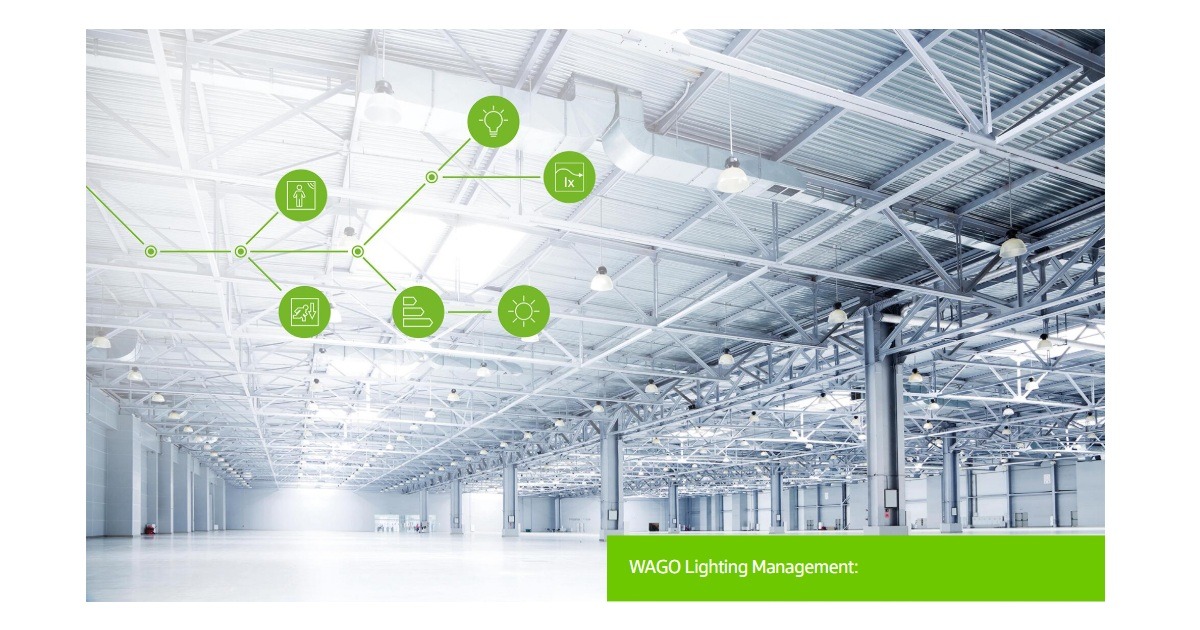
  • WAGO: Lighting Management Solutions

    WAGO: Lighting Management Solutions

    WAGO Lighting Management is a sophisticated solution for lighting control in large spaces such as production facilities and warehouses. Using a combination of predefined hardware and user-friendly software, WAGO offers a lighting management system that facilitates design and commissioning of new lighting systems while providing numerous additional advantages for their operation. Read More…

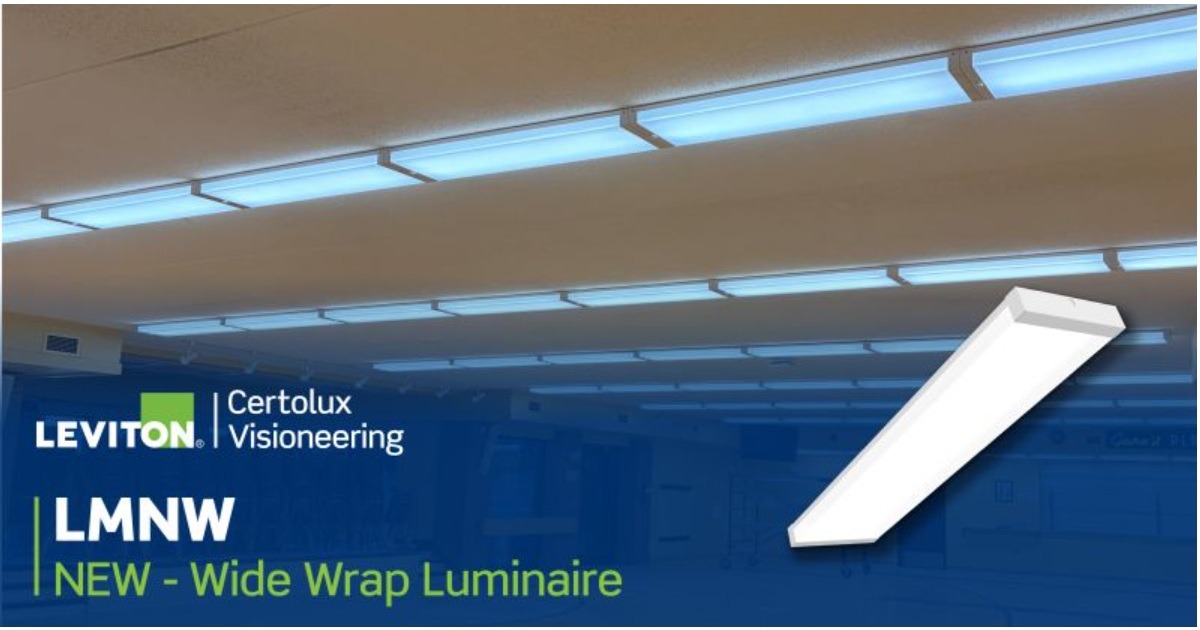
  • Leviton – Certolux Visioneering (Viscor): LMNW Series LED Wide Commercial Wrap Luminaire

    Leviton – Certolux Visioneering (Viscor): LMNW Series LED Wide Commercial Wrap Luminaire

    When dependable row mounting performance and broad, uniform illumination are required, the LMNW wide commercial wrap delivers a practical solution for both renovation and new construction projects. Designed as a versatile commercial wrap, LMNW combines a wide footprint with a fully illuminated polycarbonate lens to provide smooth, even light distribution while helping simplify upgrades from… Read More…