Light at Night and the Inequality Gap: Progress and Challenges
March 9, 2023
In December 2021, the DLC hosted a webinar that explored issues related to “Bridging the Inequality Gap” in outdoor nighttime lighting. The conversation introduced research on how lighting contributes to discrimination and inequity in underrepresented communities, and generated heightened interest among attendees.
To follow up on the research and work presented, the DLC sat down over Zoom with two of the 2021 webinar’s participants for an update. Below is the first of a two-part blog series based on our conversation with panel moderator and organizer Lauren Dandridge, principal of the lighting design firm Chromatic and University of Southern California architectural lighting design professor, and panelist Don Slater, Associate Professor of Sociology at the London School of Economics and Political Science.
Shortly after the DLC’s December 2021 “Responsible Lighting at Night: Bridging the Inequality Gap” webinar, moderator Lauren Dandridge expressed hope that continued dialogue about nighttime lighting and equity in the year ahead might “identify the right places to go next and illuminate pathways forward”. Talking with the DLC a year later, Dandridge and fellow webinar panelist Don Slater noted that progress is slow, but said efforts during 2022 made some headway toward easing inequities in nighttime lighting practices that have harmed the wellbeing and social fabric of marginalized neighborhoods for a century.
Positive developments, Dandridge said, included the Illumination Engineering Society’s November 2022 Light and Justice Symposium, as well as work by Light Justice, an organization formed to “create a specific home for the kinds of information that research on light and equity produce”.
“I’ve met more designers that are starting to talk about community engagement as a specific task and part of the design process in a more strategic and operational way,” Dandridge said. “I wouldn’t say it’s top of mind for every person in lighting, but it definitely has moved forward.”
International Light Equity
Across the Atlantic in England, considerations about nighttime lighting and equity issues are generally further along than in the US, said Slater, who co-leads a team of sociologists and lighting professionals exploring the role light plays in social life and how leading-edge social research can produce better lighting. While one year is too short timeframe to expect much progress, he said, “things have improved massively” compared to ten years ago “and are continuing to improve”.
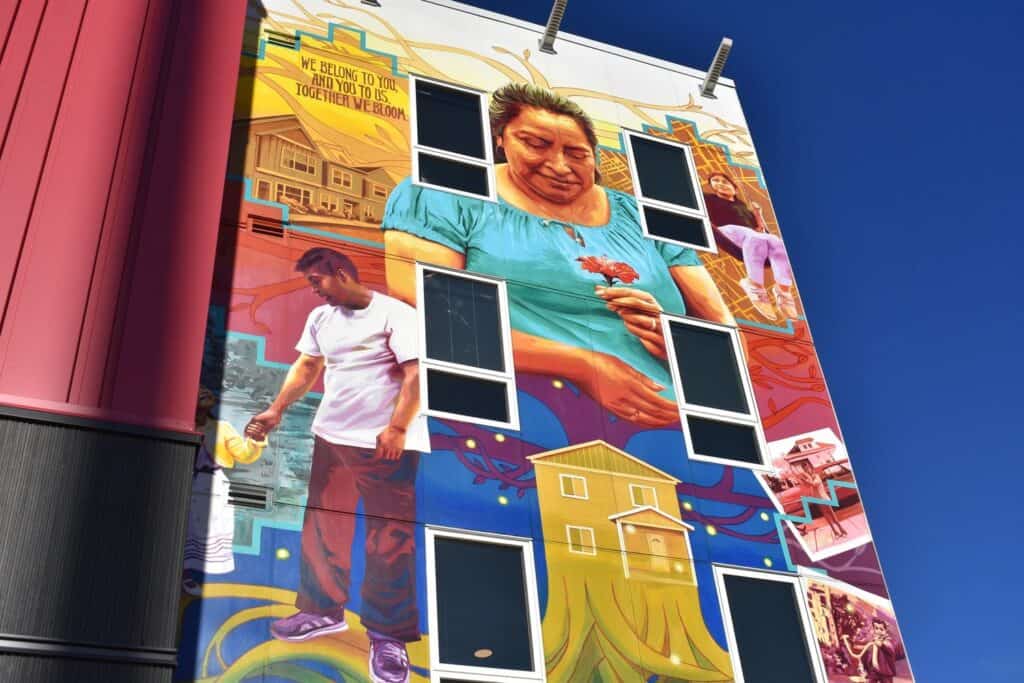
Las Adelitas, a new community by Hacienda CDC in Portland Oregon, incorporates good quality lighting for the community and features an example of downward-pointing lighting that minimizes light pollution. Photo courtesy of Hacienda CDC.
“When I talk to cities or manufacturers or when I talk to residents in the community, it no longer seems strange to be connecting lighting and social issues,” Slater said, noting that “master planning” that relies on community education, involvement, and input into lighting project design is a mechanism “used widely now” in London.
On both continents, however, the dialogue around societal benefits of lighting continue to focus heavily on sustainability and cost rather than issues relating to lighting that is too bright, too dim, or wrongly placed in underrepresented communities. The misguided narrative that “more light is tied to more safety” continues to dominate, Dandridge said.
Light at Night as a Social Issue
“There’s no consideration about quality of light beyond its ties to sustainability and cost that cities are looking at. Of those three things, quality will come as the tertiary item for sure almost all the time,” she said.
What’s more, Dandridge said she fears that any momentum for equality in lighting that has built since the “strength and fervor” of the social justice movement in 2020 may wane as time passes and the movement becomes “less trendy and popular”.
Meanwhile, both Dandridge and Slater pointed to skyrocketing interest over the past year in the dark sky movement. Again, however, it’s seen mainly as an environmental, rather than social, issue.
“When dark sky gets brought up, it’s always brought up as an environmental issue, not as an equity one. No one is talking about who has access to the night sky. It’s just that there is a night sky to be seen because that’s what’s good for the planet,” Dandridge said.
Looking ahead, the “big battle”, Slater said, is for lighting design to consider communities not as monoliths but as mosaics of diverse populations – from senior citizens to teenagers – and incorporate the outdoor lighting needs of each.
“If our interest is in inequities, then our first attention has to be on differences and not use concepts that obliterate differences or make differences less visible,” he said. “How does light relate to very, very different kinds of people trying to do very different things with different kinds of resources and support? How do we share streets and how does light allow us to share streets even with conflicting needs?”
More Information Available Here