Steven DenBaars: Future of Lighting Lies in Laser
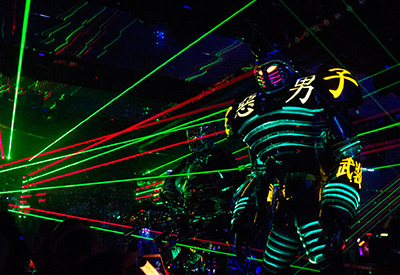
The future of lighting will be laser, said Nobel Laureate in Physics Shuji Nakamura and fellow colleague Professor Steven DenBaars of University of California, Santa Barbara (UCSB) at an exclusive forum hosted by Taiwanese leading chip LED manufacturer Epistar on Wednesday at the company headquarters in Hsinchu, Taiwan.
In an article published by LEDinside, Chief EditorJudy Lin quotes Nakamura and BenBaars as saying laser diodes will become a next major lighting field. Lasers are similar to blue LEDs when it comes to the energy transition level at E3, which is about 70% compared to LEDs 75%, said Nakamura. Finding a good omni-conduct on sapphire will be important in developing laser technology, but making stable lasers will be the greatest challenge, he added. Nakamura even suggested collaborating with Epistar on certain research.
According to DenBaars, the next major laser technology will be quantum well lasers, specifically semi polar InGaN laser diodes. “It is a very difficult technology, but I think difficult technology is good for keeping out competitors,” said DenBaars.
It will take some time before laser reaches the masses because of costs and eye safety issues, said Nakamura and DenBaars. According to DenBaars it took automotive maker BMW nearly 18 months before the BMW i8 laser headlights launched in April 2014 was brought to a safer level. German car maker Audi, which also launched automotive laser lights, is retailing the option at EUR 1,500 (US $1,611), he added. By adding lasers to automotive headlights, car manufacturers were able to raise visibility to 1 Km, which will be attractive to users that highly value safety.
Another laser market application is projectors, but there is still the challenge of raising the efficiency of green lasers in these devices. In 2001, DenBaars and Nakamura made the first green laser, but it might take another three to five years to progress the technology. At the moment, DenBaars believed laser on phosphor would be the best solution. For cinema blue laser on phosphor are ideal, and other applications can also include mobile phones or large displays. The performance of green lasers will determine the market penetration rate of laser displays, added DenBaars.
Laser lighting is projected to remain a niche market in the next three to four years. Although, DenBaars hopes mass production will be on the horizon within the next four to five years. For lasers to be widely adopted in the residential market certain spectrum changes have to be made to make it eye safe, he added.
Read the full article: http://www.ledinside.com/news/2015/4/steven_denbaars_future_of_lighting_lies_in_laser?utm_source=twitterfeed&utm_medium=twitter.