Here’s How Wireless Lighting Control Will Save Businesses, Campuses and Cities Money
JP Bedell
At this point, I’m not breaking any new ground when I tell you that lighting control systems, especially automatic ones like occupancy sensors and daylight sensors, can radically reduce energy consumption. Traditionally deploying lighting control beyond the standard NEMA photocell in exterior roadway and area lighting applications was prohibitively expensive with very little added benefit. All of that is changing with the advent of wireless area lighting controls and dimmable LED.
I think it’s really important to highlight where the marriage is between LED and lighting control. Now that LED is bright enough and durable enough to meet the needs of most exterior lighting applications, we have, for the first time, a dimmable exterior light source.
Why is this so important? High pressure sodium and metal halide sources are only switchable and require a warm up time before coming to full brightness. This meant that binary on/off control with a photocell was basically the best we could do in terms of energy savings. Enter a dimmable light source like LED and the game radically changes.
To give you an example, imagine a baseball stadium on game night. Traditionally on a game night 100% of your area and parking luminaires would need to be on. But with adaptive lighting controls, we’ll see how a flexible control system could greatly reduce the amount of unnecessary illumination used and thusly save a ton of energy and operational expense.
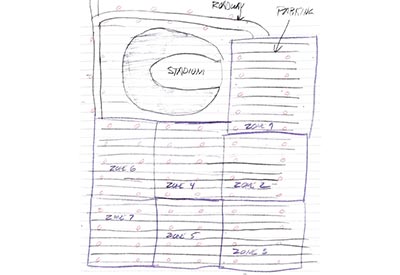
Take a look at my very crude sketch. What I’ve imagined here is taking the parking lot that was once just one big area and breaking it up into zones. The zones allow facilities to create rules for how the lights will behave.
What I’m picturing is a weekday game night scenario where the stadium will be about 40% occupied. Since some folks took mass transit, imagine the parking lot is 30% occupied for the game.
Instead of lighting 100% of the parking area 100% of the time, now we can adapt the lighting to what is necessary on this particular game day. Here’s just one scenario:
• all lighting is activated by the lack of natural light as measured by the photocell
• lighting in zones 1 and 2 (the closest to the stadium) will remain at full brightness throughout the game
• zones 4 and 6 will dim to 50% of their total output unless triggered to full by the occupancy sensor
• zones 3, 5, and 7 will dim to 25% of their total output unless triggered by the occupancy sensors
• the roadway that leads to the stadium will remain at 100% and is triggered based on the teams schedule
This kind of combination of scheduling, daylight harvesting and occupancy sensing can yield anywhere from a 30% to 60% savings in energy.
It’s important to see that these examples do not include LED fixtures, meaning that even more energy savings are on the table. Echelon is hosting a webinar specifically geared toward universities, educational campuses and parking lots. Engineers, architects and facilities managers interested in saving energy should check out Echelon’s June 30 webinar (for a link, visit the LDS Calendar.
JP Bedell is a Lighting Guy from New York City. Sales rep and blogger for SDA Lighting.Stan Deutsch Associates, founded in 1962, is dedicated to offering specification-grade lighting products to the local design community. SDA offers quality lighting solutions to commercial, retail, hospitality, institutional, healthcare and educational markets; http://www.sdalighting.com.