Smart Buildings and Grids Keys to the Smart City
April 11, 2022
The promotion of sustainable energy generation, the reduction of consumption in buildings and the expansion of electromobility are central building blocks on the way to the energy turnaround by 2030. Due to rapidly rising prices for gas and oil and the need to secure the supply of raw materials, the subject of energy supply is now taking on a whole new urgency. Concepts for the networked and intelligent city of the future – the smart city – already exist. At its heart is the safe and efficient networking of people, places and infrastructures.
In recent years, the trend has been towards urbanisation. Since space in cities is limited, it must be used optimally. Expanded living space is being created, for example, through sustainable additions to properties in timber construction. However, the basis for smart cities and thus an efficient and secure energy supply is the electrification and digitalisation of the infrastructure. Once this step has been achieved, the economic use of wind and sun as sustainable energy sources (smart grids) and the coupling of sectors are possible.
Key factor innovation
Technological developments and innovations play a key role in the concepts of smart cities. They enable completely new approaches to solutions that are now absolutely topical for politics and society. The invention of the lithium-ion battery, for example, was decisive for the development of sustainable electromobility. The economic use of wind and sun as regenerative energies is only possible through technical excellence in generation, transmission and distribution (“smart grid”). Of central importance here is the further development of information and communication technology to ensure secure and efficient networking. In the “final development” of a smart city, people, places and infrastructures will be networked with each other. Already a reality today: the generally stronger networking and data collection of technical trades within buildings.
Smart Buildings – the Basis of the Smart City
Smart buildings are the basis of a smart city. This is where residents spend a large part of their time, whether living (“smart home”) or working in functional buildings (“smart building”). Through comprehensive networking, the data from the numerous sensors are available to all trades and thus ensure, among other things, lower energy consumption. According to the German Electrical and Electronic Manufacturers’ Association (ZVEI), intelligent building automation can reduce energy consumption and CO2 emissions by 30 to 40 percent. Self-learning systems enable the intensive involvement of building users, for example by controlling lighting, air conditioning and heating according to demand or by displaying individual escape routes on mobile devices. In addition, security systems can be implemented, for example, that not only detect dangers such as fire or burglary, but can also predict them.
Smart Lighting – a building block for energy saving
Another important part of the energy-saving potential is lighting. According to the Arbeitsgemeinschaft Energiebilanzen (Working Group on Energy Balances), lighting accounts for about 13 percent of German electricity consumption. The introduction of LED luminaires meant a giant leap forward for lighting technology. They save up to 80 percent of energy compared to conventional luminaires. Smart light also has a strong influence on people’s well-being and sense of security. By adjusting the light temperature and light colour of LED luminaires, individual scenarios can be realised that increase well-being and productivity (“Human Centric Lighting”). On a larger scale, LED street luminaires can form the backbone of a smart city. Equipped with WLAN, charging function for e-cars, emergency call button or sensors for traffic and weather measurement, they are an important component of the networked IoT. Pilot projects have already been installed in Berlin-Adlershof and in Santander, Spain.
Smart Mobility only with e-charging infrastructure
Many cities have long suffered from gridlock and high pollution levels. New mobility concepts are therefore the basis of future smart cities. In addition to intelligent traffic management and networking of transport modes, the intensive expansion of electric mobility is the key to this. While the signs are pointing to growth in the registration of electric vehicles, there is still a need to catch up in the expansion of the necessary charging infrastructure. In the smart city, sufficient charging points must be available that are coupled with intelligent charging management. Ideally, the latter is integrated into an intelligent power grid (“smart grid”) that provides regenerative energy independently of time and economically. Then the overloading of the infrastructure can be avoided.
Conclusion and outlook
The challenges of the future, such as urbanisation and climate change, can only be solved with forward-looking concepts and innovative ideas. Smart cities are no longer a vision, but are already being implemented. As early as 2014, the EU named 240 European cities that are pursuing more or less advanced smart city concepts. In order to move beyond individual measures and pilot projects to efficient solutions, an intensive exchange between all stakeholders is necessary, both nationally and internationally. Only if political decision-makers, urban planners, building operators, architects, specialist planners, installers and also citizen representatives exchange ideas and work out viable solutions together will smart cities become a reality in the near future and be accepted by their inhabitants.
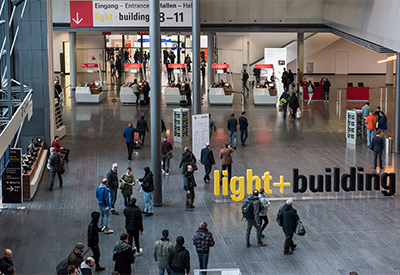
Go HERE for more information on Light+Building