Can We Illuminate Our Cities and (Still) See the Stars?
Oct 26, 2021
S. Bará et. al/International Journal of Sustainable Lighting IJSL (2021)
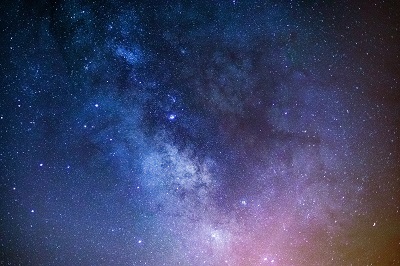
Photo courtesy of Unsplash.com
Could we enjoy starry skies in our cities again? Arguably, yes. The actual number of visible stars will depend, among other factors, on the spatial density of the overall city light emissions. In this paper it is shown that reasonably dark skies could be achieved in urban settings, even at the center of large metropolitan areas, if the light emissions are kept within admissible levels and direct glare from the light sources is avoided. These results may support the adoption of science-informed, democratic public decisions on the use of light in our municipalities, with the goal of recovering the possibility of contemplating the night sky everywhere in our planet.
A common tenet of the dark skies movement is to try to preserve the dark areas still existing in the world, avoiding their further deterioration. This position, often implemented through different figures of protection like certified Starlight Tourist Destinations [1-2], IDA’s International Dark Sky Places [3], and other astro-tourism initiatives [4-8], not only intended for pristine dark sites, but also addressing urban parks and star observing spots in polluted areas, has brought extremely significant benefits to the cause of the night and should no doubt be further promoted. Notwithstanding that, a purely defensive, reactive stance seems to be nowadays insufficient for ensuring the future of the dark nights in the planet. The persistent increase of radiance and illuminated surface [9] progressively encroaches the dark areas, reducing their size and natural values [10-12]. The dark territory to defend becomes progressively smaller and fragmentary, breaking in many cases the continuity of the nocturnal ecological corridors [13]. A related ethical and political issue is whether or not we should collectively renounce to restoring the quality of the night in areas already deteriorated, particularly in the most conspicuous ones, our urban nuclei. It is often taken for granted that the night skies are irremediably lost there, due to the huge amount of light produced in our urban agglomerations. Conventional wisdom considers the present level of emissions unavoidable. There is however an ongoing trend to reassess the validity of some “old truths” regarding the required light levels in cities: modern research fails once and again to find convincing reasons to support the actual recommendations for road lighting [14], be it in the name of a purported traffic safety, fostering of compulsive consumption, or the even less proven effect of increased photons densities when it comes to avoid some behaviors, see e.g. [15-20]. Recovering the night sky in our metropolitan areas should therefore not be discarded a priori. The explicit position of this short paper is that decidedly remediating deteriorated skies should be the option by default, and that this goal should not be abandoned excepting where and when proven unfeasible.
To download the article https://arxiv.org/ftp/arxiv/papers/2109/2109.05310.pdf