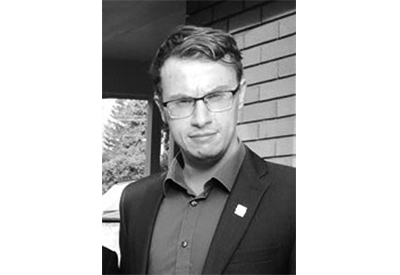
Ask an EP: Chris J. Bishop
April 7, 2020
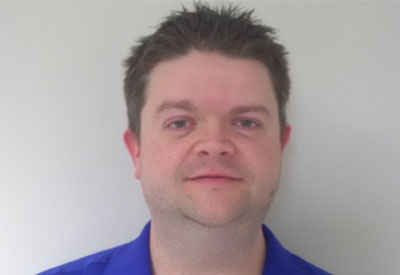
The president of Illumenedge, a Toronto-based horticultural lighting design agency, hopes his firm can be part of the solution to the global food crisis.
Why lighting?
My Dad. He’s always been passionate about lighting. He’s been involved as a Philips agent in the Southern Ontario region for almost 30 years. Without his guidance and expertise, there is no way I would’ve been able to accomplish what I have so far.
I chose horticultural lighting in particular because when I was coming out of school, Canada was approaching cannabis legalization. I saw a massive online interest in lighting for horticulture, but very little resources. The other thing I noticed was the lack of educational, unbiased design agencies. Most horticultural lighting was being sold direct, so I started Illumenedge in 2017 with the goal of disseminating accurate and photorealistic horticultural lighting designs with the best solution possible.
Favorite project?
Our active redesign/retrofit of Ripley’s Aquarium. The manager of life support systems contacted us because of our involvement in the niche lighting realm, including aquaculture applications for the cultivation of aquatic plants and animals. They needed highly specified lighting for various exhibits and spaces. In one setting, we used a 7000K, 10-deg spotlight to create a “deep blue sea” effect. It was exactly what Ripley’s was looking for. Bringing forward solutions for our client’s issues is always satisfying, but this was something else.
Best part of your job?
The tours and site visits. Typically, lighting site visits aren’t the most exciting aspect of the job, however, with horticultural lighting it is totally different. Most of these facilities, whether cultivating cannabis, leafy greens or insect larvae, will teach you something amazing and unique during your visit. There are so many individuals I encounter with the best stories from all over the world. With light being utilized as a resource in these facilities, the high-output demand and specificity of wavelengths create incredibly particular requirements for each project and application.
Biggest obstacle you’ve encountered?
Proving myself within an emerging industry. With horticultural lighting being such a focus today, there is a lot of competition within the market. Initially I felt out of place, but once I sank my teeth into a few detailed projects, I became much more confident. Additionally, being a young adult starting my own business, I definitely experience hesitation from older parties when initially meeting. I have to always prove myself, but that’s an enjoyable challenge.
Most important thing for the future of the lighting industry?
The biggest surprise will be the increased focus on horticultural lighting after we begin experiencing a food crisis. Indoor farming installations have consistently been cultivating nearly 400-times more produce per sq ft than traditional agriculture. We’ll need many more horticultural lighting designers and experts across the globe to help create successful indoor farming facilities.
What’s next?
We’re looking forward to working with more indoor farmers. We’re going to see a massive interest develop around vertical farming in the coming years and I’m excited to be a part of that. It’s such an awesome space seeing the combination of traditional agriculture and new technologies creating these amazing environments. Alongside collaborating with growers, I’m hoping to expand our network and connections with other lighting designers to assist in their introduction to horticultural lighting, and help assist them in the learning curve, terminology and differences from traditional lighting.
Published with the permission of IES. This article was first published online by the Illuminating Engineering Society (IES)