Lowering Energy Usage in Hotels Without Sacrificing Guest Experience
Feb 4, 2020
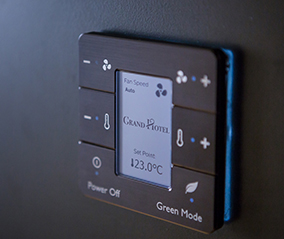
A study by Cundall shows that for mid-scale and luxury hotels, using Interact Hospitality can deliver significant energy savings without compromising on quality and guest comfort. This connected guest room management system allows for intuitive guest room management in a single dashboard. Compared to rooms with no smart controls in operation, a luxury hotel can consume 28% less energy per guest room at 80% occupancy. When the guest uses the Green Mode on the thermostat an additional 10% energy saving can be achieved.
Hotels are big players when it comes to energy consumption, consistently ranking among the highest energy consumers of the tertiary building sector, which focuses on delivering services. One possible explanation for high energy use and inefficient energy practices, is that hotels often prioritize guest comfort and experience over everything else. But much more can be done than asking guests to opt-in to less frequent towel changes and the increasing use of refillable toiletry dispensers Cundall’s study shows how integration of control systems into key building services (air conditioning, lighting and power), can play a major role in reaching the energy reduction targets set by the International Tourism Partnership[1], while maintaining guest comfort.
Cundall’s study shows that 65% of the realized energy savings in the hotels studied were achieved due to the integration between Interact Hospitality and the hotel property management system. The remaining 35% energy savings are achieved due to the real-time occupancy control in the guest room
 “Based on seasonal changes, the Interact Hospitality system provides support to automatically update temperature setpoints across the hotel, balancing energy use with optimal guest comfort,” said Marcus Eckersley, Managing Director SEA for Cundall.
“Although this study has presented significant energy savings for hotels in hot climates within Southeast Asia, Middle East and North Africa, we anticipate similar savings from heating for hotels in temperate climates, like Europe and North America. Hotel operators can expect favorable returns on investment, compared to guest rooms without a smart control system in operation,” Eckersley added.
Through its open Application Program Interface (API), the Interact Hospitality system communicates to various hotel IT systems, from housekeeping to engineering, as well as guest tablets.
Cundall’s study shows that 65% of the realized energy savings in the hotels studied were achieved due to the integration between Interact Hospitality and the hotel property management system. The remaining 35% energy savings are achieved due to the real-time occupancy control in the guest room.
“Commonly used temperature setpoints used by hotels often make guests feel too warm or too cold, marking vast gaps between indoor and outdoor temperatures. Working with Cundall, recommendations of temperature setpoint ranges have been created, commonly referred to as adaptive comfort hypothesis,” Segers added. Understanding the bandwidth of comfortable temperature set points gives more options for energy savings.
“Based on seasonal changes, the Interact Hospitality system provides support to automatically update temperature setpoints across the hotel, balancing energy use with optimal guest comfort,” said Marcus Eckersley, Managing Director SEA for Cundall.