Hospital Research Project Integrates Circadian Lighting with Functional Lighting, Noise Masking and More
September 24, 2018
A unique solution at a neuro intensive care unit of a hospital in Aarhus, Denmark integrates circadian lighting and functional lighting, noise masking, music intervention, individual info monitors and camera observation. The staff are thrilled with the new initiative.
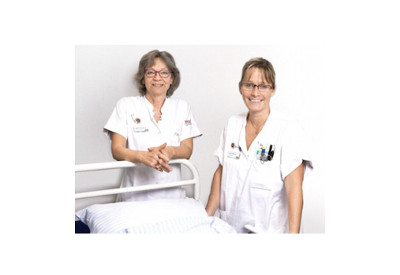
”We have to develop and document the new knowledge about the stimulating patient environment, and ensure that this knowledge becomes implemented and used to optimize the patient environments of the future,” say Leanne Langhorn and Lone Moeslund. Both work at the neuro intensive care unit as a clinical nursing specialist/ RN, MScn, PhD and intensive care nurse/ coordinator of patient care, respectively.
Light, sound and images
As a start-up for the groundbreaking research project, it was defined that optimally, a stimulating patient environment should
- reduce commotion and noise
- optimize the patient’s personal space
- provide individual stimuli
- create calm and a sense of security for the patient and next of kin
- ensure functional light and circadian lighting
- optimize communication
As part of the project, Chromaviso is developing ergonomic circadian lighting further, while scientists form clinical documentation for ergonomic circadian lighting and the integrated patient environment with light, sound, visual information and monitoring. Chromaviso is a firm with expertise in health promoting lighting solutions.
”We cannot say anything definitive about the documented effect at this time, but we are seeing indications that the patients benefit from the stimulating environment,” says Leanne. ”What is unique about the project is that we an integrated concept with light, sound, visual information and monitoring. This means that we deal with all aspects around the patient. The more the patients understand their surroundings, the more actively they can participate in the early rehabilitation.”
Natural circadian rhythm and improved sleep
The lighting component fulfils the wish for focused light, functional night light, and available daylight. Ergonomic circadian lighting contributes to a natural circadian rhythm for patients as well as staff. The functional night light makes it possible for the staff to disturb the patient as little as possible when doing their work at night. Ergonomic circadian lighting follows the natural rhythm of the sun. It rises in the morning, is the most intensive in the middle of the day, and at night, a specially designed night light with built-in monitoring is turned on.
Ergonomic Circadian Lighting has an immediately noticeable effect on patients as well as staff, and affects the patient’s sleep pattern positively. A patient who gets a good night’s sleep is better rested and thus less confused and consequently ready for early rehabilitation.
Noise reduction and music stimulation
In intensive care rooms, patients are exposed to undesirable sound influence from interior fittings and machines, the other patients, and the staff. The purpose of the sound component of the project is to control the noise impact occurring in connection with emergency situations. This happens through directional sound. Furthermore, music intervention can be used to stimulate the patient. In an emergency situation, it is possible to mask the noise, resulting in less impact on the other patients and their next of kin from what is taking place in the room.
Individual systematic information
An information board is installed on a flexible arm at each bed. The monitor shows who the patient is, where the patient is and what time it is. This makes quick and systematic information possible. Furthermore, you can see the schedule for the day and a general plan for the patient.
It is possible to use the visual component to stimulate the patient, for example with mood pictures and seasonal pictures.
Monitoring as part of an integrated environment
The monitoring provides the most sense of security for patient and next of kin at night. In this way, the staff can observe the patient without disturbing his or her sleep, which is a significant advantage. In emergency situations, when emergency lighting is turned on, the monitoring and the masking noise are automatically activated.
The project is subsidized by The Market Development Fund and has a total budget of DKK 9,6 million. It is a collaboration between Chromaviso, Glostrup Hospital and Aarhus University Hospital. The research related part of the project takes place at the neurosurgical unit at Aarhus University Hospital and the neurological unit at Glostrup Hospital. Both places research the effect of circadian lighting on patients as well as staff.
This article was first published online by Chromaviso, https://chromaviso.com/en/circadian-lighting/cases/intensive-care-unit-aarhus-university-hospital/.