Comments on the AMA Report Concerning LED Streetlighting and 3000K CCT

April 10, 2017
Shirley Coyle
Next month LDS will feature an interview with Shirley Coyle, President of CREE Canada and IES. We asked Shirley to participate in the debate on the AMA’s position on blue light. Here are her comments.
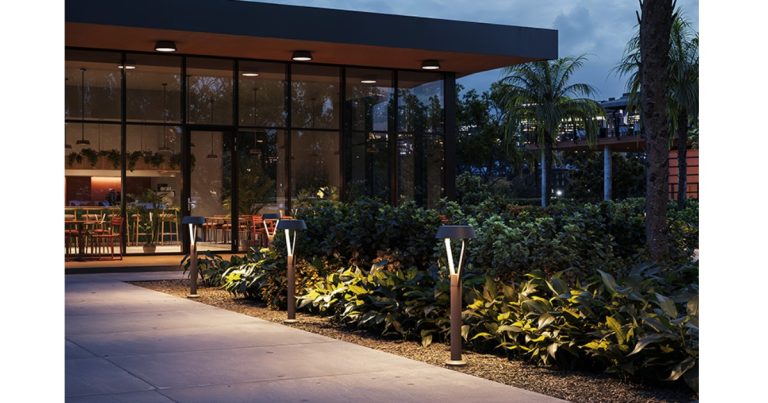
As a manufacturer, Cree is committed to providing quality lighting that is comfortable and doesn’t require the customer to compromise in order to save energy. We have a long history of delivering outdoor lighting, for area and roadway applications, across a range of colour temperatures (3000K to 5700K). What is important to note about the ongoing conversation is that not all LED lighting is created equally, and the technology has reached a point where it’s possible to deliver better experiences with lighting, by providing low-glare, warm, dark-sky friendly illumination. We often find that warmer 3000K CCT in a well-designed, visually-comfortable streetlight is preferred for residential neighbourhoods, while 4000K CCT is preferred for arterial roads and highways.
On the issue of safety, the most obvious flaw of the concerns raised is that CCT is not the issue at all — CCT is an overly simplistic value that describes the colour appearance of a light source, and for these issues the important metric to consider is the specific blue content, and more specifically the melanopic response, which cannot be captured in CCT. And along with spectral content, consideration has to be given to dosage, duration, and time of day.
So there is a disconnect here between real lighting science and those leading the outcry on the basis of CCT. Fifty percent of fatal collisions happen at night time even though only 25% of roadway travel happens at night time. There is a statistics-based consensus that roadway lighting decreases night time collision rates. We light roadways primarily for safety reasons: the goal is to use well-designed roadway lighting to improve visibility for drivers, including their ability to detect other vehicles, pedestrians and cyclists.
Read LDS’ previous coverage of this issue: AMA Issues Guidance on Harmful Effects of High Intensity Street Lighting.