LRC Releases Report on UV Disinfection Products
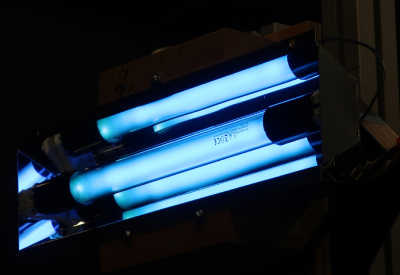
LDS UV LRC 400

Jan 6, 2021

The Lighting Research Center (LRC) recently released its latest publication, Lighting Answers: UV Disinfection Products. This online publication includes information on products that produce optical radiation at specific ultraviolet (UV) or very short visible wavelengths, designed for use in disinfecting indoor building surfaces and/or air. Three key aspects of UV disinfection are considered throughout the document: product effectiveness, radiation safety, and energy use in buildings. 

The publication is organized into a question-and-answer format. Questions were developed based on the results of a survey sent by the LRC to lighting stakeholders in June 2020. Important aspects of UV disinfection discussed in the publication include the wavelengths of optical radiation commonly used for disinfection, key characteristics of UV disinfection products currently on the market, field measurement and assessment of UV disinfection products, and currently available codes and regulations pertaining to these products. 

The publication also provides a concise guide for professionals who are considering the specification of UV disinfection products in buildings, including a discussion on selecting the dose of UV radiation needed to inactivate various types of pathogens (viruses, bacteria, or fungi). Finally, the publication includes the results of LRC testing of twelve UV disinfection products, representing a variety of product types. This analysis includes a review of manufacturer claims of product performance and well as LRC evaluation of other key attributes of product performance. The report was sponsored by the Lighting Energy Alliance, the McClung Lighting Research Foundation, and the New York State Energy Research and Development Authority (NYSERDA)

Go HERE for the full report
Related Articles


Changing Scene

  • Feb 26, 2026 - CDm2 LIGHTWORKS Announces a New Partnership with Omnify

    CDm2 LIGHTWORKS Announces a New Partnership with Omnify

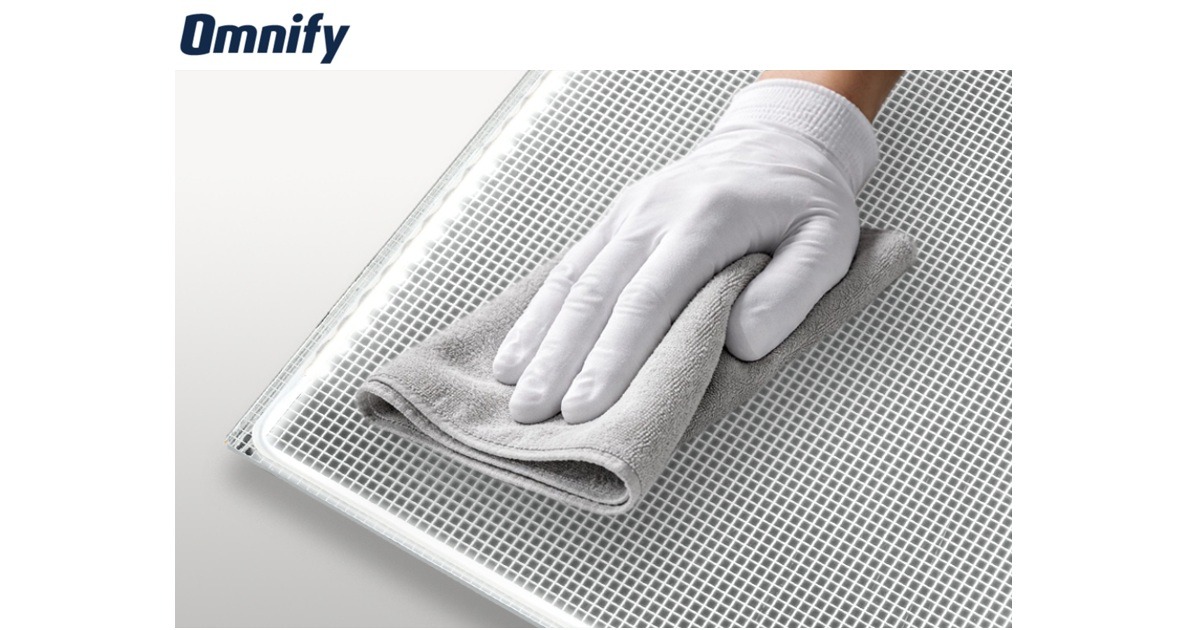
    CDm2 LIGHTWORKS is pleased to announce a new partnership with Omnify, a Canadian expert in high-quality, custom LED backlighting solutions. With more than 20 years of experience and a portfolio of patented, UL-certified light engines and fixtures, Omnify is trusted by designers and builders to transform architectural surfaces into luminous features. Read More…

  • Feb 25, 2026 - Lumenwerx Welcomes Justin Castellano as Their New Midwest Regional Sales Manager

    Lumenwerx Welcomes Justin Castellano as Their New Midwest Regional Sales Manager

    Lumenwerx is excited to welcome Justin Castellano as their new Midwest Regional Sales Manager! Justin brings over 10 years in architectural and commercial lighting, 15 years of consultative sales, theatrical lighting design expertise, and a background in acting. His career has given him a well-rounded perspective across the lighting ecosystem—from specification and sales to production… Read More…


Design


New Products

  • SATCO|NUVO: LED Beam Selectable Linear Highbays

    SATCO|NUVO: LED Beam Selectable Linear Highbays

    SATCO|NUVO’s new LED Beam Selectable Linear Highbays deliver powerful, configurable illumination for high-ceiling commercial and industrial environments. Each fixture features selectable beam distributions of 45°x100°, 65°x95°, or 90°x90°, providing precise control for aisle, general, or wide-area lighting layouts. All models offer 3CCT selectability modes (3000K/4000K/5000K), multiple wattage options across four lumen packages, and universal 120–347V… Read More…

  • Cooper Lighting: PrentaLux Decorative High Bay Gen 2

    Cooper Lighting: PrentaLux Decorative High Bay Gen 2

    PrentaLux is making advancements in lighting innovation and sustainability with 3D-printed luminaires like the Decorative High Bay Gen 2. This new generation offers more versatility with upgraded warmer CCTs (3000K and 3500K) and field adjustable optical distributions. The Decorative High Bay Gen 2 pairs an elegant and customizable aesthetic with the robust output needed for… Read More…