Introducing New Lighting Products – Exclusive Research

June 22, 2022
By David Gordon
New products are the oxygen of manufacturers, and the industry. While most sales come from products that have been introduced more than three years ago, progressive companies focus on a key metric – revenue from products introduced in the past three years.
This is even more important for lighting manufacturers. Since lighting went from “analog” to digital, the electronic components have turned the lighting industry into a new product factory to the point that some companies introduce 50-100 new products a year.
Further distributors have gotten to the point where they know to adjust their stocking requirements. Why have much inventory that the manufacturer will obsolete with the next version in 6 to 9 months?
But an accelerated new product introduction cycle has more than inventory, development, supply chain, manufacturing and similar issues. A significant issue is how to introduce these products to the sales organization, to the channel, and to installers and specifiers. In other words, how to create demand.
After all, the channel and sales organization is already trying to sell the products they know, let alone non-lighting products.
It has been a dilemma for a number of years and COVID furth amplified the challenge given WFH, personnel turnover and a sales and marketing process change that has trended towards a digital marketing, and sometimes sales, environment.
While companies seek to manage their cost of sales and marketing costs.
How to Market New Lighting Products
Given the markets change, during the Q1 2022 Pulse of Lighting Report we asked distributors, manufacturers, and manufacturer sales organizations (direct salespeople, independent manufacturer reps and lighting agents) what are the three most effective marketing strategies for introducing new products?
We then grouped the responses by audience and, interestingly, there are different perspectives on the effectiveness of each. We also added an “average” for the channel (and the list is sorted based upon the average.)
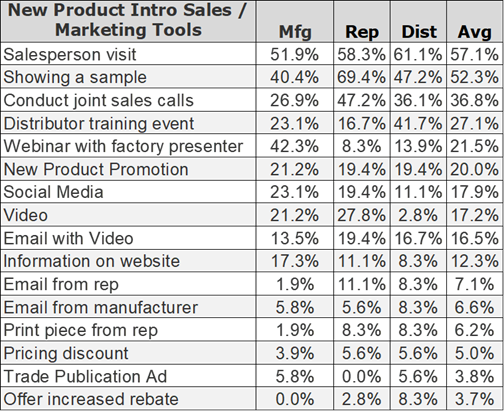
Granted this input is in the eyes of each channel member and that the most important perspective would be in the eyes of the customer (hence contractors, lighting specifiers and “end-users”), but, some trends:
- People still matter as evidenced by the first four strategies … salespeople, showing samples (which requires a person), joint sales calls (again, the role of the salesperson) and distributor training (which means people need to engage.)
- Webinars are #5 but a factory person (hence someone knowledgeable, and with technical credibility) as the presenter.
- Electronic marketing rates relatively low … according to the channel and manufacturer sales personnel. But much money is getting invested here. This doesn’t mean that these areas are not effective, but they are part of an integrated sales and marketing mix. Salesperson-driven initiatives are target-specific initiatives whereas digital marketing should be considered part of a brand building / awareness strategy. It is also interesting that digital marketing rates much higher than print and trade magazine advertising.
- The role of rebates is inconsequential for any of the audiences. This relates to purchasing incentives and not to utility rebates. Most probably this is because the rebate amount, if any, is not communicated to “sellers”. The rebate amount stays “silent” within management and/or purchasing (so, the takeaway is invest the funds into another marketing strategy.)
Coincidentally, we did research for a lighting manufacturer last fall and asked a similar question of distributors. At that time, here was the feedback of what is important:
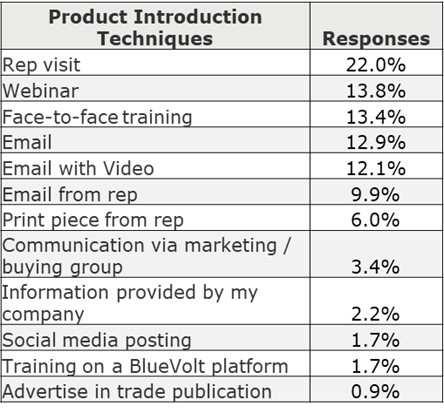
Again, people, training, and digital marketing.
You’ll also notice, in both sets of feedback, the interest in video as well as emails coming from reps rather than from manufacturers.
In speaking to distributors, the reason for the difference between emails from reps vs manufacturers is that the rep is considered 1) more trusted and 2) won’t “spam” the distributor with information regularly … they know their customers.
For the most part, lighting sales lag sales in many other product categories, on a revenue basis, due to pricing. The key is looking at unit sales. If you review your first half performance and are seeking to improve for the remainder of the year, perhaps one area is reviewing your new product introduction strategy? And there are ways, using some sales analytics, to be even more “focused” to align with those who are focused on “you”?
For ideas on how to increase sales and share, give us a call.
And if you would be interested in understanding what contractors / end-users and specifiers think are the “right” ways to reach them, reach out and we can craft a quick research initiative to ask them (if voice of the customer is “really” important!)