Ecological Benefits of Part-Night Lighting Revealed
March 8, 2019
Switching off streetlights to save money and energy could have a positive knock-on effect on our nocturnal pollinators, according to new research.
A study, led by experts from Newcastle and York universities, along with the Centre for Ecology & Hydrology and Butterfly Conservation, has shown that turning off the lights even for just part of the night is effective at restoring the natural behaviour of moths.
Role played by moths “often overlooked”
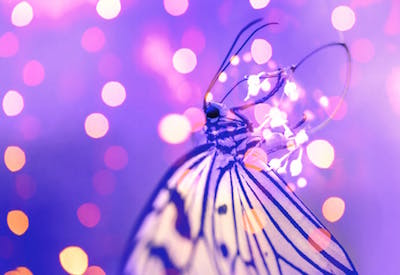
The important role moths play in the pollination of plants — potentially even including key food crops such as peas, soybean and oilseed rape — is often overlooked. However, recent studies show that moths supplement the day-time work of bees and other pollinating insects.
Night-lighting disrupts nocturnal pollination by attracting moths upwards, away from the fields and hedgerows so they spend less time feeding and therefore pollinating. But in this latest study, published in Ecosphere, the team found there was no difference in pollination success between part-night lighting and full darkness.
Dr. Darren Evans, Reader in Ecology and Conservation at Newcastle University, who supervised the study, says that at a time when local authorities are switching off the street lamps to save money, this study highlighted the environmental benefits of part-night lighting.
“Artificial light at night is an increasingly important driver of global environmental change and sky brightness is increasing by about 6% a year,” he explains.
“Understanding the ecological impact of this artificial light on the ecosystem is vital. We know that light pollution significantly alters moth activity and this in turn is disrupting their role as pollinators. But what our study showed was that while full-night lighting caused significant ecological disruption, part-night lighting did not appear to have any strong effect on pollination success or quality.”
Street light switch off
Ecological light pollution is increasingly linked to adverse effects on human health and wildlife. Disrupting the natural patterns of light and dark, artificial light “has the potential to affect every level of biological organization,” explains Evans, from cells to whole communities.
In the last decade, many local authorities have changed their street lighting regime in a bid to cut costs and save energy. This includes switching off or dimming the lights at certain times of the night as well as replacing the traditional high-pressure sodium (HPS) bulbs with energy-efficient LEDs.
In the study, the team analyzed the impact of a range of scenarios on the pollination of moth-pollinated flowers placed underneath streetlights. These included both types of lighting (HPS and LED), run either all night or switched off at midnight. Results were compared to pollination under natural darkness.
They found that regardless of the type of light, full-night light caused the greatest ecological disruption. There was no difference between LED and HPS bulbs in the part-night scenarios, and in both cases the disruption to the plants’ pollination was minimal compared to full darkness.
Lead author Dr Callum Macgregor, formerly of Newcastle University and now a postdoctoral research associate at the University of York, says “Often, as conservationists, we have to make difficult trade-offs between development and environmental protection. However, our study suggests that turning off street lights in the middle of the night is a win-win scenario, saving energy and money for local authorities whilst simultaneously helping our nocturnal wildlife.”
This article was first published online: www.ncl.ac.uk/press/articles/latest/2019/01/streetlighting/
Photo source: Emkae Junior on Pexels