Phototherapy Equipment Market Analysis By Product
October 9, 2017
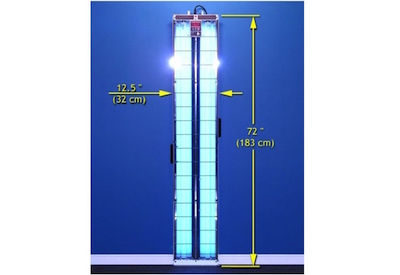
The global phototherapy equipment/device market size was valued at US$481.5 million in 2016 and is anticipated to witness an attractive growth over the forecast period. Huge prevalence of skin diseases is leading to extensive growth of phototherapy equipment market. Skin diseases such as psoriasis, eczema, and acne related problems are rising to a great extent. (Shown in photo: a Solarc Systems model (E720M‑UVBNB) providing full-body UVB-Narrowband phototherapy.) The global phototherapy equipment/device market size was valued at US$481.5 million in 2016 and is anticipated to witness an attractive growth over the forecast period. Huge prevalence of skin diseases is leading to extensive growth of phototherapy equipment market. Skin diseases such as psoriasis, eczema, and acne related problems are rising to a great extent. (Shown in photo: a Solarc Systems model (E720M‑UVBNB) providing full-body UVB-Narrowband phototherapy.)
According to a journal published by BioSpectrum in 2015, Indian population suffering from skin diseases accounted for 10% to 12% of the total population. Out of them, psoriasis and eczema were the major contributors. Global warming and ultraviolet rays, due to huge pollution, are the main drivers responsible for high prevalence of such skin disorders. Other skin problems, such as acne, are also increasing at a faster pace, which is further driving the growth of phototherapy equipment industry. In the U.S., acne affects nearly 50 million people each year, as reported by American Academy of Dermatology. Hence, growing epidemiology of skin diseases is expected to boost the market demand for phototherapy devices.
Other than such severe skin diseases, phototherapy treatment is also very useful for treating newborns suffering from jaundice. In this treatment, the neonates are exposed to fluorescent light, which helps them recover at a faster rate. Occurrence of jaundice among the newborns is common, however, if it persists for long, then, doctors use phototherapy devices for treatment. According to Scholars Journal of Applied Medical Sciences (SJAMS), 25% to 50% of all infants and premature neonates develop jaundice. Hence, with rising number of newborns developing jaundice, the demand for phototherapy equipment is also projected to increase in the near future.
Phototherapy equipment industry is further growing with rising technological advancements in this sector. for instance, D-Rev, Design Revolution, a non-profit design firm introduced LEDs for the treatment of neonatal jaundice. This device has proved to be more energy-efficient, which lasts 10 times longer than the conventional devices and is also comparatively cheaper. Research done by Stanford Medical Schools, one of the partners of D-Rev, has proved its efficient application in the treatment of jaundice therapy. Most of the phototherapy devices use compact fluorescent bulbs due to its uniformity and ease of use by the healthcare professionals. Hence, technological innovations have contributed towards huge growth of the market.
Product insights
On the basis of products, the market is categorized into conventional, LED, and fiberoptic equipment. Among them, conventional equipment held the largest market share in 2016. This growth is due to the huge application of these devices for psoriasis and eczema related skin diseases.
LED equipment is anticipated to show significant growth over the forecast period due to availability of cost-effective products. Other factor responsible for its growth include its high efficiency coupled with long-running feature for treating newborns developing jaundice.
Application insights
On the basis of application, the market is categorized into skin disease treatment and neonatal jaundice management. Amongst them, skin disease treatment contributed towards the largest share in 2016 owing to huge prevalence of severe skin disorders such as psoriasis, eczema and acne.
Neonatal jaundice management is expected to witness attractive growth over the forecast period due to rising number of neonates suffering from jaundice and new product launch for the treatment of neonatal jaundice.
End-use insights
On the basis of end-use, hospitals and clinics dominated the market in 2016 due to huge birth prevalence in hospitals. Additionally, easy availability of large number of skin care clinics in both developed and developing countries is further supporting the market growth.
Homecare segment is expected to show lucrative CAGR during the forecast period owing to convenient usage of phototherapy equipment at home. Phototherapy treatment at home is cost-effective, which is anticipated to further increase the demand for home products.
Competitive insights
Some of the major companies of the market are Philips Lighting Holding B.V.; GE Healthcare; Natus Medical Incorporated; Herbert Waldmann GmbH & Co. KG; Nice Neotech Medical Systems Pvt. Ltd.; Phoenix Medical Systems Pvt. Ltd.; Atom Medical Corporation; National Biological Corp.; and Solarc Systems Inc.
These key players are engaging in strategies such as mergers and acquisitions, new product launch, and regional expansions to cater to the unmet needs of the target population. For instance, in 2015, Philips launched Philips BlueControl 2.0, a wearable medical device to control psoriasis.
Find out more about this market analysis: www.grandviewresearch.com/industry-analysis/phototherapy-equipment-market
Photo source: Solarc Systems Inc.