A Qualitative Policy of Urban Lighting in the Master Plan: Defining Visual Comfort in Street Lighting
Gilles Arpin
Visual comfort is a fairly subjective concept that depends on a variety of characteristics — physical, environmental or contextual, physiological, and even cultural and sociological. First, note that visual comfort is studied primarily in terms of interior settings, with a goal of optimizing the safe and productive performance of tasks (office, factory, commerce, residence…). With exterior settings, the study of visual comfort focuses on accommodation (entering and exiting a tunnel, for example) and threshold increments applied to street lighting, which inform us about discomfort (glare) produced by the contrast between the source and its background.
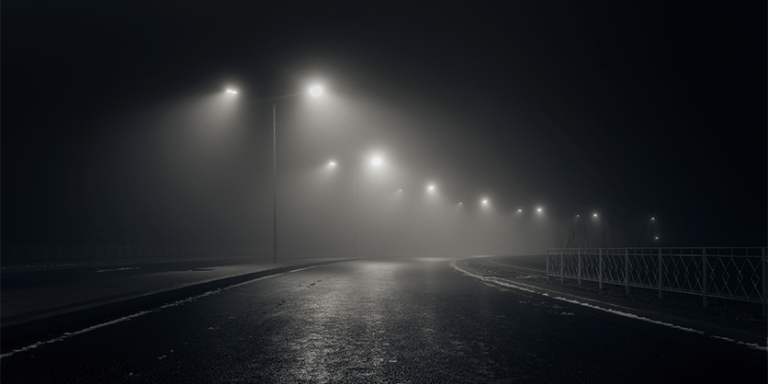
The type of visual comfort that interests me is derived from the latter and is concerned with the ability of an observer to appreciate and understand nocturnal space. It refers to what we feel in an illuminated nighttime environment. At first glance this satisfies me, but in returning to the characteristics of visual comfort I can see the role of my own subjectivity in this pseudo definition.
Back to the characteristics of visual comfort:
• physical characteristics — from person to person our ability to perceive and tolerate under-and over-illumination varies
• environmental or contextual characteristics — these refer to the sites; we expect visual comfort more or less at an amusement park on the edge of a body of water in the middle of an urban park
• physiological characteristics — related basically to the observer’s age; lighting for the grounds of a retirement home would be expected to take this into account
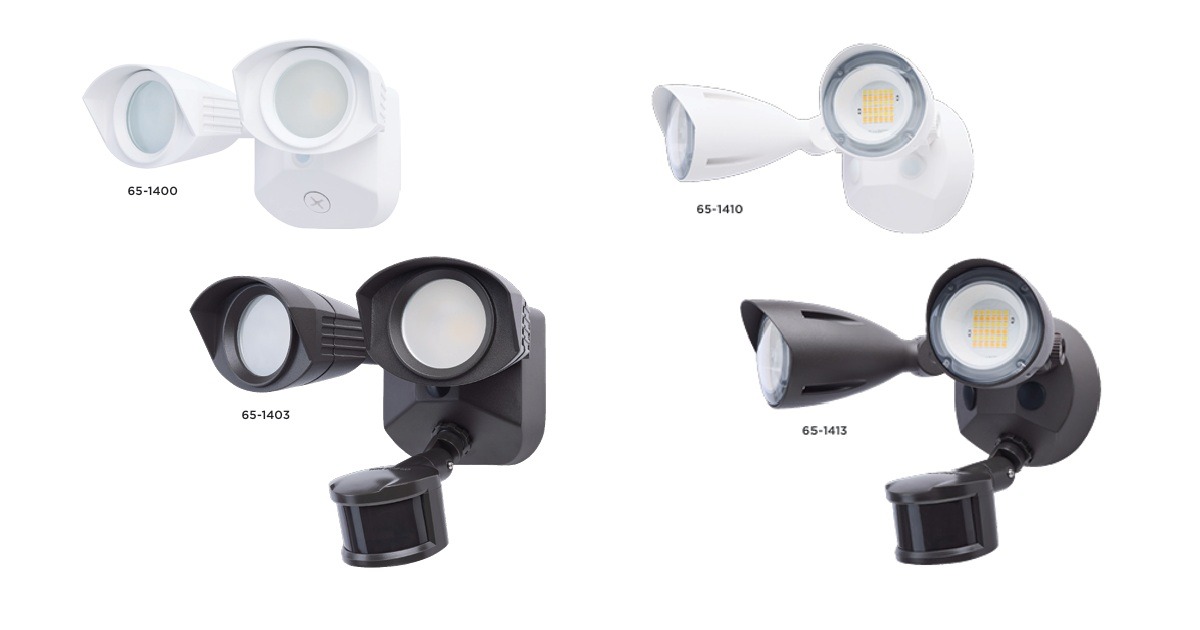
• cultural characteristics — I’ve often noticed that people illuminate differently depending on where they are on the planet. Communities near the equator, where day and night succeed each other with almost monotonous regularity, commonly illuminate extensively, while cities further north or south are more chic and tolerate particularly low levels of illumination (e.g., 1 lux in Berlin). In Japan, cool and contrasting light on streets is used extensively, and Chinese cities demonstrate an openness toward coloured light. Some of these cultural characteristics overlap sociological aspects: the “calle” of neighbourhoods in Mexico City are equipped with sentinels, these luminaires that illuminate full-out and are sometimes found in Canada on farm buildings regions. Mounted 3 meters up on walls concealing opulent residences, they are rather a response to would-be prowlers. Sometimes I wonder if these cultural and sociological aspects don’t make light more of a social actor, but that is another story.
Finally, visual comfort is adaptive depending on the application and context as we seek to appreciate a site or to discourage attendance. The key is certainly that our choices are clearly argumentative.
Gilles Arpin is a lighting designer. He has 30 years of experience as a technician, lighting designer, technical director, production manager and producer for various ballet, opera and musical productions. Since 1996 he has been interested in the lighting of public places and residential and commercial spaces, and founded the firm Éclairage Public. Several of his projects have won awards and recognition.
View a project portfolio at http://www.eclairagepublic.ca/index.php/en/
Professional associations include the Illuminating Engineering Society (IESNA) section Montreal, IALD International Association of Lighting Designers, and IDA International Dark Sky Association.
Éclairage des voies de circulation – confort visuel – réflexion pour une définition
Gilles Arpin
Le confort visuel est une notion passablement subjective qui dépend d’une variété de caractéristiques. Celles-ci sont de nature physique, environnementale ou contextuelle, physiologique et même culturelle et sociologique. Notons d’abord que le confort visuel est surtout étudié pour des conditions intérieures. Il vise ultimement la performance d’une tâche dans des conditions sécuritaires et productives (bureau, usine, commerce, résidence…). Pour ce qui est des conditions extérieures l’étude du confort visuel est concentrée sur l’accommodation (entrée et sortie de tunnel par exemple) et la luminance de voile (Threshold Increment) appliquée à l’éclairage routier qui nous renseigne sur l’inconfort (glare) produit par le contraste entre la source et son arrière-plan (background).
Le confort visuel qui m’intéresse est dérivé de cette dernière et se préoccupe plutôt de la capacité pour un observateur d’apprécier et d’appréhender l’espace nocturne. Il fait référence à ce que nous ressentons en présence d’un environnement nocturne illuminé. À première vue cela me satisfait mais en revenant sur les différentes caractéristiques je me rends compte de la part de ma propre subjectivité dans cette pseudo définition.
Revenons aux caractéristiques du confort visuel. D’abord les caractéristiques physiques. L’œil de chacun de nous est doté de capacités différentes quant à la perception et à la tolérance à diverses situations de sous-ou-sur éclairement. Les caractéristiques environnementales ou contextuelles font références aux sites; on s’attend à plus ou moins de confort visuel selon que l’on se trouve dans un parc d’attraction ou aux abords d’un plan d’eau au milieu d’un parc urbain. Les caractéristiques physiologiques sont celles reliés fondamentalement à l’âge des observateurs, les abords d’une maison de retraite devraient en tenir compte. Enfin les caractéristiques culturelles. J’ai souvent remarqué qu’on éclaire différemment selon le lieu où l’on se trouve sur la planète. Près de l’équateur où le jour et la nuit se succède de manière quasi monotone il est fréquent de voir des villages abondamment éclairé par l’éclairage public alors que les villes nordiques sont plus chiche et tolère des niveaux particulièrement bas d’éclairement (1 lux à Berlin). Au Japon la lumière froide et contrastée sur les routes est utilisée abondamment et les villes Chinoises font preuves d’une ouverture abracadabrante envers la lumière colorée. Certaines de ces caractéristiques culturelles recoupent ses aspects sociologiques, les «calle» des quartiers chics de Mexico sont pourvues de sentinelles, ces luminaires qui éclairent tout azimut que l’on retrouve parfois sur les bâtiments agricoles dans nos régions. Montées à 3 mètres sur les murets qui dissimulent des résidences cossues elles font plutôt office de message à l’intention des rodeurs. Il m’arrive de me demander si ces aspects culturels et sociologiques ne font pas de la lumière une espèce d’acteur social mais c’est une autre histoire.
Finalement le confort visuel est une notion adaptive selon les applications (désolé pour l’anglicisme) et les contextes selon que l’on recherche à faire apprécier un site ou en dissuader la fréquentation. L’essentiel est certainement que nos choix soient clairement argumentés.
Gilles Arpin concepteur lumière 31102015