6 Trends in Solar Area Lighting
August 25, 2020
By David Shiller
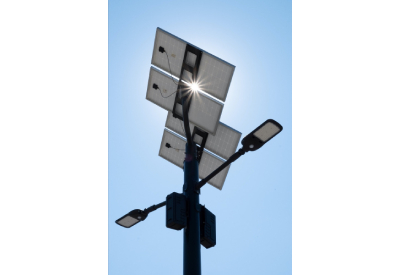
Distributors, contractors, and specifiers have to keep up with many changes in lighting technology. One of the growing outdoor lighting categories is solar area lights. The global solar lighting market is projected to more than double to $10.8 Billion USD by 2024, up from $5.2 Billion USD in 2019, a compound annual growth rate (CAGR) of 15.6%, according to the research firm Markets and Markets.
Here are six trends in solar area luminaires to be aware of:
1. Independently aim-able solar panels and LED modules. This allows optimization of solar collection as well as directing light where it is most needed. Placing the solar panel on an angle, equal to the local latitude, will maximize solar energy collection, year-round. Angling the solar panel also allows rain, wind, and gravity to naturally clean the solar panel surface.
2. Increased light output. LED fixture efficacy can now exceed 200 lpW, for some models. This LED efficiency is combining with dramatically improving solar panel and battery power+efficiency, so that some solar area lights can now achieve 9,000+ lumens for a 50W floodlight fixture.
3. Increased LED run times. The same combination of dramatic efficiency improvements for the LEDs, solar panels, and battery technology is also allowing longer run times for solar area lights. Some high power fixtures are now able to operate the entire night (10-13 hours), while many lower power models can now operate for 2 to 3 nights, on a single charge.
4. More automated control options. Solar lights now come with a variety of pre-programmed timer options, built-in microwave motion sensor, daylight sensor, and automatic dimming of lights when the battery power gets low, to extend operating time throughout the night.
5. Strong ROI. Solar lights are ideal in places where running grid power is difficult. Solar lights avoid trenching, cabling, and electricity costs, providing a great ROI for these locations. In addition, there is a federal solar tax credit worth 26% of the system costs. Low maintenance for solar area lights can also improve the financial analysis. Some resulting ROIs for solar area lights versus grid-powered LED lights exceed 50%, with roughly a 2-year simple payback, including incentives.
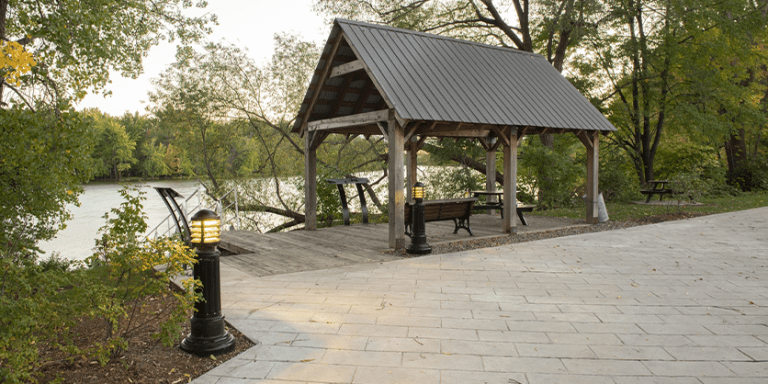
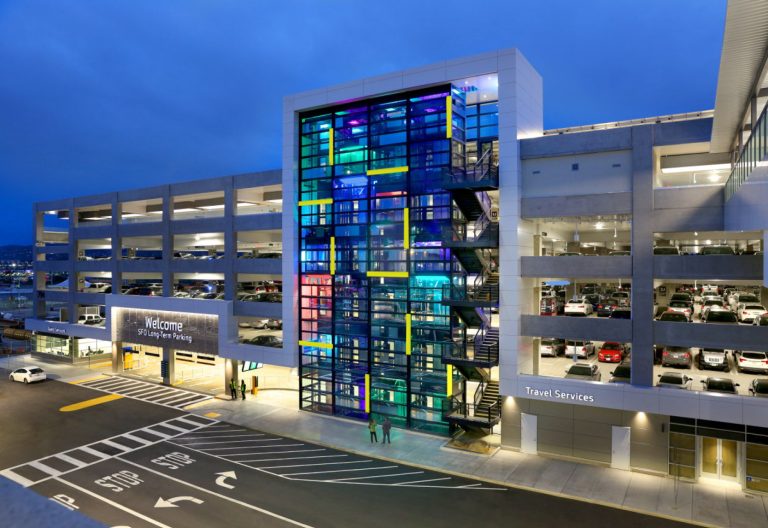
6. Increasing use in roadway, parking lots, bike paths, and parks. Many municipalities and other government agencies construct and maintain roadways, parking lots, bike paths, and parks. The more remote and difficult these sites are to run grid power, the more attractive a solar lighting installation will become. Many of these municipalities also have environmental and sustainability goals that they can make progress towards, using solar lighting. In the commercial sector, solar lights are increasing in use for bus stops, signage & billboard, pedestrian pathways, and perimeter security lighting.
Leo Liao, CEO at SOLTECH Solar Lighting stated, “The rapid improvements in LED, solar panel, and battery technologies have fundamentally improved solar lighting performance as well as ROI to the point that it is now a mainstream area lighting solution.” Liao added, “Solar area lights are an environmentally-friendly solution that saves significant money both in installation costs and electricity costs. We are seeing very strong growth in demand for all of these reasons.”
David Shiller is Marketing Consultant with Soltech Solar Lighting