CRI Modulation: Future Lighting Control Strategy?
Craig DiLouie
LED lighting has made a new dimension of lighting control, colour tuning, widely available. By mixing separately dimmable arrays of warm- and cool-white, saturated colours (RGB+A), or a mix of the two, correlated colour temperature (CCT) can be tuned manually or automatically based on various application needs.
Besides CCT, the source’s colour rendering index (CRI) can be raised or lowered within a given range. The maximum depends on the source, while the minimum depends on the designated CCT. This is accomplished by gradually reducing the red component of a red, blue, green and either yellow or amber mix.
While the primary benefit of modulating CCT is aesthetics, the primary benefit of modulating CRI is energy savings. As CRI declines, luminous efficacy increases. This creates a potential energy savings opportunity in spaces that must remain illuminated at full output and constant CCT while unoccupied.
David L. Bay, LC, corporate engineer for Osram Sylvania, sees airport concourses as a potential application for this novel control strategy. The lights must remain on and at full output at night for safety, though for much of the night large parts of the concourse may be unoccupied. CCT must be maintained because changing CCT would be objectionable from an aesthetic point of view.
In this application, the lighting in the main circulation spaces would be zoned to operate at full output and specified CCT and CRI. Lighting in peripheral areas would be separately zoned, with CRI reduced based on occupancy or a schedule.
“CRI modulation would be suitable for applications with certain characteristics,” Bay says. “Notably, applications where maintaining high lux levels for safety or other reasons is important, and where the space is granularly occupied at different times of the day.”
Actual energy savings would depend on the application, though Bay believes at least 10% would be typical, and up to 25+% has been demonstrated. Another question is whether occupants would find a change in CRI objectionable.
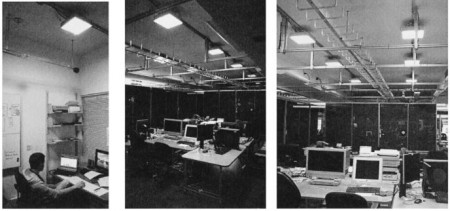
In 2005, the Massachusetts Institute of Technology (MIT) conducted a study in an open office and two private office spaces at the institute’s Media Lab. The researchers wanted to know how far CRI could be reduced before occupants noticed the change and/or found it objectionable.
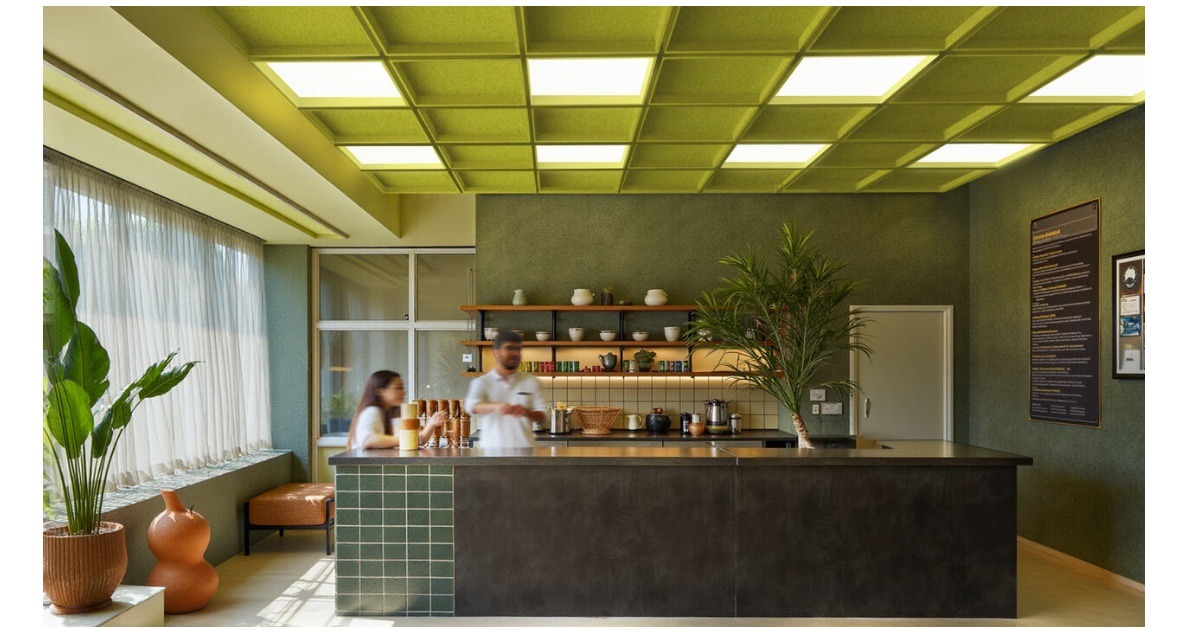
Eight OSRAM SYLVANIA LED panels were installed in the ceiling of the open office and two each in the private offices. These LED panels were colour tunable and of an experimental design. CCT was maintained at 5000K, light levels at about 30 footcandles. The study participants —13 graduate students with no prior knowledge of the study — were asked to perform tasks in the spaces. While they were working, CRI was adjusted over a period of three seconds from 89 to 68. Shortly afterwards, a pop-up questionnaire appeared on their screen asking what activity they were doing and whether they noticed the change.
Three hundred and twenty of these queries received responses; of these, 203 responses (63%) indicated a change had not been noticed. Changes were more likely to be noticed when occurring in the immediate area or simultaneously in the immediate and peripheral areas. Changes were least likely to be noticed when they occurred solely in a peripheral area.
“Experience suggests CRI modulation within an occupied space will not be well accepted,” Bay notes. “The concept of CRI dimming is currently founded on modulating CRI of unoccupied spaces adjacent to occupied spaces.”
CRI modulation was considered a good potential if not practical strategy at the time of the study. LED technology has made significant advances since then, making it practical. Still, Bay notes, the requirements of colour-mixing LEDs and granular zoning pose a cost that challenges economic viability. As LED technology continues to progress, however, CRI modulation may become viable from an economic as well as a technological standpoint.
Bay sees CRI modulation being paired with another potential control strategy, which is using LED general lighting as an indicator. For example, peripheral lighting in a private office could automatically adjust to become red when the occupant is on the phone, both saving energy while indicating the occupant should not be disturbed. This potential has many applications.
“Colour tuning has opened a vast potential in lighting design and application, and we are just beginning to pioneer,” Bay says. “While these applications focus on aesthetics with some interest in circadian health, this extraordinary emerging dimension of lighting control may also be used to maximize energy savings.”
Craig DiLouie, LC is acting education director for the Lighting Controls Association.
This article was reprinted with permission of the Lighting Controls Association, www.lightingcontrolsassociation.org