Research Supports Customized Lighting Solutions to Reduce the Negative Impact of Light on Sleep
November 3, 2017
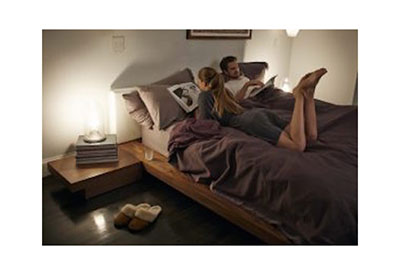 A study conducted at Brigham and Women’s Hospital, a teaching affiliate of Harvard Medical School, shows that selectively reducing the amount of short-wavelength (blue) light emitted by a light reduced the alerting effects of typical indoor bedroom intensities before bed. The study was conducted with lighting technology provided by Rhode Island-based Lighting Science, makers of the GoodNight and Sleepy Baby pre-sleep consumer LEDs.
“Lighting solutions being used as tools to positively impact health — on both an individual and global scale — are the future. This much is clear,” says Fred Maxik, Chief Technology Officer and founder of Lighting Science. “The pursuit of scientific innovation inspires the design of our products and has for over a decade, so we are encouraged that the industry at large has begun to take notice, both for everyday consumers and for public infrastructure, like hospitals and schools, all the way to the International Space Station.”
According to the study, the C-LED light designed by Lighting Science Group had multiple benefits compared to typical fluorescent light, including attenuating the suppression of the darkness hormone melatonin, slowing reaction times, and reducing alertness as measured by brain activity patterns.
The C-LED specifically targeted reduction in only the narrow range of blue light that corresponds to the peak response melanopsin (~470-500nm), the photoreceptor that primarily mediates circadian responses to light, rather than a general reduction in all blue light. Such selective blocking is critical for visual function when designing light systems as the color distortion caused by completely filtering all short wavelengths may render the lighting impractical.
Steven Lockley, PhD, a researcher in the Division of Sleep and Circadian Disorders at Brigham and Women’s Hospital, led the study along with Shadab Rahman, PhD and Melissa St. Hilaire, PhD, also researchers in the Division. “The study shows that designing lighting to selectively inhibit the right wavelengths can substantially reduce the circadian disruption caused by exposure to light before bed,” says Lockley.
This article was adapted from a blog post by Kate Kaminsky; https://blog.lsgc.com/new-research-supports-customized-lighting-reduce-negative-impact-light-sleep/
* Rahman SA, St Hilaire MA, Lockley SW. The effects of spectral tuning of evening ambient light on melatonin suppression, alertness and sleep. Physiology & Behavior, 2017; 177: 221-229.