Mariana Figueiro Talks Healthy Lighting for Healthcare Buildings
June 25, 2018
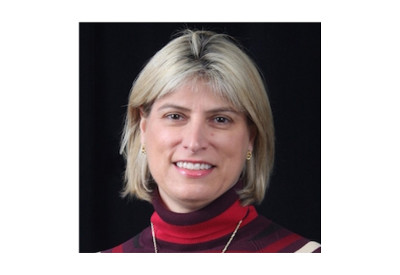
I recently had the pleasure of interviewing Mariana Figueiro, PhD, Professor and Director of the Lighting Research Center at Rensselaer Polytechnic Institute in Troy, New York. The topic: healthy lighting for healthcare buildings.
How would you characterize healthcare buildings as having distinct populations? How are their needs different in terms of functional and healthy lighting?
Various writers have likened the hospital to a city in microcosm, which poses a formidable challenge to lighting design because in this case the “city” is all under one roof. The hospital functions around the clock and year-round, its patients range in age from premature infants to the elderly, and the people in any given space can be very ill or in perfect health. Many healthcare personnel work long hours that can include night shifts and rotating shifts. Yet each person has in common an individual circadian system that takes its cues from the patterns of light and dark reaching their retinas. Despite sharing some core principles of what makes the circadian clock tick, however, the timing of light exposures for patients, healthcare workers, and visitors can be very different.
How is circadian lighting different in a healthcare building as opposed to an office building or school? Not just in terms of needs and space characteristics and use, but typical recommendations for CS and light level, spectrum, timing, and duration?
There is a good deal of overlap between the lighting needs of office workers and hospital workers, at least in respect to workplane illuminance requirements for visual performance. The IES recommends daytime levels of 500 lux on the workplane for general tasks in both offices and hospitals. In terms of circadian stimulus (CS), whether office worker or hospital daytime worker, patient or caregiver, all occupants of a given space generally should receive high levels of CS (CS >0.3) during the day, especially early in the day, and low CS (CS <0.1) in the evening.
There are a few differences, however, that should be noted. Unlike with office workers, evening and nighttime exposures can be controlled in a healthcare facility. For maximum benefit, the full 24-hour light-dark patterns need to be controlled, but this is not possible with office workers. In addition, the lighting needs of night-shift workers are different from those of day-shift workers, so lighting in healthcare facilities needs to be flexible and designed to meet the needs of both groups.
Are healthcare buildings a “killer app” for circadian lighting due to patients being a “captive” population?
While working with a captive population where we can control the 24-hour light-dark patterns is important, the various types of populations under the same roof makes it harder for healthcare buildings to be a “killer app.” Remember too that circadian lighting design for healthcare buildings is really no different from lighting design for schools, elder care facilities for people living with Alzheimer’s disease, offices, and even US Navy submarines. The specific settings and needs of the individual populations are obviously quite different, even radically so, but the underlying design principles remain the same. Implementing a lighting system in a space where the entire 24-hour light-dark patterns can be controlled is without any doubt beneficial.
Do patient and staff lighting needs come into conflict, particularly for nightshift workers, and how should that conflict be reconciled?
Nighttime lighting conditions must above all be suitable for promoting patients’ sleep as part of a healthy recovery while also making it possible for caregivers to do their extremely important work. It’s a delicate balance that invites creative solutions. Here, it would be helpful for designers to think of lighting in layers, tailoring the exposures to the space, the person who is occupying it, and what is required for what the person is doing, whether working or sleeping and healing. So, in sum, high CS during the day and low CS in the evening and night should be the basis for the design, with additional layers of light to accommodate visual needs when performing difficult tasks and increase alertness in night-shift workers.
What research supports your recommendations for circadian lighting in healthcare buildings?
There are few studies that have directly investigated the impact of circadian lighting in patient outcomes. However, it is now well known that disruption of the circadian system through exposure to irregular cycles of light and dark, as experienced by shift workers, is associated with sleep disturbances, certain forms of cancer, chronic metabolic disorders like cardiovascular disease and diabetes, depression, and higher risk for accidents. Nurses, many of whom follow 12-hour shift schedules that involve working through the night, are particularly at risk. In fact, nurses who have worked rotating shifts for 20 years or longer show significantly increased mortality rates for all of these diseases and several more, as well as increased risks for injury both on and off the job. Managing circadian disruption has been shown to mitigate these risks among all shift workers, and it has been widely accepted by healthcare researchers, facilities managers, and the lighting industry that significant gains in health care workers’ well-being can be realized through circadian healthy lighting. The same principles can be used for patients and for daytime workers in healthcare facilities.
Are there any tradeoffs in implementing lighting in healthcare buildings that is both circadian-friendly and functional?
At one time we might have been compelled to make tradeoffs due to deficiencies in technology and imagination, but any gap that existed between the two concepts is closing quickly and it’s the job of imagination to come out on top. Circadian-friendliness isn’t the least bit antithetical to functionality. A prime example is the Swedish Healthy Home, which is a joint research project involving the Lighting Research Center (LRC), Lund University, and the Swedish Energy Agency. We developed an integrated network of light and activity sensors that track and record personal 24-hour light exposures and activity, which then formulates and delivers a personalized lighting prescription for each individual’s circadian health everywhere they go in the home. The geometric growth of IOT technology points to a time when we will be able to deliver an around-the-clock lighting prescription to people outside the home, whether at work or the supermarket, or even while driving their cars.
The same technology could be employed today, or at least in the very near future, throughout the “city” of a modern healthcare building. So no, there are no tradeoffs, only efficiencies and benefits to be realized as circadian healthy lighting moves forward.
What types of lighting strategies should be implemented in terms of design (light on walls, etc.) and equipment (color tuning, dimming, direct/indirect luminaires, etc.)?
Lighting for circadian stimulation should be delivered in the vertical plane, close to eye level, rather than on the horizontal plane. Distribution of light becomes critical; luminaires delivering direct/indirect light may be more effective at increasing vertical illuminance than downlights, for example. Lighting up vertical surfaces, such as walls, will not only provide a more pleasing environment, it will also help increase the CS received at the eye. This is where the concept of working with layers light, as mentioned earlier, comes in. If the illuminance requirements of a particular space limit the amount of CS that can be delivered, extra CS can be delivered to its occupant using a self-luminous panel that can serve as a light oasis. The use of a higher correlated color temperature (CCT) lighting may help, but only a little. For example, 500 lux of a 2700K light source delivers a targeted CS that is equal to 350 lux of a 5000K source. If using a single-spectrum source (e.g., 3000K), changing the light level from 100 lux at the eye to 400 lux at the eye will increase the CS to the same targeted level.
What do we know about how various spectra of light may impact patients with certain conditions or on certain medications? Do certain types of light facilitate diagnosis or cause medicated patient reactions?
We don’t know much about how light impacts patients who are on certain medications, but we do know that light is a recognized treatment for seasonal affective disorder, and that light can improve sleep and reduce depression and agitation in Alzheimer’s disease patients. Anecdotal evidence suggests that surgeons prefer green light in operating rooms, but the physiological mechanisms associated with this preference are not well established.
What can electrical contractors do to begin implementing or support implementing circadian lighting solutions in healthcare buildings?
To support the implementation of circadian lighting solutions, the best thing contractors can do is educate themselves about key concepts and applications. A great place to start is the LRC’s Lighting Patterns for Healthy Buildings web resource, which has a tab specifically dedicated to healthcare settings. The resource also includes background on key concepts relating to the circadian system, clearly described in lay language. Contractors also might wish to have a look at the LRC’s free, open-access CS calculator, which is designed to help lighting professionals select light sources and light levels that will increase the potential for circadian-effective light exposure in architectural spaces.
Are there any pitfalls or common mistakes designers make in regards to circadian lighting—perhaps based on popular myths—that should be avoided?
Designers shouldn’t rely solely on CCT in their lighting designs for circadian health. Correlated color temperature is a convenient metric that everyone knows and understands, but sometimes it can point designers in the wrong direction. While it is generally the case that high CCT sources (5000–6500K) will provide higher levels of CS, for example, a 3500K lighting system provides about one-third less CS than a 3000K source. The CS metric is a better metric because it gauges the circadian system’s response to specific light sources and accounts for a broader range of lighting characteristics, such as spectrum, level, timing and duration of exposure, and a person’s history of light exposures. It is also important for designers to consider vertical illuminance (i.e., light at the eye) in addition to horizontal illuminance on the workplane.
If you could tell the electrical industry just one thing about circadian lighting in healthcare buildings, what would it be?
Figueiro: The challenge is that since its inception, the lighting industry’s solutions have tended to be closely tied to a particular building or space and a somewhat restricted view of what people require to perform the narrow range of tasks that is defined by the space. But the circadian system does not work 8-hour or 12-hour shifts, it works continuously and cumulatively through the many and varied lighting environments of our 24-hour, increasingly globalized society. The technology now exists to develop more individualized solutions for healthcare applications. Think beyond the ceiling.
Craig DiLouie, LC, is Education Director for the Lighting Controls Association. Reprinted with permission of the Lighting Controls Association, www.lightingcontrolsassociation.org.