Wireless Lighting Controls —Simple and Easy?
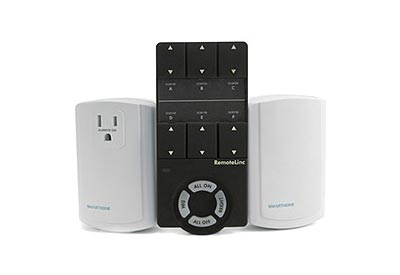
What does anyone expect out of a wireless lighting control system or any lighting control system? Certainly the basics of occupancy/vacancy control, daylight harvesting and scheduling are required. Energy savings are also necessary, or why else do you install a control system. Worry free operation needs to be the norm for any system.
Many papers have been written to cover the legislative requirement deemed by the National Energy Code of Canadafor Buildings (NECB-2011) and ASHRAE 90.1, which clearly state the use of occupancy technologies.However, the legislation never speaks to the need for thesimple use of controls for occupants so changes they may want to make to programs and parameters are easy to do. The energy codes also don’t speak to ease of installation to keep start-up costs low and help provide a quicker ROI. They also don’t describe what a complete system should be,so that end users, specifiers and contractors are left with a myriad of choices that can lead to job delays, voltage issues and start up challenges.
One company’s solution
Ideal Industries, Inc.’sAudacy family of advanced wireless controls tries to answer these questions. The Audacylighting control system combines push-in wire connectionexpertise with radio frequency technology thatallows operating system control from a smart phone. The result is a simple to use and install lighting control system.
At the heart of the Audacy system is the Smart Connector. The Smart Connector has a small form factor, lies within the fixturetroffer, and implements the instructions from the gateway for all functions:
• on/off
• dimming/daylight harvesting
• occupancy and scene control
The Smart Connector is universal to all dimming ballasts that use a 0 to 10volt dimming circuit. It comes in both a 120 to 277 volt package, and a 347 volt package, which negates the need to step down voltages. The 347 volt Smart Connector uses a robust 600 volt relay. In a two-month trial, the 347 volt package was flawless in itsoperation running at the required voltage. In the accompanying photo you can see the ports that the wire is pushed into. No other mechanical fasteners are used for wiring, just strip and insert the wire into the smart connector, saving significant amounts of installation time. There is a bar code on the Smart Connector that is scanned by a smart phone or bar code scanner and downloaded into the set-up tool. Once all of the elements of the system are scanned into the set up tool, the programming is drag and drop to assign the various occupancy sensors, lighting sensors, and switches to the appropriate Smart Connector.
Programming and controlling the system has also been designed and engineered to bring simplicity into this critical feature. The system uses drag and drop technology, combined with slide bar functionality, to make choices on all functions down to individual fixture control, if necessary. For future control after the system is installed, the administrator can usea Smartphone App and make adjustments remotely from anywhere that has internet access.
Return on investment is one of the most frequently used criteria for installing a lighting control system. All systems should provide some savings from occupancy/vacancy sensors, but beyond that, the ROI can depend on what you need from your system:
• amount of light required in a work space
• scheduling
• daylight harvesting
• scene controls within a workspace.
The 2-month trial used the occupancy/vacancy feature andthe daylight harvesting benefits of the Audacy system. Ideal incorporated an Eyedro Energy Monitoring system and ran the lighting system as it had always beenfrom Octoberthrough November of 2014 and compared it to a period from December to January where we had the Audacy system installed. To avoid skewing the data, we compared 3 weeks of data in November to three weeks of data in January showing equal hours of work. The ratio of exterior wall area to window (fenestration) area was x15 to y1 with south and southwest exposure. During the test comparisons we saved a JKL% of watts used. This was done on a 347 volt lighting system, which also demonstrated the functionality of our 347 volt Smart Connector.While this was a smaller sample, the results mirrored a larger scale test at the UCLA Athletic Offices. The UCLA study relied on the same occupancy control, dimming controls,and daylight harvesting to support the data. The results for the UCLA program were a 40% reduction in power consumptionduring the test period. The same result is also supported from test sites performed at other venues.
Further to supporting a strong ROI is
• lower installation costs — the Smart Connector is attached to the fixture by UL-approved thermal tape.
• simpler programming
• willow power micro-processing technology, providing a 25-year life to system components
For further information, check this out atwww.lightingcontrols.com, contact Bill Stephens, National Sales and Marketing Manager, 905-683-3400orget in touch with any Ideal representative.