Night-Time Light Pollution Is Causing Spring to Come Early
January 7, 2017

Human use of artificial light is causing spring to come at least a week early in the U.K., researchers at the University of Exeter in Cornwall have found.

New research led by a team of biologists based at the University’s Penryn campus highlights for the first time and at a national scale the relationship between the amount of artificial night-time light and the date of budburst in woodland trees.

PhD student Robin Somers-Yeates, working with independent environmental consultants Spalding Associates, led the study, which made use of data collected by citizen scientists from across the UK, after the Woodland Trust asked them to note down when they first saw sycamore, oak, ash and beech trees in leaf as part of the charity’s Nature’s Calendar initiative. The research team analyzed this information, correlated with satellite images of artificial lighting.

The research, published in the journal Proceedings of the Royal Society B, found that buds were bursting by up to 7.5 days earlier in brighter areas and that the effect was larger in later budding trees.

Researchers believe early bud bursting will have a cascade effect on other organisms whose life cycles work in synchronicity with the trees. The proliferation of the winter moth for example, which feeds on fresh emerging oak leaves, is likely to be affected which may in turn have some effect on birds in the food chain that rely on it for food.

The findings provide important information for those in charge of lighting levels, such as local councils, and point to the need for further research into the impact of different light quality and the specific wavelengths of light generated by different lighting types.

According to Professor Richard ffrench-Constant, one of the co-leads of the study based at the University’s Penryn Campus, “We found that artificial lighting can accelerate tree leaves budding, and effectively the onset of spring, by a week. This has got to be bad for nature, particularly because of the knock-on effects. At the moment, caterpillars are timed to hatch to make the most of opportunities to feed from freshly budded leaves, and birds hatch in time to feed off the young caterpillars. If this cascade effect is thrown out of sync by early budding, wildlife is bound to suffer.

“A positive from this research is that we found red lighting to be particularly culpable for this effect. We may now have the opportunity to create ‘smart lighting’ that is kinder to nature.”
Adrian Spalding of Spalding Associates in Truro is one of the leading experts on moths in Britain. He believes this work is important as councils have recently been given control over decisions as to when they want to turn on or off their streetlights.

“This study shows the importance of collaborative research between business and academia to address our real concerns of the effect of lighting on plants and animals and the importance of managing light levels in our urban environment in a sustainable way.”

Read the full research paper: http://rspb.royalsocietypublishing.org/content/283/1833/20160813.

 

Related Articles


Changing Scene

  • Oct 8, 2026 - Canada Light Expo 2026 To Unite Canada’s Lighting Industry Under One Roof - CLE 2026

    Canada Light Expo 2026 To Unite Canada’s Lighting Industry Under One Roof

    Canada Light Expo 2026, the country’s premier exhibition for the lighting and LED technology sector, will return to the International Centre, Toronto, on 18–19 November 2026. Marking its 3rd edition, the event is expected to bring together more than 100 leading brands and showcase over 1,000 lighting solutions, connecting manufacturers, designers, specifiers, distributors, contractors, and… Read More…

  • Oct 7, 2026 - Eureka Wins Multiple GRANDS PRIX DU DESIGN Awards

    Eureka Wins Multiple GRANDS PRIX DU DESIGN Awards

    Eureka is pleased to announce that five of its luminaire families have been recognized in the 19th edition of the GRANDS PRIX DU DESIGN Awards. Jarry, Orelia, Scout Accessories, Torno, and Tulip all received GOLD CERTIFICATION in the Product Design – Lighting/Indoor Lighting Fixture category. The GRANDS PRIX DU DESIGN Awards is an international competition… Read More…


Design

  • LEDVANCE: Toyota Lighting Case Study – Brossard, Quebec, Canada

    LEDVANCE: Toyota Lighting Case Study – Brossard, Quebec, Canada

    Located 15 minutes from Montreal, Toyota’s Quebec Regional Office in Brossard, Canada houses a first-floor training and service area, and second-floor offices where financial services and dealer network operations are conducted.  With environmental sustainability representing a core pillar of Toyota’s mission, the Brossard location has long been committed to embracing products and practices that conserve… Read More…

  • CSC LED: How Product Availability Impacts Project Timelines

    CSC LED: How Product Availability Impacts Project Timelines

    When planning an LED lighting project, the focus is usually on performance, specifications, budget, and application requirements. But there is another factor that can have just as much impact on the project: product availability. A fixture may be the right choice on paper, but if it is not available when needed, it can affect installation… Read More…


New Products

  • SATCO|NUVO: Dual Head Security Lights – Bullet & Square Heads Models

    SATCO|NUVO: Dual Head Security Lights – Bullet & Square Heads Models

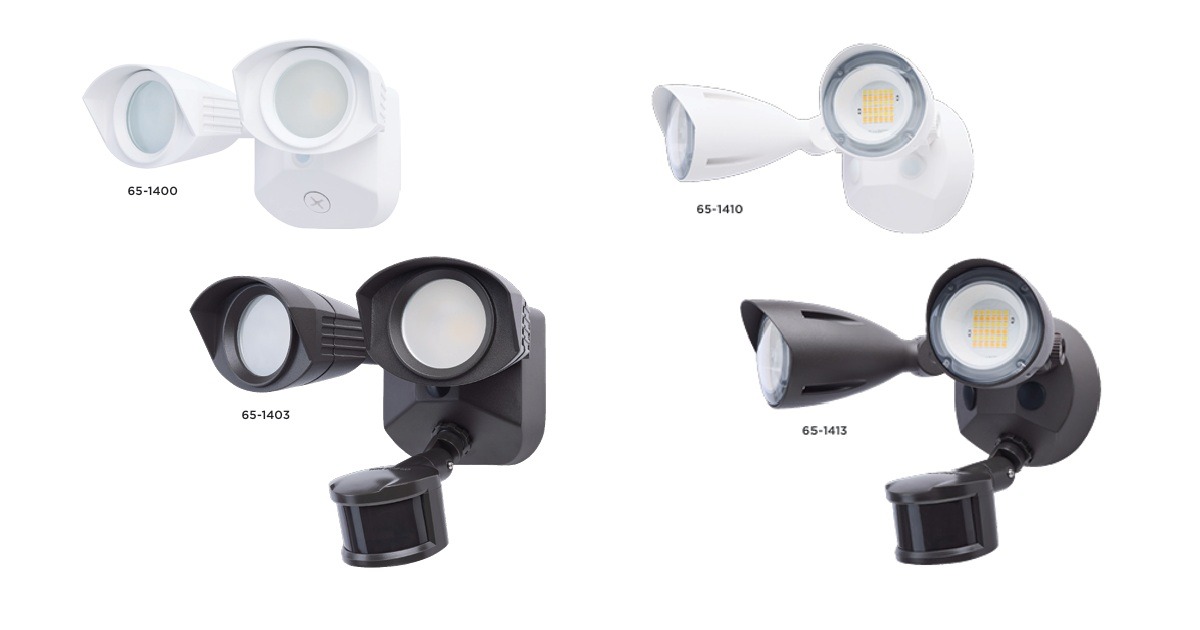
    SATCO|NUVO’s Dual Head Security Lights deliver dependable outdoor illumination for residential and commercial applications. Available in traditional bullet head designs as well as architectural square heads, these fixtures feature selectable 3000K, 4000K, and 5000K color temperatures and are offered in black, white, and bronze finishes to complement a variety of exteriors. Constructed from rugged die-cast… Read More…

  • ABB Ready-Lite: RSAUR Series – Surface-Mount Architectural Remote Fixture

    ABB Ready-Lite: RSAUR Series – Surface-Mount Architectural Remote Fixture

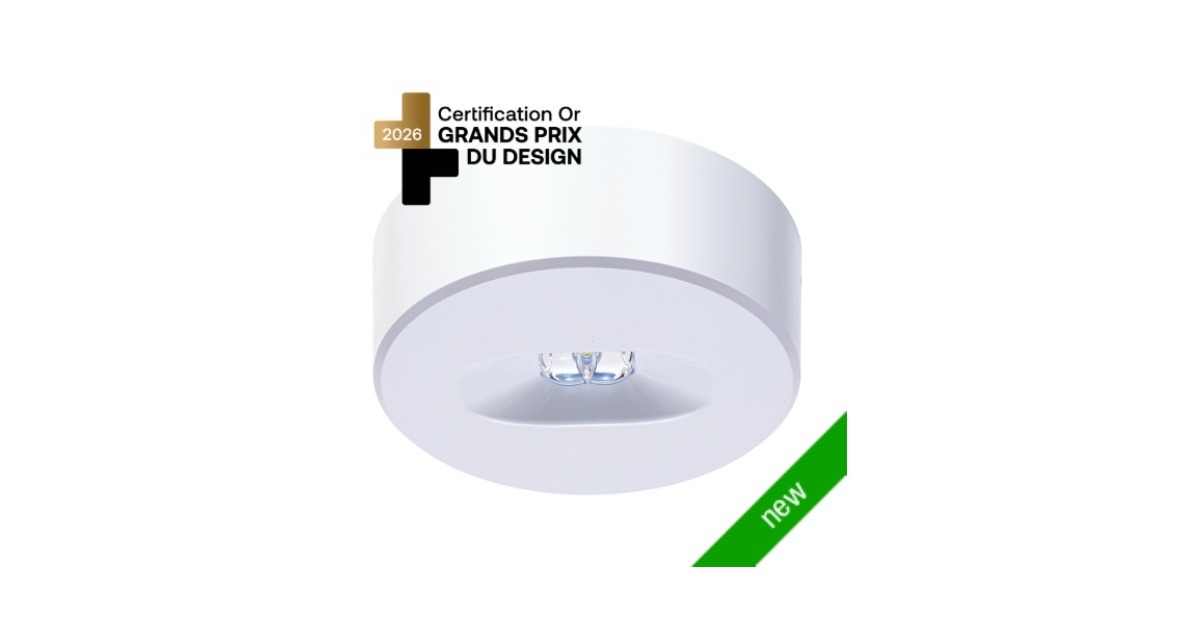
    The RSAUR Series surface-mount architectural remote fixture is designed specifically for installations requiring a junction box, whether recessed, surface-mounted, or suspended. Engineered for easy installation, it combines performance with simplicity and style, making it a smart choice for commercial and architectural environments. Recognized with Grands Prix du Design | Gold Certification 2026. Read More…