What You Need to Consider When Choosing Data Center Lighting
July 8, 2025
Data Center Lighting Insights from LEDVANCE
When operating a data center, the lighting system is often not the most concerned part. Actually, lighting system performance directly influences whole electricity consumption and operating costs, especially in a 24-hour non-stop data center.
This article will delve into the key factors to be considered when choosing data center lighting. For enterprises that are planning to build new data centers or considering infrastructure upgrades, these insights will help you make more informed decisions.
5 Things to Consider for Data Center Lighting
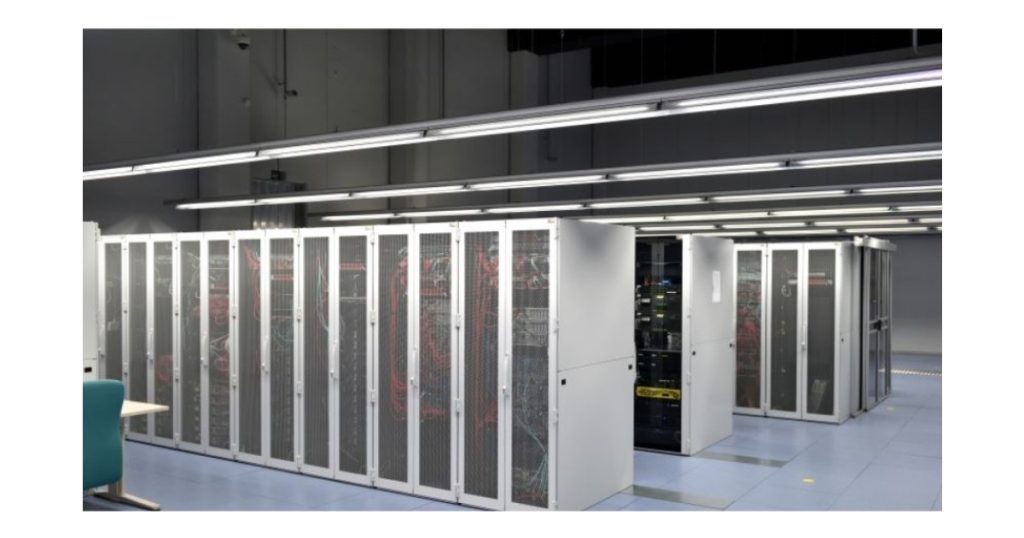
Data center lighting requirements are different from common office environments. Since the main function of a data center is to store and operate server equipment, the area for personnel activities is relatively limited. Most of the space is occupied by cabinets and infrastructure.
Strengthen and improve your data center environment with lighting solutions designed with these crucial features:
1. Energy Efficiency
Data centers consume large amounts of energy, making energy efficiency a key concern. Although the proportion of the lighting system is not high, the accumulated energy consumption over the long term is still considerable. Therefore, choosing a high efficiency lighting solution is exceedingly important.
LED lighting is the most energy-efficient choice. Compared with traditional fluorescent lamps or halogen lamps, the energy consumption of LEDs can be reduced by more than 80%. It reduces unnecessary energy use and has low lighting power contributing to better PUE and more energy dedicated to actual computing. LED cuts down operational costs by a long lifespan and fewer replacements. Even small lighting savings become significant at the scale of large facilities operating 24/7.
Using an energy efficient lighting source is crucial for reducing power usage effectiveness (PUE). Although lighting plays a small but meaningful role in this effort. Optimizing lighting solutions helps data centers move closer to lower PUE.
2. Visibility
The Data Center is a mission-critical, high-density technical environment. Technicians rely on clear and bright lighting to work. Poor visibility increases the risk of misreading equipment status or plugging into the wrong port. Although the main areas of the data center do not require high-intensity lighting, the office areas, operation passages, and monitoring rooms still need a good lighting environment.
In addition, data centers are filled with raised floors and cable trays. Adequate lighting and visibility ensures safety in this complex space. In an emergency situation, clear visibility helps staff navigate the space quickly and safely.
3. Automated Controls
Data centers often have large areas with minimal human traffic. With automated controls, such as motion sensors and remote access, lights can be dimmed or turned off in unoccupied zones. Since cooling is one of the biggest contributors in data centers, lowering the heat generated by lighting through automation helps improve overall power usage effectiveness.
Besides, automated lighting systems ensure instant emergency lighting activation during power events. With remote access, security personnel can control lighting in different areas.
4. Stability
The data center is filled with precision instruments such as servers and network devices, which are very sensitive to electricity. If the lighting always malfunctions, such as the lights flickering frequently or the voltage fluctuating up and down, it will affect the stability of the entire power supply system.
In addition, unstable lighting equipment will increase the burden on wires and distribution boxes, making them prone to overheating. It may not only cause a fire, but also consume more electricity. If the lighting equipment keeps breaking down, parts have to be replaced frequently. The data center is large in area and has many lights. Every time maintenance is carried out, people have to climb high or cut off the power, which not only wastes labor but also may affect the operation of the equipment.
5. Lighting Placement
If the lights are installed too off-center or too dim, when the staff inspect the equipment, such as looking at the cable interfaces and indicator lights, they may not be able to see clearly. On the other hand, when the lighting equipment is too close to the server, heat will be emitted when the lights are turned on.
It is best to install lights directly above or on the ceiling in front of the cabinet, with the light shining straight onto the front door of the cabinet and the equipment panels. Installing a light every 2 to 3 meters to ensure that the brightness of the passage is approximately the same from beginning to end. Green exit sign lights are needed on the walls at the entrance, the end of the corridor and the staircase entrance. It is 2.2 meters above the ground and powered by an independent battery.
Applying a Three-Level Lighting Approach in Data Center
Using three-level lighting in a data center is actually like dividing the lights into three brightness levels. Use different brightness levels for different scenarios, which saves power and reduces PUE. Consider the principles behind the design and practical application of the three lighting tiers.
- Level One: Only illuminating the escape routes, safety exits and key equipment to hold basic visibility and safety.
- Level Two: In the evening after work, the lights automatically dim to about 50% brightness. This still gives security cameras a clear view while cutting electricity costs by about half compared to running at full brightness.
- Level Three: When the staff operate in front of the cabinet, the lights automatically adjust to the brightest. In corridors and passageways, the lights automatically brighten to 80% when someone pushes an equipment cart through.
Implementing three-level lighting in data centers is not only an energy-saving measure but also reflects the trend of intelligent operation and maintenance. Refined lighting management can take into account energy efficiency and safety.
Why Choosing LED for Data Lighting Center
Choosing the appropriate lighting source is a key link to ensure the stable operation of equipment and the efficient work of personnel. LED lights, with numerous advantages, have become the ideal choice for lighting in data centers nowadays.
- Energy Efficiency: LED lights are particularly energy-efficient, and data centers can save a large amount of energy costs. For instance, a 40-watt LED lamp can be as bright as a 100-watt traditional incandescent bulb, but its electricity consumption is only 40% of the former.
- Long Lifespan: Ordinary incandescent lamps may break down after 1,000 hours of use, while LED lamps can last for more than 50,000 hours. Assuming the data center is on for 24 hours a day, one LED light can last for 5 to 6 years.
- No Flickering: The light from LED lights is very stable. Technicians can see clearly when repairing equipment and it is not easy for them to get tired. LED lights generate almost no heat and can reduce the workload of air conditioners.
- Interact with Intelligent Systems Easily: LED lights can be easily connected to the intelligent control system. It also supports remote adjustment. There is no need to send someone to the scene to turn on the lights.
LED lights feature dimmable, energy conservation, long lifespan and intelligent adaptability. It is gradually becoming the mainstream solution for data center lighting.
Upgrade Your Data Center Lighting with LEDVANCE
If you’re looking for a reliable lighting solution for your data center, LEDVANCE offers advanced and energy-efficient systems designed for mission-critical environments and understand that data centers require more than just illumination.
With smart controls, their LED lighting fixtures are dimmable and have customizable lighting levels. Backed by mature technology and a professional team, LEDVANCE is there to support your data center’s performance from the ground up.