Selling Lighting or Selling Data?

By David Gordon and Allen Ray
Recently we touched on how the emergence of connected lighting is opening new opportunities for manufacturers and could for distributors. The reason for “could” is that the opportunity potentially can be much more than selling fixtures. It could explode into an array of services as the “connected” environment generates an ecosystem. As you may recall, as an “off the wall” thought we theorized that Google could buy Acuity (or for that matter Apple, Microsoft or others tech companies could) as data could become more important that lighting fixtures.
Our posting generated a conversation with Chris Cloutier from D+R International. D+R works with governments, businesses, trade groups, and efficiency program sponsors to move residential and commercial consumers toward greater energy efficiency. He shared the following thoughts:
“Facebook is free. A company with a US$300 billion market cap and an estimated 1.5 billion users worldwide provides its services for free.
Google is free. The most valuable company in the world provides answers for more than 100 billion searches a month for free.
Not too long ago this would have been inconceivable! How can a company be successful without charging for its services? The answer is simple: data. These companies collect and monetize vast amounts of data.
Will lighting follow the same path?
Two emerging trends suggest that data will be a much more important part of shaping and understanding the lighting business: IoT and PoE.
We have all heard about the Internet of Things (IoT) and the speculation that Google will gobble up a lighting company like it bought Nest. A steady stream of articles and announcements about the increasing role of lighting in the IoT boil it down to the simple reason that humans need light. Where you have humans, you have light. Where you have humans, you also have data that can be monetized – especially if those humans are carrying connected smart phones.
At a recent industry meeting, a rep from a major tech company said, “Cost [of connected lighting] won’t be a barrier. We aren’t getting into this to provide light; we are providing light to collect data.”
This is a fundamental and important shift.
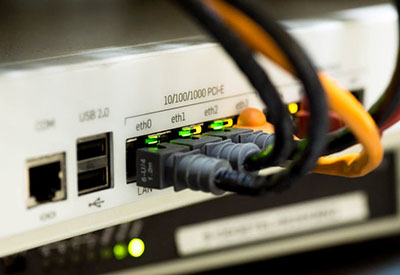
With Philips’ recent installation of a controlled, Power over Ethernet (PoE) lighting system at Clemson University, the race is on. PoE installation is said to be easier (plug-and-play), cheaper (no electrician, just use the existing Ethernet cable), and safer (lower voltage) than conventional lighting systems. PoE is less expensive to operate, and it provides greater controllability of the lights. While there is still much to demonstrate about PoE, it’s clear that it is here today and will be bigger tomorrow.
The market implications of this shift to lighting systems that are easier to install and cheaper to upgrade/replace, provide great controllability, and collect data are enormous. The best way to understand them is by looking not at the lighting business we know, but at the tech industry.
The tech industry wants the data that these systems can generate: traffic patterns, occupancy rates, customer movement inside a store and how long they stay, busy times, slow times, Fitbit wearers, Facebook Messenger users — the combination of data gathering, connected lighting systems, and a population carrying smart phones that can communicate with these systems creates a motherlode of data.
Cost is one of the biggest barriers to adoption of connected LED lighting, but the tech industry has demonstrated repeatedly that it will subsidize hardware and service to get data.
What are the implications of a business model that lowers the cost of lighting and simplifies lighting installation and replacement, but shifts lighting from a product to a data-collection service for a distributor? A lighting designer? An electrician?
While these and many other questions remain unanswered, using the tech industry as a guide suggests that the change that IoT and PoE will bring will be disruptive to all elements of the lighting market.
And I didn’t even mention LiFi.”
Chris Cloutier is a VP at D+R who has been working in the LED industry for the past four years. For more than 30 years, D+R has guided its clients in making informed decisions about energy use and efficiency by integrating proven expertise, analytics, methodologies, and tools.
And if you think Chris is crazy, check out this article titled, “These companies are mining the world’s data by selling street lights and farm drones.“
So, data becomes king. Does equipment get subsidized like it did originally for cellphones? If that happens, how does it change the distributor role (and compensation)?
Is your staff trained to engage in these advanced lighting conversations, or do you need to outsource them to a supplier (and which one)? And if you outsource to the supplier, who may be a lighting agent, do you lose control? Lose margin? Will the supplier potentially go direct (or through a different source) and does the customer question your value? Just food for thought.
Have you been exposed to PoE? If not, whom are your suppliers selling PoE through? Consider the Philips/Clemson scenario. Was a distributor involved? How? Why? What could other Philips distributors learn from this case study?)
The reality is that not all lighting would go this way, but does lighting enable the reality of the smart home? How does Chris’ scenario play out for large commercial facilities that can generate significant energy savings for utilities? Or if it is integrated into the Industrial Internet of Things (IIoT) where equipment is a bigger energy user? Of think of how retail environments may change through the data capture?
(I know, and then think of privacy issues!)
While this may not impact you today, longer term elements of this will. How can you increase your lighting acumen?
Have you been involved in a connected lighting project or know of one in your marketplace? How were you involved?
David Gordon is President of Channel Marketing Group. Channel Marketing Group develops market share and growth strategies for manufacturers and distributors and develops market research. CMG’s specialty is the electrical industry. He also authors an electrical industry blog, www.electricaltrends.com. He can be reached at 919-488-8635 or dgordon@channelmkt.com.
Allen Ray is president of Allen Ray Associates Ltd. Allen is a veteran distribution consultant. He has helped manufacturers, distributors, business system developers and business data providers grow their productivity and businesses. He can be reached at 817.271.0236 or allen@allenray.com.