Meet the Luminous Veil Lighting Design Team
By LDS Editorial Team
Learn more about Mulvey & Banani International Inc. and the lighting design team assembled for the Luminous Veil project by reading their collective answers to LDS’ questions. LDS periodically asks members of Canada’s lighting community for their perspective on the industry, as a way of helping our readers get to know leading members of the industry better. In this instance, Paul Boken, Associate and Manager, MVII’s Lighting Design Division, responded on behalf of the team. A full list of team members appears in The Luminous Veil: Transforming Infrastructure into Art.
1. What is Mulvey & Banani International Inc. (MBII)’s Lighting Division’s biggest challenge right now?
As lighting designers in the age of the complete transformation from conventional to solid state LED sources, we constantly need to stay educated and manage risk as we try out and specify new products. Project timelines move quickly and we are always coming up with creative ways to test new technologies, techniques and lighting details that are inspired by new lighting technologies. We very rarely find ourselves repeating the same detail with the same luminaires from project to project. Being creative and “edgy” at a time like this requires a great deal of hands-on experimenting education and risk management.
{loadposition slideShow4}
2. What decisions does your lighting team find are the most difficult to make?
I always find the hardest decisions are the ones that involve managing creativity and innovation with business risk and profit. Risky creative ideas/concepts can make a project “shine” but they take a great deal more time to design and implement. They also open the door to unpredictable results, which could end in extra cost to the owner and additional time spent by MBII, (that we can’t always recover). If the issues need to be resolved during construction, this cuts into profit. As creative individuals we don’t like to hinder creativity based on these types of “practical” decisions, we educate our clients, push for mock-ups and gauge fees according to the level of design we offer; we are not your “commodity” priced design firm, but you also don’t get the “Big Box Store” Treatment.
3. What has been your team’s greatest achievement so far?
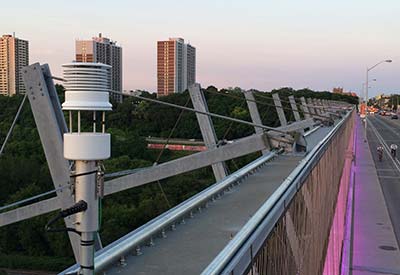
This is HARD to gauge… but I would say our greatest achievement is the reputation we have built across many disciplines of lighting design. Our greatest asset is the versatility of the team we have built, ranging from architecture and Interior design to theatre/live entertainment. We excel with complex, once-in-a-lifetime lighting installations like the Prince Edward Viaduct, to the country’s most celebrated commercial interiors and architectural spaces/buildings as well as themed environments like the new Ripley’s aquarium in Toronto or other theme parks we are currently working on all over the globe.
4. What industry trends or developments have captured your interest and imagination?
Integration!! Light sources are tiny and long lasting. We can build them into any architectural detail. Light should be felt, not seen…
5. What recent projects by other lighting designers have really impressed you?
While I am very proud of our Canadian lighting designers who are growing in numbers and consistently make a presence on the world stage (despite that Canada probably has 1 lighting firm for every 50 in the USA or central Europe), I must confess that I am consistently blown away by the quality of lighting design emerging from Chinese design firms. With unfathomable growth in the middle class, there are lots of projects in the region and more and more local firms emerging with increasing quality. These projects often use mind-boggling quantities of LEDs and integrate colour and animation with great imagination.
6. What industry developments are you most looking forward to? How do you see the industry benefiting from it/them?
Universality of lighting controls. We have been struggling with specifying lighting controls as the available technology develops and becomes more versatile, allowing for seemingly infinite control of many variables. This dramatic growth of control technology has paralleled LED technology changing how, and how often we dim/control lighting; LEDs are easy to dim, so we control them more frequently. From manufacturer to manufacturer these systems were initially proprietary, with different elements compatible with different manufacturers, and each manufacturer required certain internal components within the luminaires. It was a nightmare; the result was largely underutilized control systems. We are finally seeing a more universal open field where we have different systems talking the same language and offering the same basic platform so that we can compare them and design them on a more apples to apples basis, true integrated building wide control.
7. If you could change one thing about your industry, what would it be?
Greed… lighting is expensive. When things are expensive and money is to be made, it attracts the lowest form of humanity… Too cynical?
8. What is success?
Mastering the art of listening, interpreting and integrity: to truly master design you really need to develop an approach and style that is integral to and consistent with all projects. Good design is first achieved by listening, interpreting and then mastering the process from creating to implementation. Creative lighting concepts come from listening to the architect/architecture, designer/design, interpreting the goals and applying a solid consistent creative process that will see the shared project vision through to completion. Great listening skills and great design integrity can be applied to all life, master it and you are successful. (I will have proof once I get there.)
9. Describe one way in which you effectively separate work from family and personal life.
Turn off. I am lucky to have a woman in my life that inspires (not forces) me to turn off, I am happier as a result. I have certain nights of the week and certain weekends that I completely ignore work. This may mean that a few emails will go a few more days without being answered, but so what, life goes on, and eventually people don’t expect an answer within a day or within an hour so they think before they shoot you an email with an urgent question. They consolidate questions, they call… lighting is not life or death, there is no such thing as a “lighting emergency.” The other is hobbies! I am an avid cyclist, I need to ride three times a week or I lose my mind!