Lighting the Way to a Clean Future with Ultraviolet LEDs
July 12 2016
Robert C. Walker
Germs are everywhere. They’re on our clothes, in our hospitals, and even in the water we drink every day. Humans are resilient to a certain degree, but recent health crises such as the Zika virus and the water contamination crisis in Flint, Michigan, have been a wakeup call. Even in today’s seemingly sanitized world, persistent environmental health threats in our water and on everyday surfaces can cause serious damage — and the problem is far more severe than many realize.
According to the World Health Organization, more than one billion people lack a reliable source of clean drinking water. That’s nearly one in every seven people. Globally, nearly 3.4 million people, mostly children, die of water-related diseases annually. Even the places we expect to be safest can be dangerous. The Center for Disease Control estimates that one in every 25 hospital patients contracts at least one health care-associated infection during their visit. Globally, each year over 700,000 patients suffer from an infection while hospitalized, leading to 75,000 deaths.
Hospitals and commercial businesses around the world are taking note and deploying more solutions. Sales of disinfectant sprays, gels and wipes have grown in recent years, and the market for disinfection solutions keeps growing. The global health care surface disinfection market alone is expected to surpass US$542 million by 2020. Although these products can reduce the germ count on surfaces, existing solutions are limited. They’re expensive, generate excessive waste, and often include dangerous chemicals such as mercury — one of the top 10 chemicals of major public health concern.
Industrial water treatment solutions face similar obstacles. Reverse osmosis and distillation systems are notoriously inefficient, wasting three gallons of water for each gallon of clean water produced.
New technologies are filling these gaps in the market and improving disinfection capabilities. Ultraviolet-C (UV-C) light, with a wavelength range below 290 nanometers, has been used for disinfection for more than a century, preventing bacteria from reproducing in surfaces and water to create a sterile environment. The technology is widely deployed across industries, but many limitations exist that restrict widespread application.
UV-C technologies have often been powered by mercury-vapour lamps. Although mercury lamps have made traction in delivering industrial disinfection, limitations associated with mercury have prevented the development of a full range of applications. Mercury lamps not only involve the use of toxic material, but also they are fragile, bulky, and notoriously difficult to implement, requiring constant maintenance and frequent replacement.
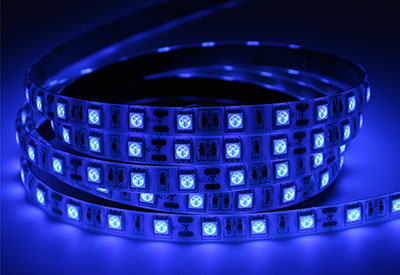
Rather than vaporizing toxic mercury to generate light from the UV portion of the electromagnetic spectrum, UV-C LEDs use semiconductor technology to achieve the same benefits while completely eliminating the risks associated with mercury-vapour based technologies. UV-C LEDs are not only safer, but also power on instantly. They are also more compact and offer higher power density than mercury vapour lamps. UV-C LEDs emitting at 280 nanometre wavelength also do not produce harmful ozone during the disinfection process.
Owing to recent advancements, UV-C LED technology is now available in the most powerful form of its size, producing tens of, or over a hundred, milliwatts of disinfection power at a size as small as a few millimetres squared. This enables unparalleled flexibility to incorporate into a range of products, from self-disinfecting water bottles and pitchers to hospital surface cleaners. With its short wavelengths and high power density, UV LEDs quickly deactivate the DNA of bacteria, viruses, and other pathogens, thereby preventing disease.
UV-C LED solutions enable point-of-use water treatment for consumers — imagine being able to purify your water with a light the size of a pencil eraser in your kitchen or in a portable water bottle, with water from any faucet. By bringing effective water treatment solutions to the consumer market, UV-C LED technology could help prevent millions of deaths per year and transform the way communities interact with their most precious natural resource.
The health care market also holds enormous potential for the deployment of UV-C LEDs; the applications are seemingly limitless. Mobile devices covered in bacteria can be disinfected within seconds by inserting the device into a UV-C machine. UV-C also enables the disinfection of catheters seconds before use. Handheld UV-C devices could disinfect everything from paper files to clinicians’ scrubs, which often carry some of the most potentially dangerous bacteria, including germs that cause pneumonia, bloodstream infections, and drug-resistant infections such as MRSA.
The possibilities are endless. Just as microchips sparked a flurry of innovation that generated incredible hardware and devices that most of us never imagined, UV-C LED technologies promise to do the same. Some sectors are ripe for transformation—such as water treatment and hospital surfaces—but these mighty components are poised to go much farther, bringing new health protections to industries from manufacturing to public transportation. More broadly, UV-C LEDs can help reduce the fear from tap water and “dirty” public spaces, giving consumers around the world peace of mind while creating healthier and more productive societies.
Robert C. Walker, Ph.D., is CEO of RayVio, an advanced health and hygiene company that enables clean water and environments to give consumers peace of mind. The company, based in Silicon Valley, helps protect against persistent environmental health threats by delivering a new class of innovative products. Applications include water, air, and surface disinfection and medical treatments, with a particular focus on consumer products. From 2007-2012, he was a Partner at Sierra Ventures, a private venture capital firm that manages more than $1.5 billion of committed capital. Dr. Walker focused on investments in solid state lighting, displays, clean technology, solar energy, and semiconductors. Prior to Sierra, he was CEO of BridgeLux, a high power LED lighting company, from 2005-2007, and served on its Board of Directors from 2004. In 2003, Dr. Walker founded YEBY Associates, a Silicon Valley-based consultancy specializing in the solid state lighting industry, and he continues to serve as a principal there. Prior to joining the compound semiconductor industry, Dr. Walker spent 10 years conducting high energy physics research, including several years living in Japan. He is an author of the paper announcing the discovery of the “Top” quark, one of the fundamental particles of nature. He received his Ph.D. in physics from Caltech in 1989 and a triple major in math, physics, and computer engineering from the University of Wisconsin-Madison in 1984.