Why You May Need a Lighting Designer on Your Next Project
March 22, 2019
If you think lighting design is simple, think again. Lighting design has become a creative extension of architectural design. According to the International Association of Lighting Designers (IALD), knowledge of physics, optics, electricity, ergonomics, business, codes, environmental issues, construction, vision, and the art of design are all essential to creating great lighting solutions.
Today’s lighting professionals must be knowledgeable across these foundational areas plus they need to know about the latest LED and controls technologies, the Internet of Things (IoT), human centric lighting, and so much more. Good, solid architectural lighting design requires this background knowledge. Great lighting design requires all of this plus an artistic creative vision.
Architectural lighting design is both an art and a science. The technical and scientific side addresses codes, standards and regulations. The creative, artistic side addresses aesthetics and enhancing the human experience. A good lighting designer with multi-disciplinary knowledge can bridge the gap between these very different sides of the design process.
Measuring the value of a lighting designer
Commercial lighting design starts with a simple question: what is the intent? There are many ways a lighting designer can enhance a commercial project and/or reduce costs, including:
[BF/IT]1. Aesthetics[BF/IT]
- Bring the architecture to its fullest realization or beyond.
[BF/IT]2. Function and the human factor[BF/IT]
- Maximize natural light, the #1 office perk according to a survey by Future Workplace.
- Create lighting that is in sync with our natural circadian rhythm to enhance occupant concentration and productivity as well as health and wellness.
- Avoid over-lighting a space—a common problem in commercial lighting that can be harsh and uncomfortable for occupants as well as increase costs unnecessarily.
- Design lighting that supports the WELL Building Standard aimed at advancing building concepts that help people work, live, perform and feel their best.
- Leverage lighting control strategies including task tuning to create a suitable level of light for a particular task or activity in a space, and personal lighting control that enables the occupant to tailor lighting to their personal preferences.
[BF/IT]3. Sustainability[BF/IT]
- Use the latest lighting technologies, techniques and control strategies to drive energy performance and reduce carbon footprint.
- Achieve LEED certification credits.
[BF/IT]4. Budgetary/Cost[BF/IT]
- Design to budget or help establish a lighting system budget early in the design phase.
- Reduce project construction and/or operations costs by getting competitive bids on lighting equipment.
- Leverage lighting control strategies such as task tuning, daylighting, occupancy sensors and more to reduce energy usage and costs.
- Identify ‘hidden’ costs such as those relating to system installation and longer-term maintenance requirements.
Selecting a lighting designer
There is no standard path toward becoming a commercial lighting designer. The title is used by a range of professionals in the lighting industry including electrical contractors, electrical distributors and architectural designers with varying backgrounds and qualification levels. However, independent professional lighting consultants with the below credentials or educational backgrounds are one point of reference for your search:
- [BF/IT]Professional associations[BF/IT] — IALD International Association of Lighting Designers (IALD publishes a directory of professional and associate members), CIE International Commission on Illumination, IES Illuminating Engineering Society
- [BF/IT]Annual Awards Programs[BF/IT] — International Association of Lighting Designers Lighting Design Awards, Architectural Lighting Light & Architecture Design Awards, Illuminating Engineering Society Illumination Awards
- [BF/IT]Educational Degree Programs[BF/IT] — Parsons School of Design, The New School, offers master’s degree programs in Lighting Design in the School of Constructed Environments (SCE). OSRAM is a member of the Parsons Lighting Design Partners Program which supports the Parsons MFA Lighting Design program students through public events, academic initiatives, tools and materials, awards, and the Parsons Light + Energy Lab. Rensselaer Polytechnic Institute (RPI) offers a M.S. in Lighting and a Ph.D. in Architectural Science with a Concentration in Lighting. The Lighting Research Center (LRC) at RPI administers the lighting graduate degree programs and pioneers research in solid-state lighting, light and health, transportation lighting, energy, and plant pathology. Osram is a partner of the LRC Partners Program, a collaboration of academia, industry, utilities, public benefit organizations, public advocacy groups, and government; a member of LRC’s Light and Health Alliance; and a member of the Illumination for Plant Health Alliance.
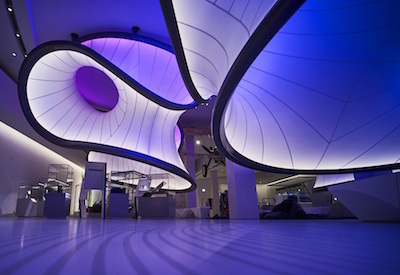
Photo: Mathematics exhibit at the Winton Gallery in London, U.K. lighting design by Arup. Photo by Giulio Antonutto-Foi. The project earned an IALD 2018 Award of Merit; www.iald.org/IALD/media/Media-Library/IALD International Lighting Design Awards/2018/MERIT-Mathematics-Gallery.pdf