LEDVANCE: Lumens vs. Kelvin – What Is the Difference?
November 17, 2026
Lumens vs. Kelvin – What Is the Difference?
Lumens and Kelvin are two of the most important lighting measurements. Because lumen output and color temperature influence lighting in different ways, many buyers mistakenly assume they are interchangeable. Understanding the difference between Lumens and Kelvin is essential for selecting the right lighting fixture.
What Is a Lumen?
A lumen (lm) is the standard unit for measuring the total amount of visible light emitted by a light source. The higher the lumen value, the brighter the light. Traditionally, people used watts to judge the brightness of a light bulb. However, watts actually measure the amount of electricity consumed, not the brightness itself. Modern LED lights only require about 8-10 watts of power to produce approximately 800 lumens.
What Is Kelvin?
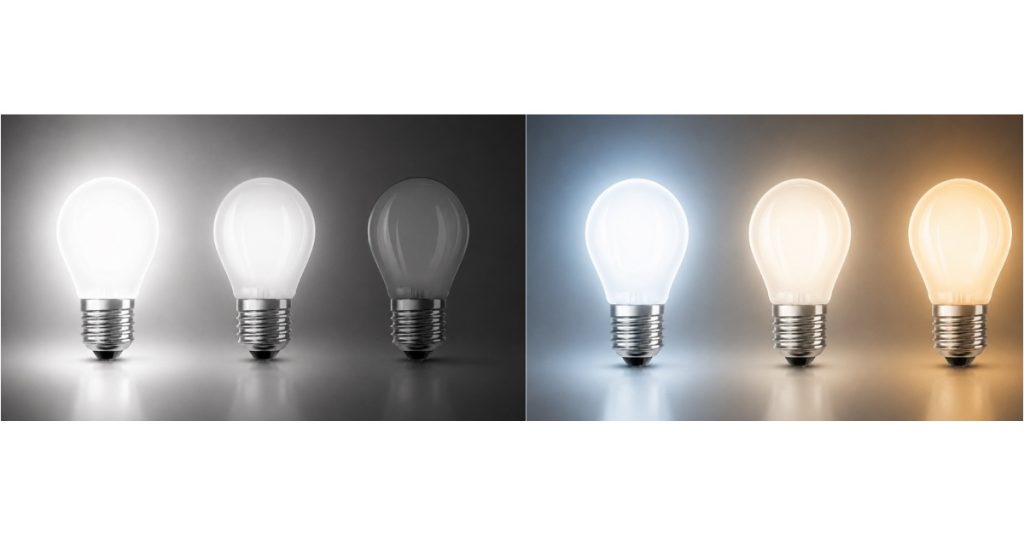
Kelvin is a unit used to represent the color temperature of light. It indicates whether the light is warm or cool. The lower the value, the yellower and warmer the light appears. For everyday lighting applications, we most commonly use the range between 2700K and 6500K.
Lumens vs. Kelvin: The Key Differences
Lumen and Kelvin are not the same thing. The key difference between Lumen and Kelvin comes down to quantity vs. quality. In practical applications, lumens are used in lighting design calculations. For instance, in commercial spaces, the total lumens required need to be calculated based on the area. Here are the recommended total lumen requirements based on 100 m²:
- Conference Rooms: 30,000–50,000 lm. Balances adequate brightness for note-taking and face-to-face interaction.
- Classrooms: 30,000–50,000 lm. Maintains high visual acuity across desktops and whiteboards.
- General Retail Floors: 40,000–80,000 lm. Completely illuminates merchandise and eliminates dark corners.
- Open Parking Lots: 1,000–3,000 lm. Mounts on high poles to cast wide, sweeping illumination across large driving and walking surfaces for security.
- Office: 40,000–60,000 lm. Provides 40–50 foot-candles of targeted task lighting to minimize eye strain and eliminate glare during prolonged computer work.
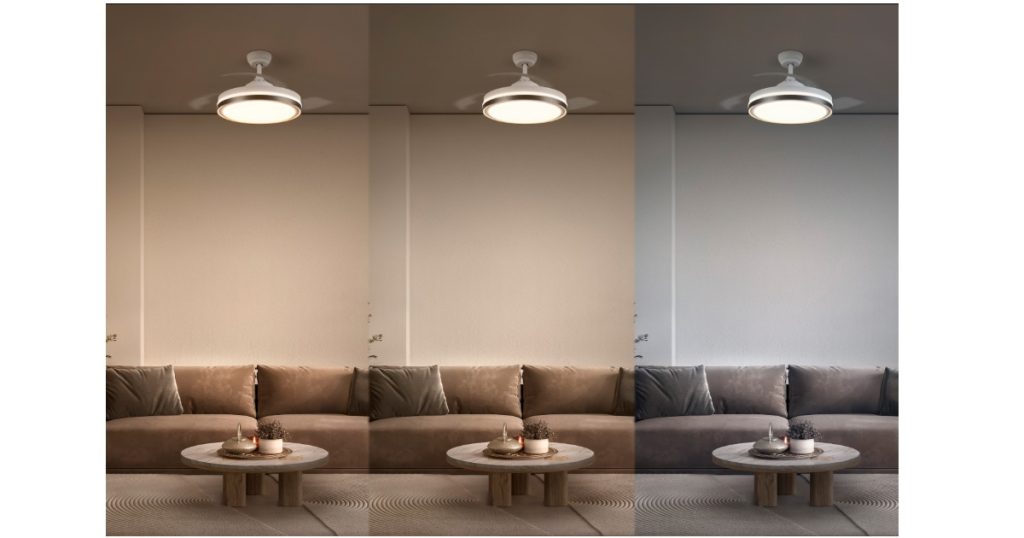
However, Kelvin is mainly used to create an environmental atmosphere. Hotels and restaurants often use 2700K to 3000K because the warm light makes the space more comfortable. Offices typically use 4000K. This kind of light is more natural and conducive to long working hours. In warehouse or industrial environments, 5000K to 6500K is commonly used, which is clearer and helps to improve efficiency.
How Lumens and Kelvin Work Together
When choosing lamps, both of these parameters should be taken into consideration simultaneously. Below is the optimal combination according to different places. The lumen values shown are calculated based on a 100 m² space using recommended illuminance levels from IES Lighting Handbook.
| Application | Lumen (100 m² space) | Kelvin |
|---|---|---|
| Office | 50,000 lm | 4000K–5000K |
| Retail Stores | 30,000–50,000 lm | 3000K–4000K |
| Supermarkets | 50,000–100,000 lm | 4000K–5000K |
| Restaurant Dining Areas | 10,000–30,000 lm | 2700K–3000K |
| Hotel Lobbies | 20,000–30,000 lm | 2700K–3500K |
| Warehouse Storage Areas | 25,000–35,000 lm | 4000K–5000K |
| Schools & Classrooms | 30,000–50,000 lm | 4000K–5000K |
| Stadium Training Facilities | 50,000–100,000 lm | 5000K–5700K |
| Airport Terminals | 30,000–50,000 lm | 4000K–5000K |
Remember to determine the required brightness for the space, then select the appropriate color temperature based on the function of the environment, visual comfort needs, and the type of activity performed.
Why Lumens and Kelvin Are Commonly Confused
People often confuse these two concepts because both describe light and affect visual perception. Intuitively, high-Kelvin light often appears sharper or cooler, leading many people to mistakenly believe that cool white light is brighter than warm white light. Conversely, low-Kelvin lighting creates a cozy, soft, and even can make a space feel softer or less bright. This physiological visual illusion causes people to mistakenly interpret Kelvin as a measure of brightness in lumens.
In the era of incandescent bulbs, the wattage, brightness, and color of a light bulb were almost identical. The color would subtly change as the bulb brightened. Now, in the LED technology, a 10-watt LED bulb can be made to emit either 3000K warm light or 6500K cool light, while maintaining the same lumen output.
Enhance Lighting Performance
Distinguishing between these two allows businesses to perfectly control the color scheme of their stores while ensuring brightness. Whether creating a warm, inviting atmosphere or a bright, modern environment, the right combination of lumens and Kelvin helps reinforce brand identity and enhance customer engagement.
Improve Employee and Worker Focus
High Kelvin light simulates natural daylight, suppressing drowsiness in employees and keeping them alert, thereby significantly improving work efficiency and reducing operational errors on the production line.
Optimize Energy Efficiency
Understanding lumens and Kelvin helps businesses choose the right lighting without overspending on energy. By distinguishing brightness from color temperature, they can select high-lumen, low-wattage LED fixtures that reduce energy costs while maintaining the desired lighting atmosphere.
FAQs: Lumens vs Kelvin
- 1.Does Higher Kelvin Use More Electricity? No. A higher color temperature in Kelvin does not necessarily mean higher electricity consumption. The power consumption of a light bulb is determined by its rated wattage and the duration of use.
- 2. What Is the Difference Between Lumen and Lux? Although lighting standards specify illuminance in lux, lumens determine whether a fixture can deliver the required lux level. As a rule of thumb, a 100 m² warehouse requiring 300 lux needs approximately 30,000 lumens reaching the work surface (300 lx × 100 m²), before accounting for fixture efficiency and light loss factors.
- 3. Is 6000K the Same as 6000 Lumens? No, 6000K and 6000 lumens measure two different aspects of lighting. A light can be 6000K and 1,000 lumens, or 6000K and 10,000 lumens. The Kelvin rating affects the light’s color, while the lumen affects its brightness.
- 4. Can I Change the Kelvin of an Existing LED Fixture? Most standard LED fixtures have a fixed color temperature, which means the Kelvin value cannot be changed after installation. However, some LED fixtures feature selectable CCT technology, allowing buyers to adjust the color temperature without replacing the fixture.
Optimize Light Levels and Color with One Fixture
LEDVANCE Floodlight Dual Selectable
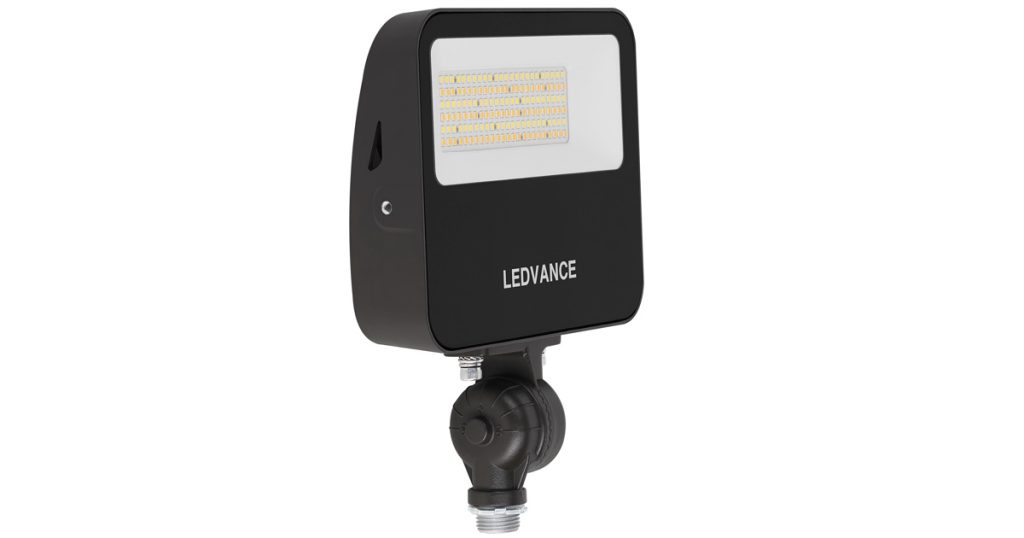
The LEDVANCE Floodlight Dual Selectable fixture offers selectable CCT (3000K/ 4000K/5000K) and lumen outputs (2250/3700/4500 lm), giving greater flexibility to adjust brightness and color temperature. With efficacy up to 150 LPW, it provides high light output while lowering energy consumption. For 30W and 60W models, a ½” IPS knuckle and trunnion are provided. For 140W, 300W, and 470W models, a slip fitter and trunnion are included. It is DLC Premium listed, which guarantees excellent energy savings. The product also qualifies for utility rebates, helping reduce overall project costs.
At LEDVANCE, many of their lighting solutions are designed with selectable CCT and lumen options. This allows buyers to easily adapt lighting to different environments without changing fixtures, improving both efficiency and installation convenience. If you are interested in these flexible lighting solutions, contact them for more information. Their team is ready to help you find the right product for your project.
For more information on LEDVANCE lighting solutions HERE


Lumens vs. Kelvin Lumens vs. Kelvin Lumens vs. Kelvin Lumens vs. Kelvin Lumens vs. Kelvin Lumens vs. Kelvin Lumens vs. Kelvin Lumens vs. Kelvin Lumens vs. Kelvin