Essentially, Enhancing the “Wow” of Light
January 9, 2018
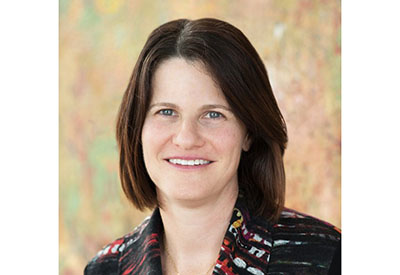
Jill Klores originally envisioned a career in physics, yet with her skill in optics, knack for creative artistry, and some insightful advice, she became intrigued by lighting design. And with David DiLaura instilling his own passion and knowledge in lighting design as one of her instructors at the University of Colorado, Jill became hooked on lighting. Her well-rounded career included working as an applications manager at Ledalite and an architectural lighting consultant for BC Hydro, both in the area of Vancouver, BC, and then two lighting design firms before founding Essential Light Design Studio in 2005.
What do you feel are the differences between day lighting and electric lighting, in terms of how it impacts those in the space?
There’s really no comparison; daylight is magic.
Photo by Jill Klores
We can strive to emulate or mimic it, but we’ll never replace the magic of sunbeams coming through a window. When clients ask me to do that, I’m inclined to tell them that I don’t want to compete with Mother Nature, I just want to enhance what she’s doing. It’s interesting; when a sunbeam comes into a room, some people close the shades, and some don’t, but if electric light is glarey, they will complain. We want to create “wow” with light, where people are drawn to it and not unnerved by it. With that being said, there’s so much we can do now with electric light that we couldn’t do just a few short years ago, like tunable light and intelligent control systems to change light intensity or colour over the course of a day, and not just in a uniform fashion. The answer still starts with bringing as much daylight into the environment as is appropriate, then we supplement and balance, sometimes with tunable electric light. This way, we’re not forced to live in static lighting environments. Humans are just meant to thrive via the dynamic light of day.
Are you incorporating tunable white into your designs?
We do have clients that are embracing tunable white, especially in healthcare. Children’s hospitals were really at the forefront of using changing colour as a feature for their patients, and that’s opened the door for other facilities to consider other dynamic lighting like tunable white. It’s something that folks want to talk about. But with every project, cost is a consideration. The studies and data haven’t settled on how to measure the benefits of such systems, making it hard for clients to balance the additional cost with a quantifiable benefit. Everybody knows that bringing daylight into a space is beneficial, and this is one step removed from that. We did it in a neonatal intensive care unit recently — we called it lighting for circadian benefit. The rooms all have some window exposure because of building codes, but some windows face another part of the building, or are in shadow, and it’s not ideal. So, tunable white helps us to mimic the natural time-clock; what’s happening outside that day. We have a senior living facility that may be interested in tunable white, too. Sundowning syndrome, where Alzheimer’s or dementia patients become agitated, confused, and anxious in late afternoon or evening, is a prevalent issue in these facilities. We are being asked to provide a tool to try to alleviate symptoms. Treatment through light therapy is still being researched, and implementing these technologies must be accompanied by staff education to use these tools to best benefit the residents.
How have advances in controls, smart building technologies, and the Internet of Things impacted your designs?
They have definitely impacted the way we think about a design solution. We have so much flexibility now. We’re working on a project for a financial institution where the lighting controls have really interesting triggers. The lights can change based on weather, sports scores or even stock market swings. The ability to have lighting as both a gatherer and distributor of information is exciting and we are beginning to have some very interesting conversations. I really look forward to where this is heading.
What motivates your clients? Is price still a predominant factor?
One would think, if they hired a lighting designer, that they care about more than just price. We, as the lighting designer, need to determine what motivated them to seek us out; what are they looking for? Since the recession, clients have been price-driven, however, I think I see a break in this. We recently did a project with a lot of linear feet of suspended, direct/indirect luminaires in an open office. We presented four different luminaire options that would work well for the job. We provided performance (including lighting, connectivity, maintenance), aesthetic, and price comparisons. It was refreshing in that the conversation centred on the performance and aesthetics. They chose a solution that was not near the lowest cost. We always want to include the options and functionality that they’re looking for, but sometimes that means a higher price. A reasonable percentage of the time, they take this under consideration, but sometimes the decision-makers don’t understand the value, so don’t go for it. And when the rest of the project team gets involved, sometimes there’s a lot of respect for what the lighting can bring, and sometimes it’s about meeting or beating a budget. That’s a normal aspect of the challenge. It’s trying to take all the requirements and create the best lighting solution possible.
How do you approach historic projects versus new construction?
For historic projects, we typically ask about the ability to change or update the glazing from a visible light transmittance or percentage of diffusion point of view, so we can take best advantage of daylight if windows or skylights are present. Or we may investigate a film or frit to help us bounce light into the space, or look at interior options to help push light further into the space. Then, we look at electric light enhancements. Typically, you walk into those projects before you start working on them, and they feel dark and dingy. I’m not convinced that’s the way they felt when they were originally completed. Somewhere along the way, a window was covered, or the twinkle of an incandescent filament was swapped out for a flat compact fluorescent. It’s our job to investigate the original intent, and add back that sparkle and play of brilliance rather than just “pumping up the volume”, although that is often necessary as well.
What advice do you have for students who might consider lighting design?
Now is a really good time to get into lighting design. We’ve been in this fast-paced, lighting technology boom for a number of years now, but I think we still have many years to go on this wave. Newcomers are unhindered by lighting definitions and practices of the past, so they can take the tools we have now and run with them. I highly recommend internships. We had an intern — she could only be with us for 5 weeks instead of 12, but it was still worth the effort for both of us. Going over how to check for flicker using a spin top, or the differences between Type II, III, IV and V distributions for exterior luminaires — it’s so rewarding to see her grasp a concept and get excited about it. Even if an internship doesn’t pay a phenomenal amount, the amount of on-the-job experience and education they receive is invaluable, and they can immediately apply almost everything they learn. On top of that, I think it’s so helpful for recent grads to get involved in other aspects of the lighting industry, like working for a manufacturer. Then, you understand exactly how products are manufactured, how materials and components work together, and what’s possible or limiting.
What can lighting manufacturers offer to facilitate your lighting projects or outcomes, or just otherwise make it easier for you to do your job?
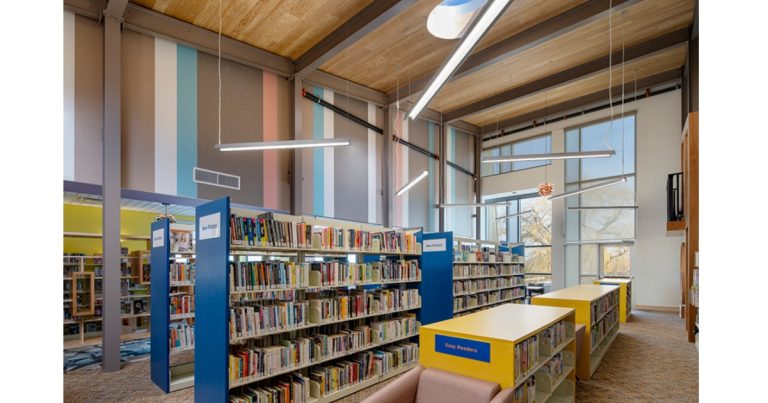
I think embracing the technologies that are available: providing ever-improving LEDs, or maybe OLEDs, and marrying them creatively with easy-to-program intelligent controls, to give us powerful tools in small or well-designed form factors. I think with LEDs, we took a hiccup when manufacturers tried to cram that technology into old form factors. Granted, we needed to have something that eased the marketplace into the new technology. Now, a lot of clients are getting excited about things that are truly LED technology, in the form factor that they should be. Architects are getting creative with ceiling designs, or the trend now with open-structure. I love it when a lighting manufacturer embraces the opportunities and combines building needs such as acoustical dampening with aesthetically interesting lighting, in some cases having great lighting performance and aesthetics! Or suspended linear fixtures that provide lighting, speakers, WiFi housing, cameras, and even the possibility of sprinklers or air distribution. There’s a lot of possibilities out there, and I’m excited when reps stop by to show us these kinds of products, because we think immediately of applications for them.
{loadposition slideShow28}
Photo credit:
1. Sheraton Dallas North, Dallas, TX, photo by Jill Klores
2. Sheraton Dallas North, Dallas, TX, photo by Jill Klores
3. CityPlace Station Square, Dallas, TX, photo by James Wilson
4. CityPlace Station Square, Dallas, TX, photo by James Wilson
Published with the permission of Philips Lighting Canada: http://images.newsletters.lighting.philips.com/Web/PhilipsLighting/%7B5b56ca00-abc2-4c2b-96d1-58e3c3aa2dfe%7D_Jill_Klores_LuminousSpec_Winter2017.pdf?origin=3_us_en_2017winterluminousspec__li_dec__art1_cta&campaignID=.