How Prepared Are Distributors for the Future?
August 10, 2023
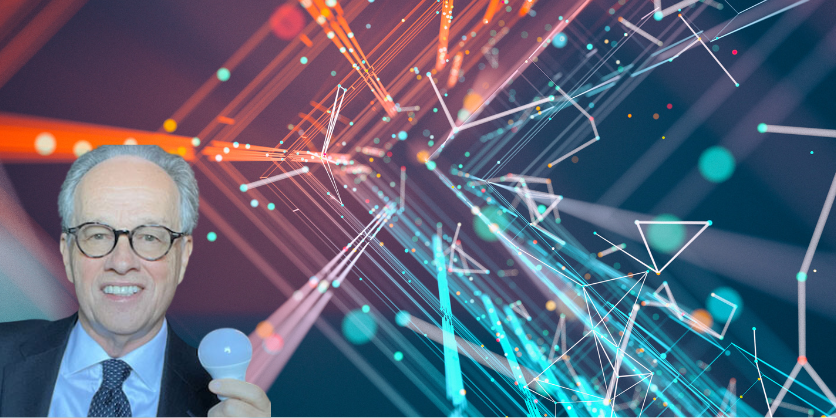
An Interview with Mark Lien about distributors staying competitive in a changing market
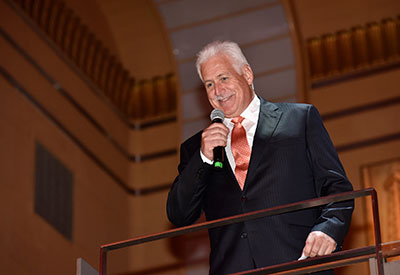
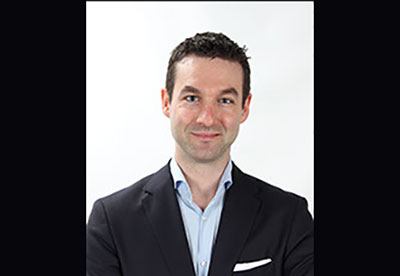
Mark Lien, LC, CLEP, CLMC, HBDP, LEED AP and President of Augmented Illumination, knows a thing or two about lighting technology. Not only does he serve on multiple industry boards and executive committees on the topic, but he also has experience managing the educational centers for Hubbell and Cooper.
Just last week, he received an IES Presidential Award for member excellence at the IES annual conference in Chicago; next month he will give a keynote on the future of lighting at the American Lighting Association’s annual conference in Lake Tahoe. He faithfully attends MIT’s technology conferences twice a year as well as other global technology events that keep him up-to-the-minute on the latest advancements.
In essence, when Mark Lien speaks about trends in technology that will impact the lighting industry, people listen.
We asked him what distributors need to know in order to stay competitive and aware of emerging trends affecting their channel.
There’s No Escaping AI
“There’s been a lot of buzz around AI lately, but it has already permeated our industry in a number of ways,” he says. “One year ago, we started to see AI in programs – such as DALI – that allow you to do image generation.” Lien notes that a colleague has started using AI to create sustainable architecture (i.e. living buildings). “AI can [generate] ideas of what buildings could look like, creating amazing architecture that we’d never think about normally,” he remarked. “We’ve talked about AI [performing] basic design and new materials science (new materials development) that is possible because AI can combine molecular structure in ways that would take humans forever to do.”
Mark Lien,
LC, CLEP, CLMC, HBDP, LEED AP
President of Augmented Illumination
As a sales tool, Lien says AI can be useful and very intuitive in helping distributors deliver information to their target customers. Manufacturers have already been using AI, Lien points out, noting that widespread acceptance started with virtual assistants such as Siri, Alexa, and Google Home.
“I don’t think there is any doubt about the trajectory of where tech is going,” he remarks. The only question is in the speed of that change because there are so many variables. “At this point, it looks to be unstoppable,” Lien notes. “It’s been woven in and will permeate our industry at levels we’re probably not considering yet. We have some interesting times ahead in lighting and AI will be a part of this.”
It’s important for distributors to become comfortable and knowledgeable about the emerging technology on the horizon. “Learning about the future enhances your credibility with customers,” Lien states. “When they come in and you tell them something they don’t know, you’re bringing value.”
Even the companies that distributors deal with, regarding energy, are going to change. “The players are going to change and the products are going to change. Distributors need to know this, so the quicker they adapt, the better [for business].”
Mark Lien,
LC, CLEP, CLMC, HBDP, LEED AP
President of Augmented Illumination
Energy Metrics Are Changing
According to Lien, who sits on six ASHRAE committees, energy metrics are changing. “Everything is about decarbonization now. The measurement of the impact of energy will be carbon, not watts. Instead of energy consumption, it’ll be about carbon generation. There’s a big difference between energy generation and use [versus] carbon, because you can make something less carbon-intensive, particularly ‘embodied carbon,’” he notes. The lighting industry will be hearing more about embodied carbon because of the increased interest in environmental product labels and transparency labeling, such as the Declare label on building products and WELL certification for buildings.
“Embodied carbon is a big deal for commercial manufacturers,” Lien states. [Embodied carbon refers to the carbon impact before the product is used. For example, how much carbon was generated in the manufacturing of the product, and in bringing components from overseas, the shipping to a distribution center, and then transporting it to distributors.]
“Think about our manufacturers; most are currently not identifying their supply chain for carbon. There are a couple who are, such as Finelite® [a Legrand company], but not many have done this yet,” Lien comments.
Mark Lien,
LC, CLEP, CLMC, HBDP, LEED AP
President of Augmented Illumination
Variables occur when manufacturers change vendors, since that will inevitably change the embodied carbon. Keeping track of it all can be time-consuming, and the onus is on companies to push their vendors to supply that information.
“These labels are going to become more important in the future for commercial lighting, along with end-of-life strategies for products,” which is also increasing in demand.
How 3-D Printing Fits In
Commercial lighting companies, such as Signify, are already offering 3D printed luminaires that can be completely customized and produced domestically. “Printed fixtures have less carbon,” Lien says. “They’re not just cutting out the transportation and distribution costs, but 3D printing is an ‘additive’ technology. With metal (or wood) we take a big piece and cut it down to size and there’s a lot of waste, but with 3D printing, you only add what you need – there’s no waste.”
“3D printing is progressing nicely,” he comments. “There is 3D printing in plastics and even human tissue for medical use. There is also research being done on 3D printing of OLED light sources.”
According to Lien, technology and decarbonization efforts will be impacting your lighting business whether you are ready or not. “Lighting companies tend to be reactive, not proactive,” he adds. For example, when investors are looking at acquiring companies or extending loans, they are looking at the company’s ESG (Environmental, Social, and Governance). “ESG is a serious weighing factor,” he states. “Companies with high ESG scores return higher profits – double digit higher profits, usually between 10-20% range.”
Lien’s advice to lighting companies and distributors is to remember what renowned naturalist Charles Darwin famously observed. “I grew up thinking Darwin said only the strong will survive, but what he really said was, it’s the ones who can adapt the fastest who survive. It’s fair to say that the companies that survive aren’t necessarily the biggest, but the ones who adapt to change — and that change is coming faster than ever.”
Mark Lien,
LC, CLEP, CLMC, HBDP, LEED AP
President of Augmented Illumination