Circadian Light Research Center Survey Confirms Harmful Health Effects of Blue-Enriched LED Light
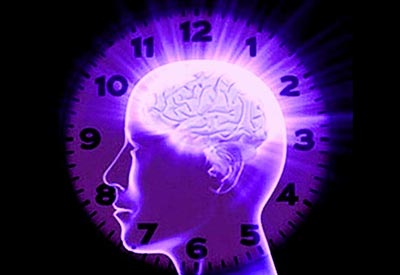
BOSTON (January 23, 2023) Many of the lights sold today are causing major health problems, including obesity, diabetes, and breast cancer. Why? They are blue-enriched LEDs, which play havoc on people’s circadian rhythms during the evening hours. Today the Circadian Light Research Center released the results of a consensus survey of 248 leading scientists, which confirms that human circadian clocks are highly sensitive to blue wavelengths, and exposure to insufficient daytime blue-rich light and excessive blue-rich light at night, leads to many major health disorders.
Lead author Martin Moore-Ede, M.D., Ph.D., director of the Circadian Light Research Center and a former professor at Harvard Medical School, said, “Fewer than 0.5% of lights sold today protect circadian health by altering their blue content across day and night. Many people in the lighting industry claim that the circadian science is not sufficiently mature to incorporate into lights. So, we asked the leading scientists who work on circadian rhythms and light whether they agreed.”
About the study: All scientists on PubMed who had published four or more peer-reviewed scientific papers since 2008 on circadian + light were invited to participate. Two hundred forty-eight of these scientists, who had published a total of 2,697 peer-reviewed publications on light and circadian clocks since 2008, completed an online survey with 40 potential consensus statements. They were asked to assess for each statement whether there was “no evidence,” “limited” evidence,” “good evidence,” or “well established.” Consensus was established for 24 of these statements, where more than 2/3 agreed there was “good evidence” or it was “well established.”
The study titled Lights Should Support Circadian Rhythms: Evidence-Based Scientific Consensus was published online on Research Square, a preprint server, and submitted for peer-reviewed journal publication. It reports there was a scientific consensus on the following:
- Robust circadian rhythms are essential for maintaining good health
- Disrupting circadian rhythms can cause ill health.
- Repetitive and prolonged exposure to light at night bright enough to cause circadian disruption increases the risk of breast cancer in women, increases the risk of obesity and diabetes and increases the risk of sleep disorders
There was also Consensus about the key role of the blue wavelengths in white light:
- The most potent wavelengths for circadian entrainment are 460-495 nm blue light near the sensitivity peak of the ipRGC melanopic receptors
- Blue-enriched light in the evening (during the three hours before bedtime) disrupts nocturnal sleep, phase shifts the circadian system and disrupts circadian rhythms
- The blue content of light entering the eyes is much more important in determining circadian health outcomes than the correlated color temperature (CCT) of the light source.
The scientists also agreed that:
- There is now sufficient evidence to support the widespread introduction of circadian lighting that adjusts light intensity and blue content across day and night to maintain robust circadian entrainment and health
- Light used in the evening (during the three hours before bedtime) should have as little blue content as practically possible
- LED lights with high 460-495nm blue content should carry the warning label “may be harmful if used at night”
- Increasing lights’ energy efficiency is desirable, but not if it increases the risks of causing circadian disruption and serious illness.
Professor Sean Cain of Monash University in Australia, an author of the study, said: “Exposure to blue-enriched LED light in the evening and night hours raises significant health issues because the human circadian system is highly sensitive to blue light near the 480 nm peak sensitivity of the melanopic intrinsically-photosensitive retinal ganglion cells (ipRGCs) in the human retina. Even small amounts of blue content in white LED light during nocturnal hours can cause circadian disruption and increase the risk of health disorders.”
Other authors include Professor David Blask of the Tulane University School of Medicine, Professor Randy Nelson of West Virginia University and Dr. Anneke Heitmann of the Circadian Light Research Center.
Since 2013 electric lighting has been transformed by the introduction of highly energy-efficient LED (light-emitting diode) lights and the progressive regulatory-enforced phase-outs of other less efficient light sources, including incandescent, halogen, CCFL, and fluorescent lights. However, most LED lights optimize efficacy by utilizing a blue chip which increases the relative percentage of blue content in the white light spectrum compared to other light sources.
To alleviate health problems associated with blue-enriched LEDs, people can purchase lights for evening and night use that do not contain blue light and use blue-enriched LEDs during daytime only.
For more information