Lighting Systems — An Introduction to ANSI C137.1
February 6, 2017
The recently formed ANSI C137 Lighting Systems Committee created a working group to develop a standard for a zero-to-10 volt analog interface between dimmable LED drivers, fluorescent ballasts and dimming controls. At present, there is no widely accepted industry standard for analog dimming of LED sources. The new standard, C137.1, will enhance interoperability of drivers and dimming controls and improve the uniformity of output of multiple drivers operating on the same control circuit.
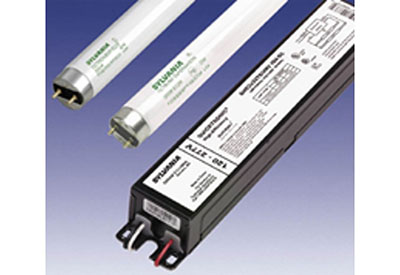
Photo credit: Osram Sylvania
The standard is based on the 0-10 V fluorescent dimming interface specified in ANSI C82.11 Annex A, which is similar to the interface specified in IEC 60929 Annex E. C137.1 adds several new features and specifies the interface in more detail.
The main new feature is a standby or “electronic off” mode. This optional mode disables the driver’s output power while its control circuitry remains awake. This feature can eliminate a relay used to disconnect the driver’s output and an extra pair of wires to control the relay. Standby mode is entered when the control signal drops below about 0.5 V. C137.1 also adds specifications for dynamic response, the time to start up or change from one level to another.
However, the standard covers more than drivers and ballasts; it also has requirements for dimming controls and system wiring. Like C82.11, C137.1 specifies that the driver or ballast supply current that the control unit sinks and uses to generate the control voltage. C137.1 requires that the control unit manufacturer declare how much current the control unit can sink. This gives a lighting system designer information needed to help ensure that the control unit can handle the current sourced by the driver(s) connected to it. C137.1 also specifies that multiple controls, such as a wall dimmer and a daylight sensor, can connect to the same control wires without damaging each other.
Finally, C137.1 requires that the voltage drop caused by control wiring resistance be no more than 0.3 V. This helps ensure adequate noise margin and uniform operation (light levels) of many drivers sharing control wires. Requirements on tolerances for the endpoints of the dimming range further contribute to uniform operation.
The working group has been developing the standard since February 2015. A draft is being prepared for public review according to the ANSI process. The standard is expected to be published in early 2017, but some of the above information may change, so it is best to check the published edition.
If you have questions regarding these new regulatory requirements or need immediate testing to ensure that your products are in compliance, please contact UL to discuss testing, advisory or training needs at PerformanceLighting@ul.com.
Roy Harvey is SSL Electronics & Infrastructure Standards Manager at Osram Sylvania. He is also Vice-chair of ASC C137 and Head of C137.1 Ad Hoc Group.