Li-Fi: 100 Times Faster Than Wi-Fi

December 6, 2016
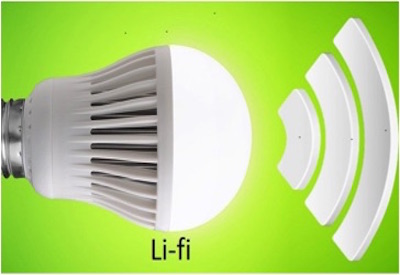
The use of light as a means to transmit Internet data has been coined Li-Fi. It has the potential to transform the telecommunications industry as we know it.
The high-speed communication technology is similar to Wi-Fi but is faster, allowing you to send and receive more data in less time. By swapping incandescent bulbs with LEDs — which have electronic properties — Li-Fi could bring Internet access to more areas and revolutionize the telecommunications industry.
The technology has already been tested in France and several other countries. The French company Oledcomm is installing more than 250,000 Li-Fi-enabled bulbs to provide wireless Internet access in the Paris subway system. In Dubai, Internet provider Zero 1 has tested Li-Fi and plans to install the technology by the end of the year throughout Silicon Oasis, the city’s tech hub.
Research has shown that Li-Fi can transmit data at 10 gigabytes per second, which would allow a user to download 18 movies in 1 second.
Li-Fi is expected to be a US$75 billion industry by 2023, according to Global Market Insights. Its potential is great, but most of us have hardly heard about the technology or how it works.
How Li-Fi works
Li-Fi was publicly introduced in 2011 by IEEE member Harald Haas, chair of the University of Edinburgh mobile communications department. The technology itself came out on the market last year.
Communication systems currently rely on electromagnetic radiation from radio waves. Electromagnetic radiation spans a vast range of wavelengths and frequencies, known as the electromagnetic spectrum. The EM spectrum is generally divided into seven regions in order of decreasing wavelength and increasing energy and frequency. On the low end are radio waves; in the middle is visible light. (Although all electromagnetic radiations are considered light, we can see only a small portion, which is called visible light.)
Li-Fi uses visible light, with spectrum 10,000 times larger than radio spectrum. Li-Fi can transmit information through light that varies in intensity. Chips inside LEDs process the data being transferred and can send and receive streams of data at the same time. A light source (LEDs) is required along with an Internet connection, a photo detector that receives the light signals, and a signal-processing component to convert the data into content. The light itself is essentially a hub for data transmission.
One of the benefits of Li-Fi beyond its speed is its relatively low installation cost. As long as a lighting system is available — and just about every place requires some type of lighting — there is no need for new wiring and equipment to make a connection. And Li-Fi is more secure than Wi-Fi, because visible light waves do not travel beyond the area covered by the light. In other words, it would be difficult for someone to intercept a Li-Fi data stream from a coffee shop next door. This also means there’s less interference among devices.
Although Li-Fi will not entirely replace Wi-Fi in the coming years, it could complement it to achieve more efficient and secure networks.
This article was first published in IEEE’s The Institute, http://theinstitute.ieee.org/ieee-roundup/technology-topics/communications/lifi-100-times-faster-than-wifi.
IEEE Senior Member Qusi Alqarqaz is an electrical engineer with more than 27 years of experience in the power industry. He writes about technology, works as a consultant, and mentors students.