Omnify: 4 Creative Applications for Backlit Wall Art & Surfaces
April 29, 2026
Backlit Wall Art: Designers Can Explore Innovative Possibilities That Were Previously Inaccessible, Allowing for Sophistication & Energy Efficiency
In the world of interior and exterior design for retail, hospitality, and other industries, one captivating element can turn ordinary surfaces into extraordinary masterpieces: backlit wall art.
By utilizing light, texture, and form strategically, backlit wall art can enhance the ambiance of any space while serving practical purposes. Traditionally, backlit wall art was associated with lightbox frames holding custom fabric prints illuminated by a light engine. However, contemporary applications have evolved to encompass entire backlit surfaces—walls, floors, and ceilings—incorporating diverse materials like glass and stone (e.g., onyx).
This article explores various backlighting techniques and their implementation in different settings: offices, restaurants, retail spaces, and hospitality venues. The integration of LED technology has revolutionized these designs, enabling larger, more unique backlit surfaces and enhancing the overall atmosphere efficiently and dramatically. Through LED backlighting, designers can explore innovative possibilities that were previously inaccessible, ushering in a new era of design sophistication and energy efficiency.
Types of Backlit Wall Art
Lightboxes
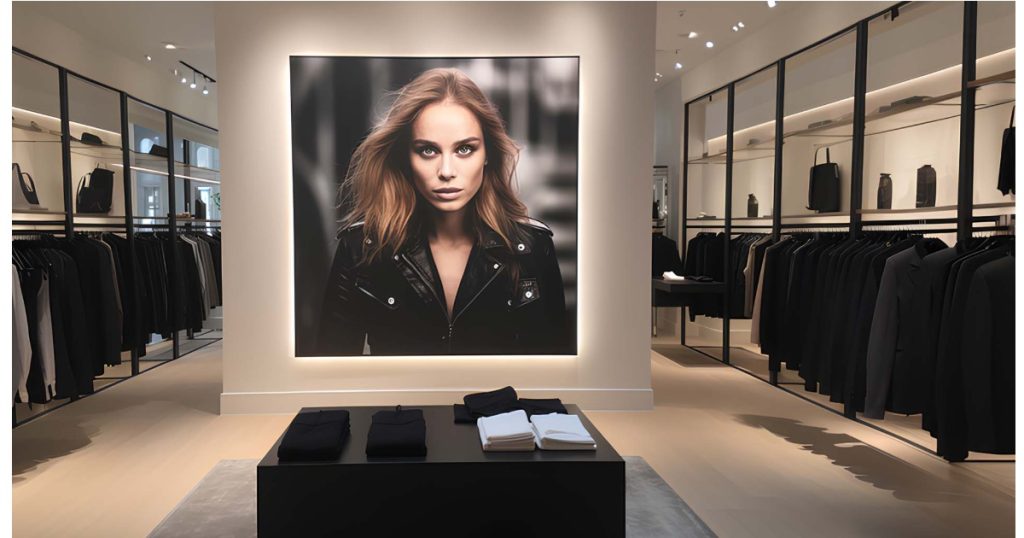
Although there are more dramatic options available, sometimes a classic lightbox is the perfect choice for the design. For example, lightboxes are regularly used in retail and movie theatres where signage must be swapped regularly, while maintaining its captivating appeal as a focal point. It’s ideal for lightboxes to feature light engines with a high CRI (color rendering index) rating of 90+ so that the graphic’s illuminated colors are accurately true-to-life and vibrant.
Omnify holds the patent for LumiSheet Pro, which has a CRI of 95+, and an efficacy of 131 lumens per watt. It’s also compatible with most lightbox applications, so feel free to check it out as a light engine option to complete your lightbox project.
Backlit Letters
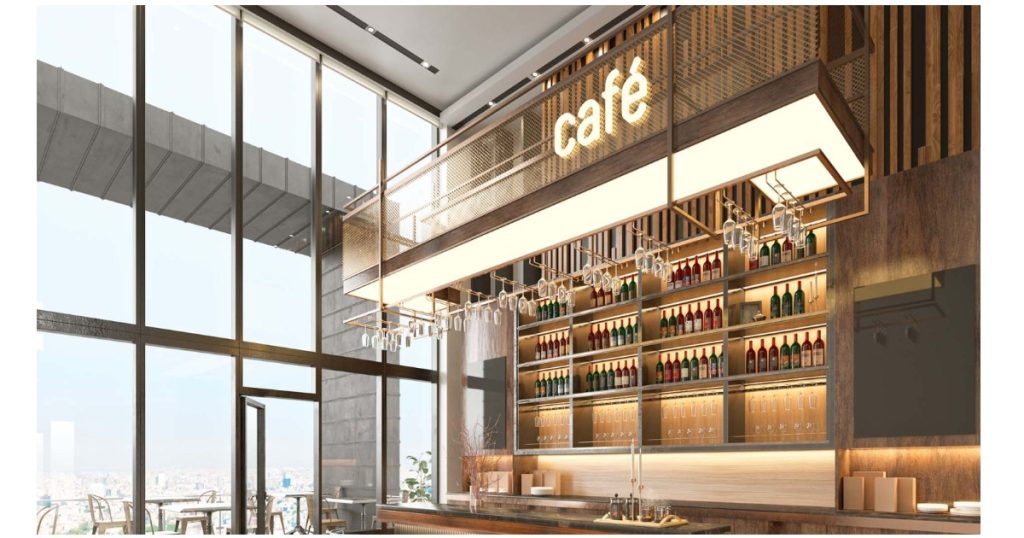
Backlit letters are everywhere you go, especially at night. They are found in both indoor and outdoor settings, and are often used in signage for cafes, restaurants and stores. If you’re looking for backlit letters, it’s best to prioritize choosing highly efficient and durable fixtures, as it’s likely you’ll need them to last, without flickering, for a long time, and be highly durable. To check those boxes, look for backlit letter products that are UL certified with long warranties, and have high lumens per watt (100+ lm/W). These high-quality products are guaranteed to reduce maintenance and replacement costs in the long run.
Feature Walls, Ceilings & Floors
Even if they’ve been paramount in crafting the desired ambiance of a space, pre-built light fixtures, wall art, and decor can be limiting. What if decor and lighting were built into ceilings, walls and floors, and customized to fit surfaces of unique shapes and sizes? This is why backlit ceilings, walls and floors have become a popular alternative to traditional light fixtures, especially in commercial or architectural spaces. It’s well known that feature walls (or accent walls) create focal points within a space. Backlighting surfaces like these make them more dynamic and eye-catching, and these surfaces can also be a wide variety of materials, such as glass, onyx, and more.
 Backlit Letters in Coffee Shop (Product Credit: OmniFrost)
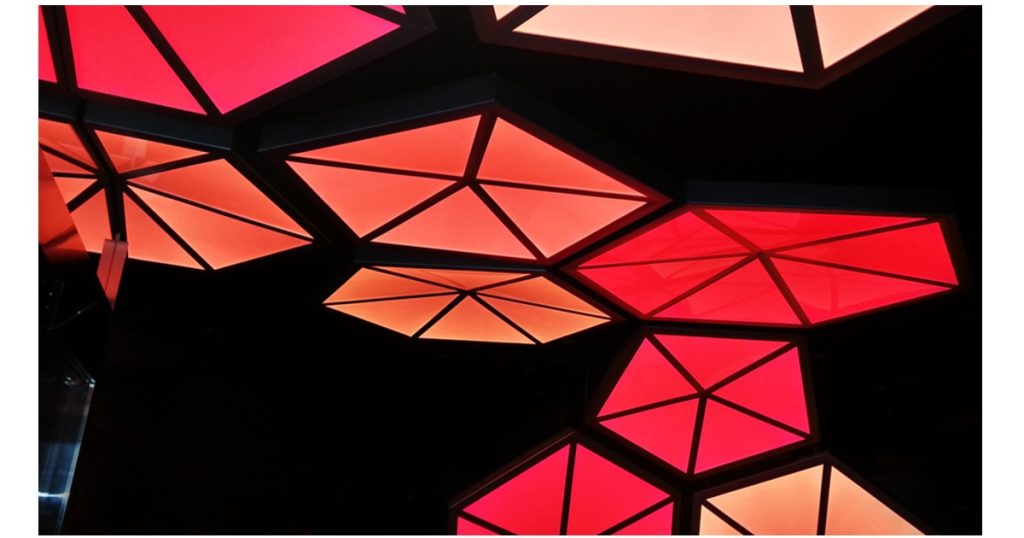
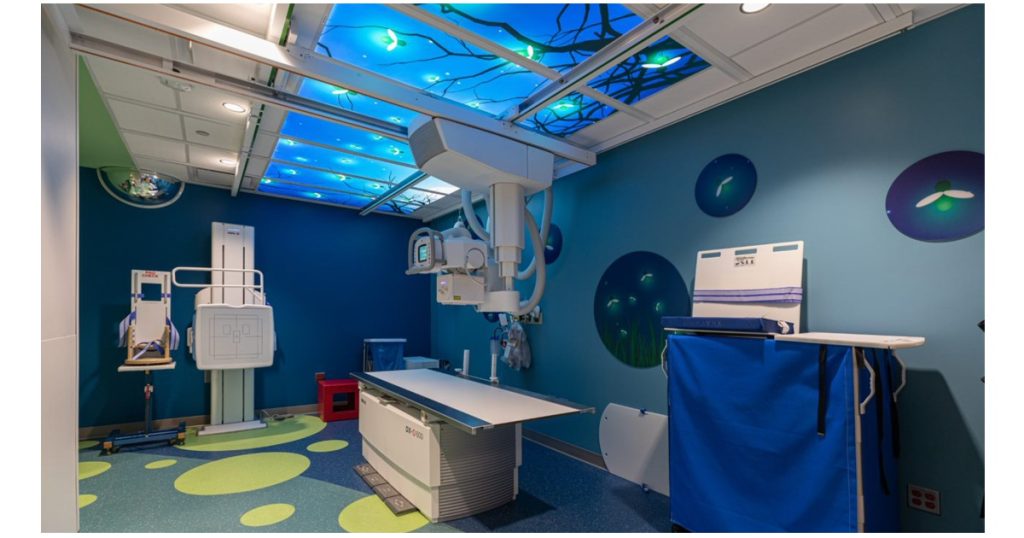 Custom Backlit Ceiling for an MRI Room (Product Credit: OmniSky)
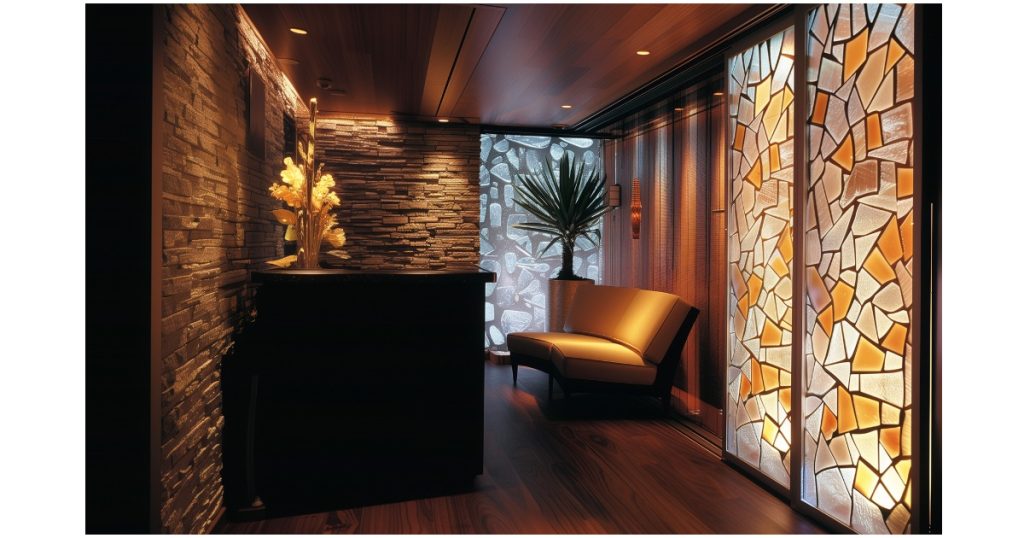 Custom Backlit Glass Feature Wall (Product Credit: LumiSheet PRO)
Inspiration for 4 Applications of Backlit Walls
The possibilities of backlit walls are endless, but it’s more digestible to consider how they might be implemented in specific applications. For example, in boardrooms, backlit walls might be used to foster an atmosphere of focus, whereas in restaurants they could be used to direct attention for improved guest navigation.
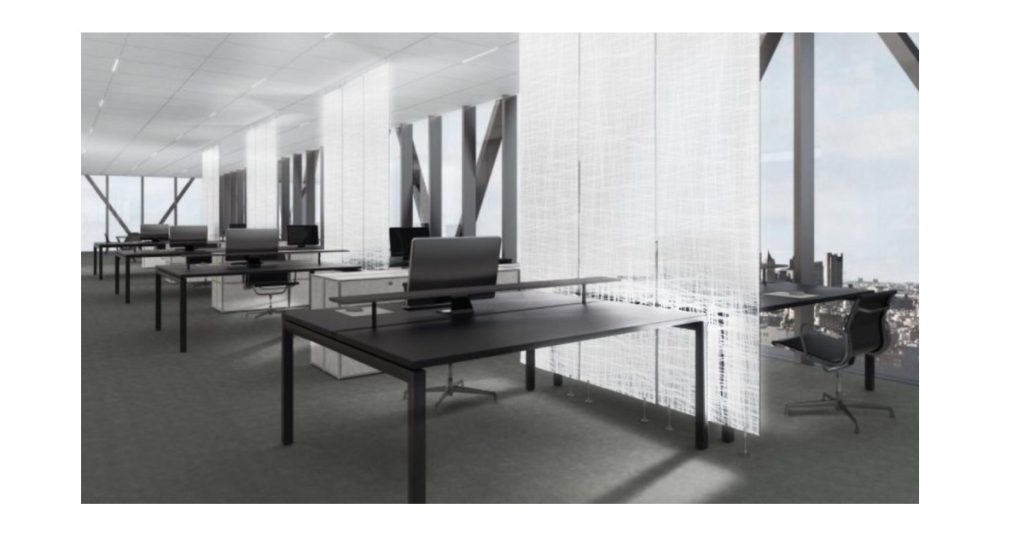
1. Backlit Walls in Boardrooms & Offices
Backlit walls can be used to mimic natural daylight from windows, which helps to boost energy levels and employee productivity. In fact, a study by the Journal of Clinical Sleep Medicine found that workers with windows got 46 more minutes of sleep a night on average, and the ones without windows had more sleep disturbances. Thus, if there’s a lack of windows in the office, backlit walls could serve as a suitable alternative.
2. Backlit Walls in Restaurants
Restaurants often incorporate feature walls and dramatic decor to create a more memorable experience for guests and improve coziness. Backlit walls and countertops can also serve a more practical purpose; restaurants tend to be dimly lit to create an intimate atmosphere, so backlit countertops can help bartenders see the drink they’re making and help customers to see menus.
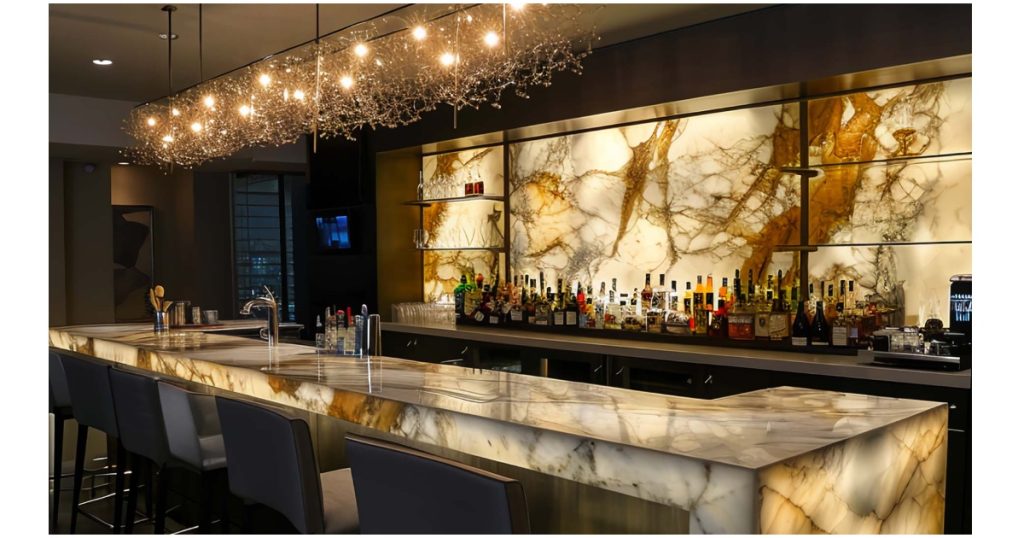 Custom Backlit Stone Wall and Countertop in a Bar (Product Credit: Matrix)
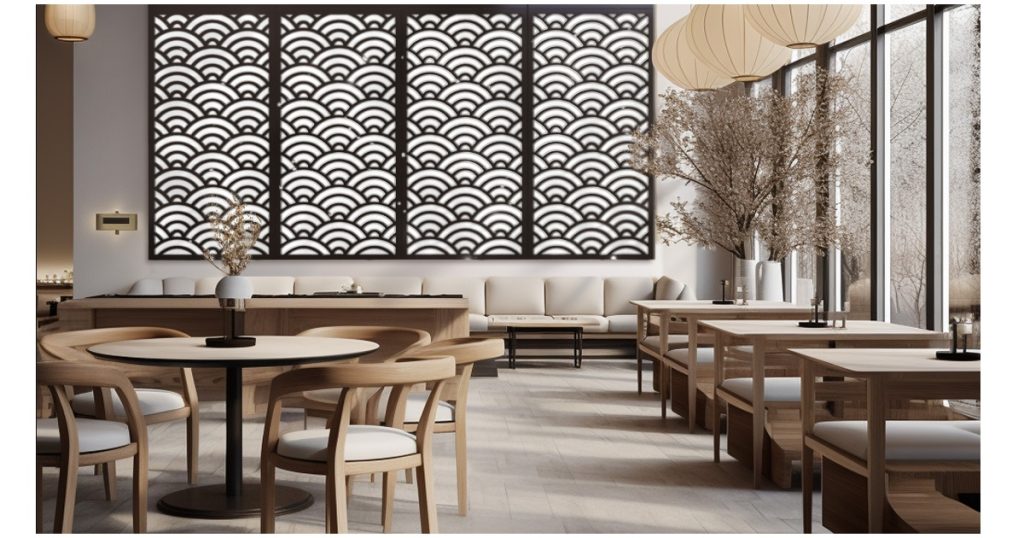 Custom Backlit Wall Art as a Feature Wall (Product Credit: OmniDecor)
3. Backlit Wall Art in Retail
In retail spaces, backlit displays showcase products in a way that draws potential customers towards products. Linear lighting with light bars and LED tape is a highly effective, simple way to add that extra dimension to product displays.
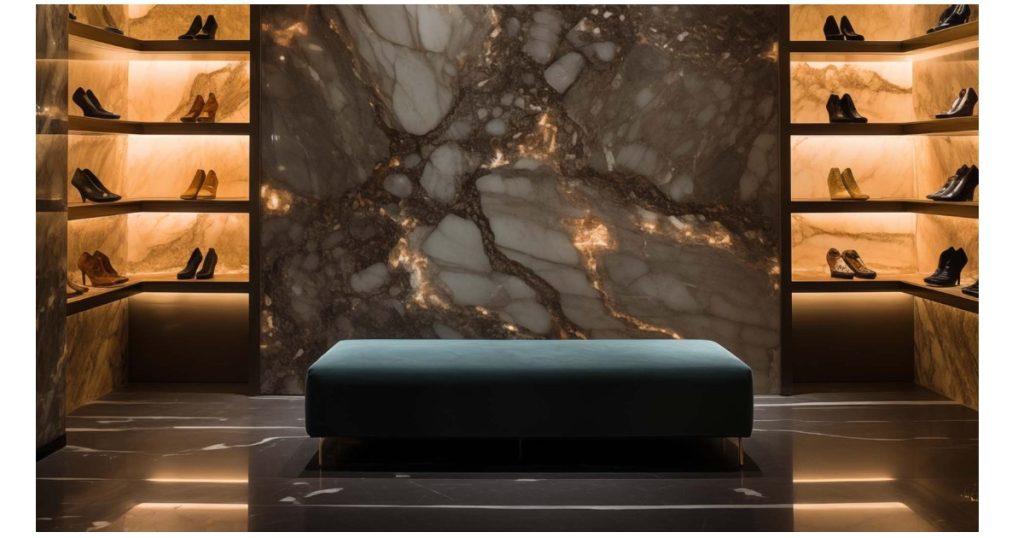
4. Backlit Walls in Hospitality
In hospitality settings, such as hotels and casinos, backlit wall art and walls are used to create an ambiance of luxury and opulence. Backlit walls are especially practical in hotel suites, as they help to illuminate a room without using the dreaded “big light”.
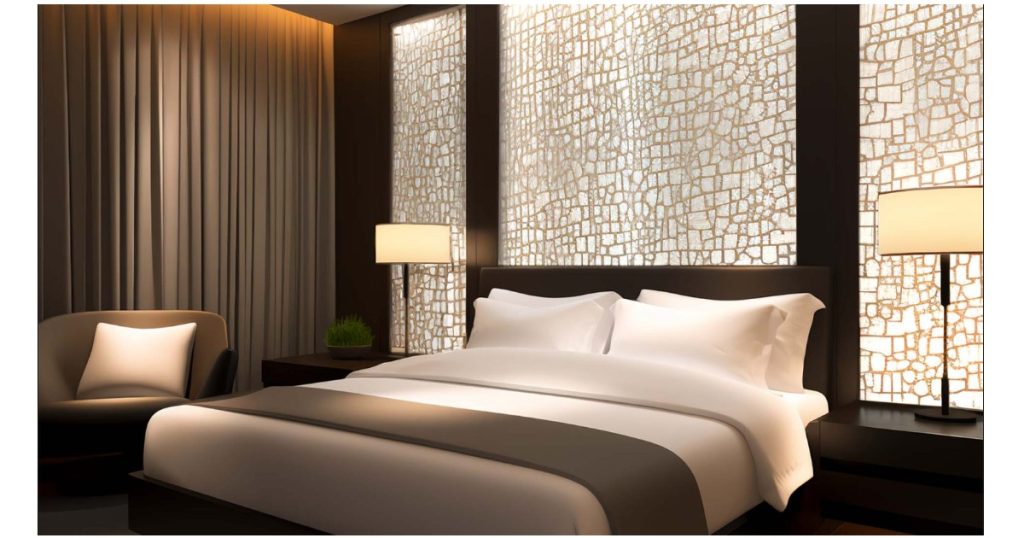
Inspiration for 4 Applications of Backlit Ceilings
It’s more common to implement feature walls into a design, but ceilings have an immense amount of potential, as they can be instrumental in creating the overall ambiance of space. Because of this, they also present many design opportunities. Let’s look at how they can be used in boardrooms and offices, restaurants, retail, and hospitality applications.
1. Backlit Ceilings in Boardrooms & Offices
Backlit ceilings present additional opportunities for further room illumination and can improve the comfort of employees in a boardroom.
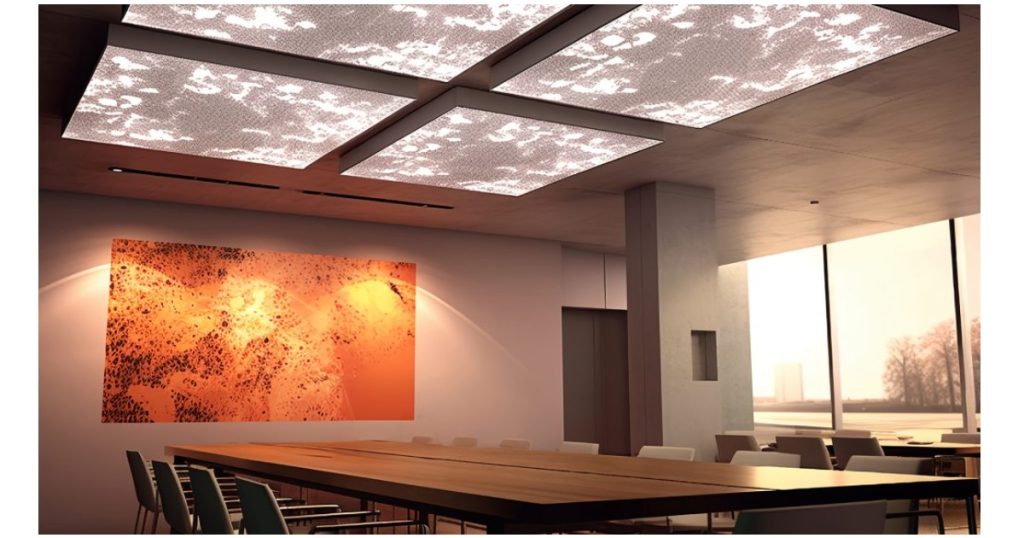
2. Backlit Ceilings in Restaurants
Linear LED lighting in restaurants can be used to create directional lines, improving guest navigation. It can also create dividers between restaurant sections, such as sit-down eating areas and bar spaces.
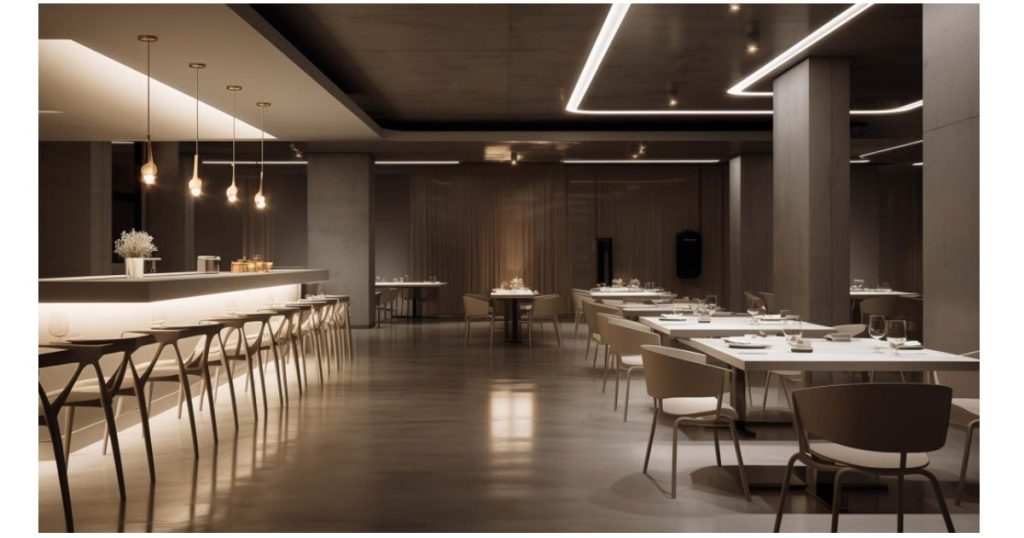
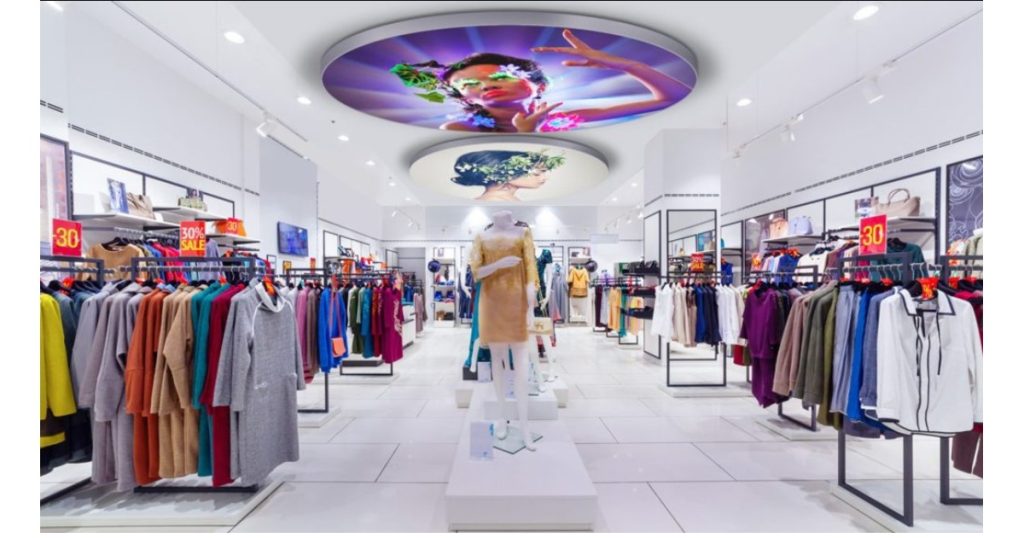
3. Backlit Ceilings & Brand Artwork in Retail
There are many possibilities for backlit ceilings in retail. For example, lightboxes can be customized to include on-brand images, such as products and logos, to enhance the store’s brand identity.
4. Illuminated Ceilings in Hospitality
Backlit ceilings and ceiling features in hospitality seamlessly blend functionality with aesthetics. Lighting can be used to guide guests through lobbies and corridors, and distinguish distinct areas in hotels, such as waiting areas, lounges, bars and more. Light also has a strong effect on comfort, and can support a sense of calm even in busy parts of hotels and casinos.
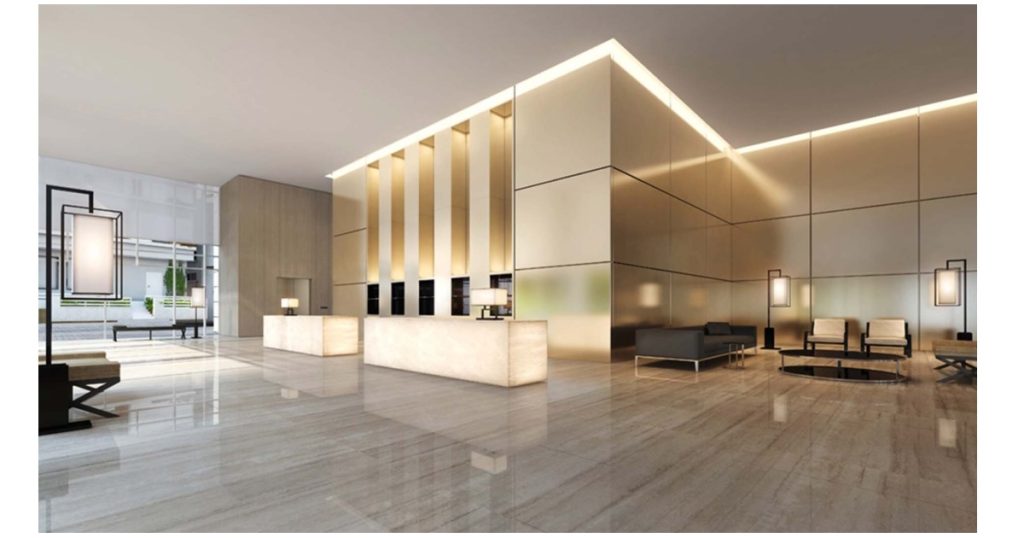 Unique Ceiling Illumination in a hotel lobby with Light Guided Panels (Product Credit: OmniSheet)
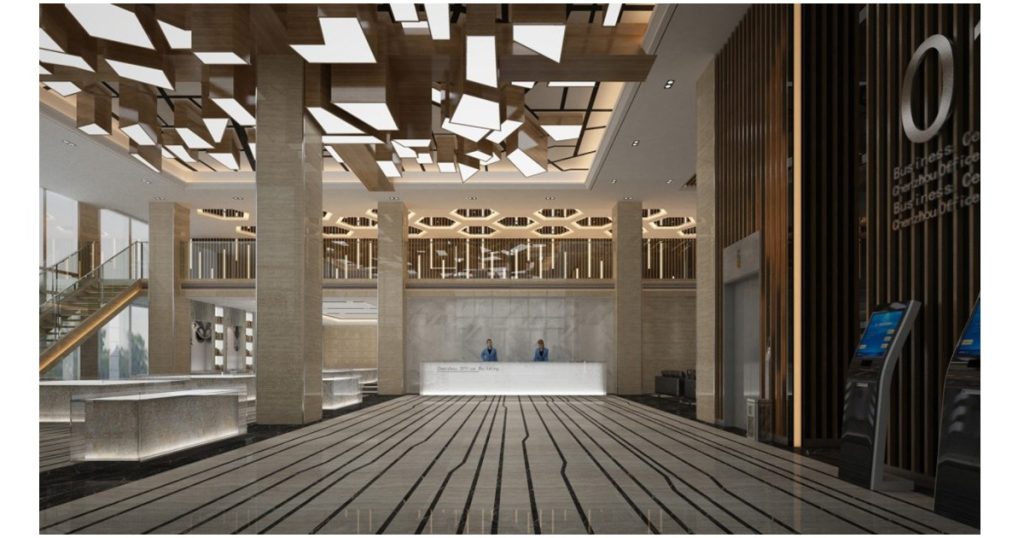 Custom, Illuminated Shapes to Replace Traditional Ceiling Fixtures (Product Credit: OmniSheet)
How Backlighting Is Installed
Installing backlighting may seem like a complex endeavor, but there are many mounting techniques, and some are surprisingly simple. Furthermore, the process becomes seamless if an expert is hired to implement the backlighting solution.
The Difference Between Light Fixtures & Light Engines
First, it’s important to note the difference between light fixtures and light engines. Fixtures are all-in-one lighting solutions that usually include a design element. For example, fabric prints could be slipped into a lightbox frame and illuminated with the included light engine. Because this is an all-in-one solution (with both a fabric print and light engine), it’s considered a fixture. Customization options for light fixtures include their size (dimensions), shape (circle, square, or a custom shape), frame type (snap frame lightboxes, for example), mounting type, and light engine used for illumination.
Light engines, as you might have gathered, are not all-in-one solutions, but are used to illuminate various materials, surfaces, and more, to achieve the desired effect. They are usually more seamlessly integrated into the design of a space, such as a stone countertop. There is a wide breadth of light engine types, including light guided rigid panels, flexible light sheets, expandable lighting modules in a lattice framework, and linear lighting (including light tape).
Light engines like these can be used seamlessly in the design of a space, or they can be used as a part of a light fixture (such as a lightbox). Light engines are also extremely customizable, and some (such as many flexible light sheets) can even be cut and customized on-site.
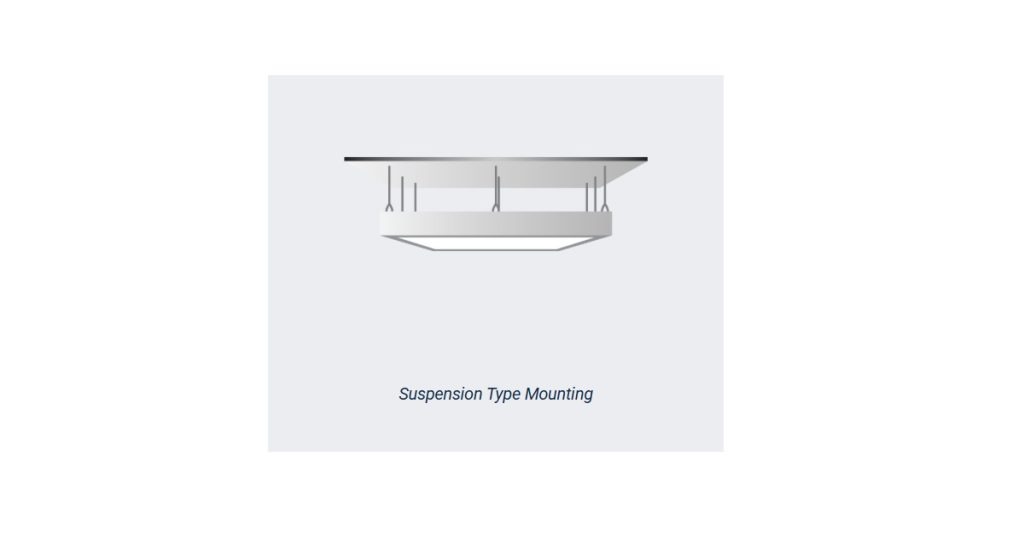
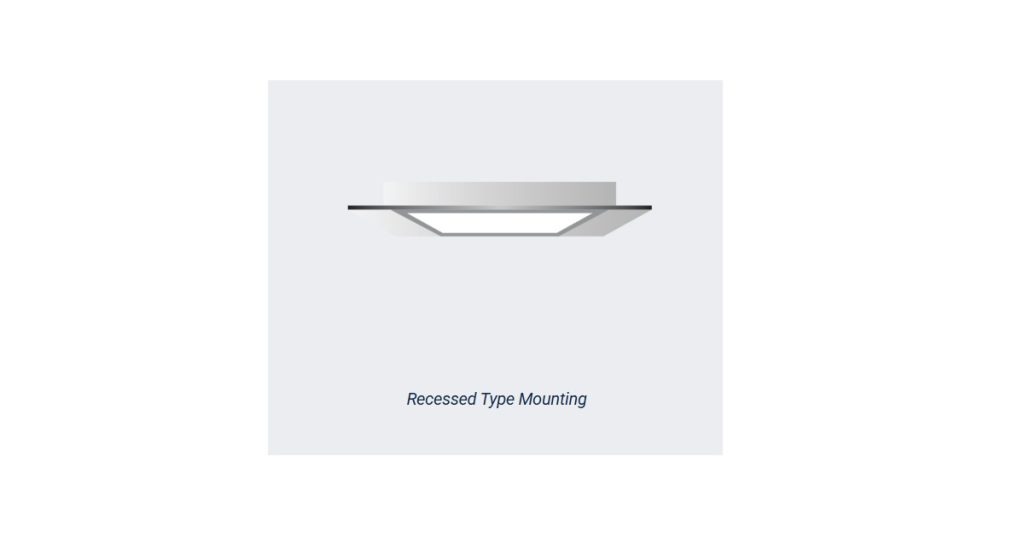
The fixture, light engine type, and specific product, determines its compatibility with different mounting methods, and many products are compatible with a few different mounting options, listing a few of them below. Be sure to check with your product’s installation manual or specification sheet for specific mounting instructions or speak with a backlighting design expert. The mounting option that you ultimately choose will be, firstly, compatible with your light engine or fixture product and, secondly, work well with your lighting project design to achieve the desired look.
General Mounting Types for Backlighting Solutions
Certain types of backlighting solutions can simply be installed with 3M adhesive tape or magnets, such as many light tape and flexible light sheet products.
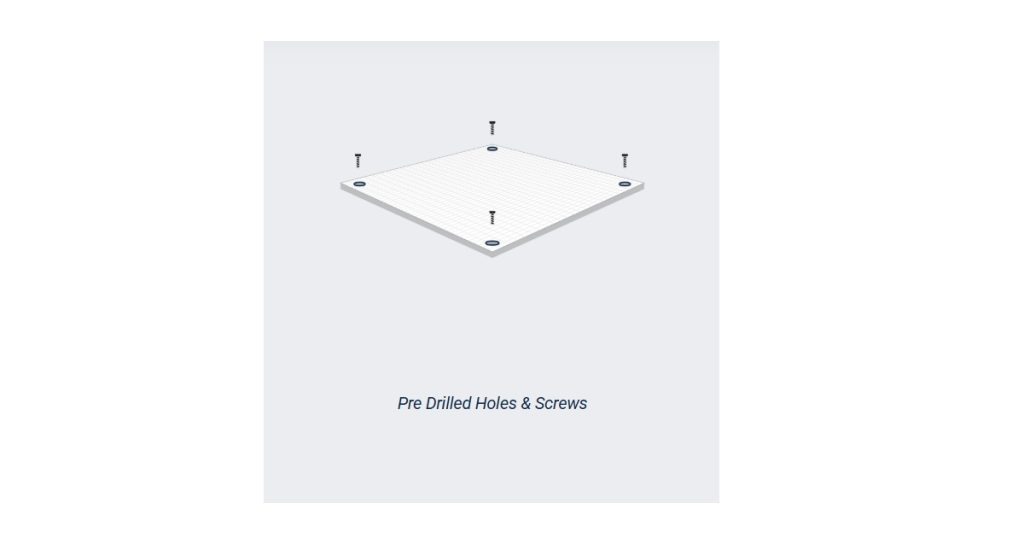
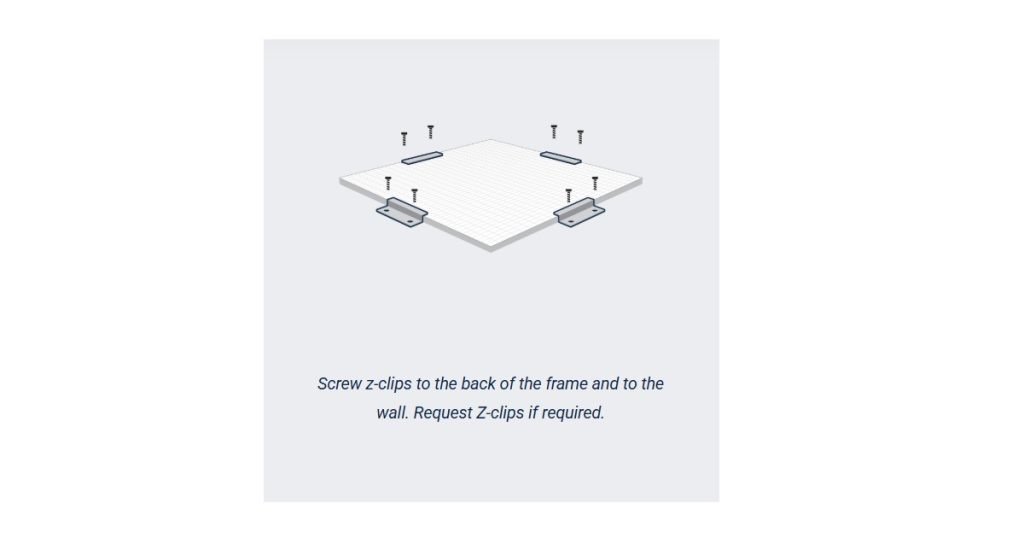
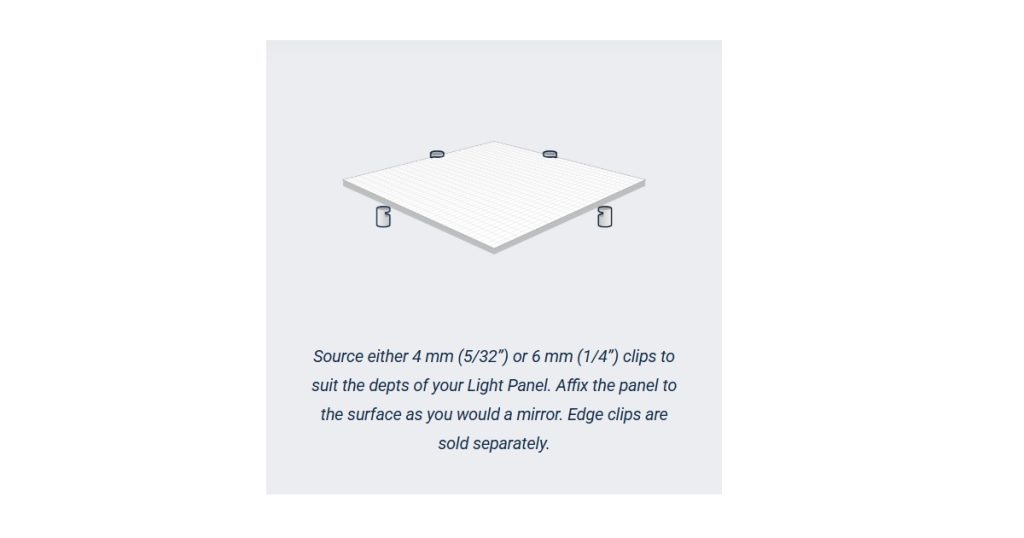
Mounting Types Depending on Aesthetic Preference
There are also various mounting options that can depend on the desired look of installed lighting. Compatibility with these options depends on the chosen light fixture product.
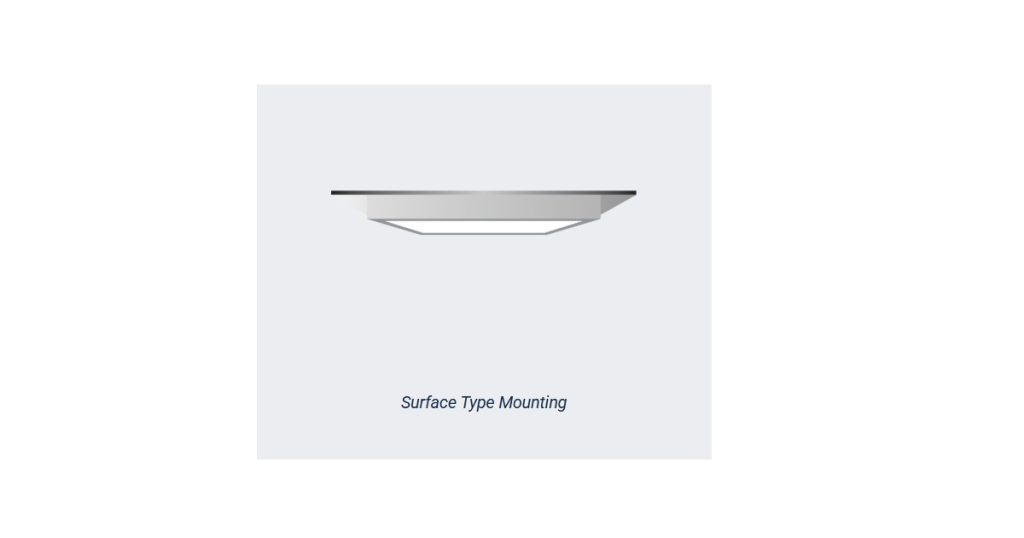
The Best Way to Backlit Stone & Onyx
One of the most captivating surfaces to backlight is stone, and onyx in particular is a very popular type of stone for backlighting. Through the strategic placement of light sources, stone surfaces come to life, highlighting intricate patterns and textures. The result is a breathtaking display of natural beauty enhanced by the power of light. Next, let’s briefly cover the process of backlighting stone.
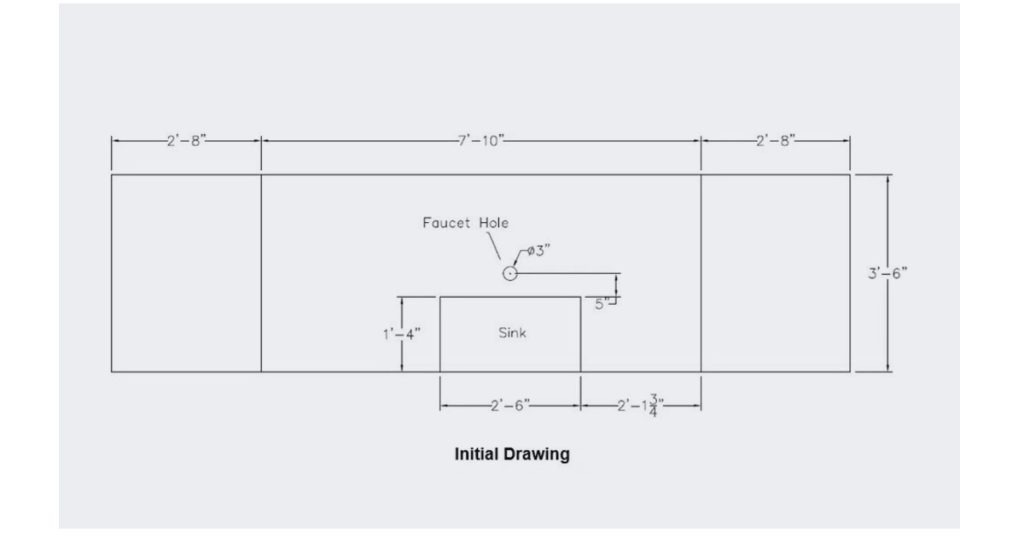
1. Sketch an Initial Drawing of the Surface & Include Dimensions
Consider how you want the final result to look, and what surfaces you want to illuminate. Obtain the dimensions of each illuminated surface, and create a sketch that features them. Determine whether you have any curved surfaces you’d like to illuminate.
2. Decide on Your Backlighting Product
Light guided panels or flexible LED light sheets are most commonly used for backlighting stone, including onyx and marble. There are many considerations to keep in mind when choosing your ideal backlighting product. It’s important to decide if lumens per watt, warranty, and cuttability are important for your project.
For example, if you require a product that’s going to be used outdoors, it should be wet rated, meaning it should conform to the IP65 standard. Or, if you have a unique surface you’re looking to illuminate, it could be beneficial to consider a flexible light sheet as your light engine so you can cut, fold and bend it onsite to fit unique knockouts and curves. There’s a lot to consider when choosing a backlighting solution, so Omnify recommends speaking with a backlighting expert to help determine your project needs.
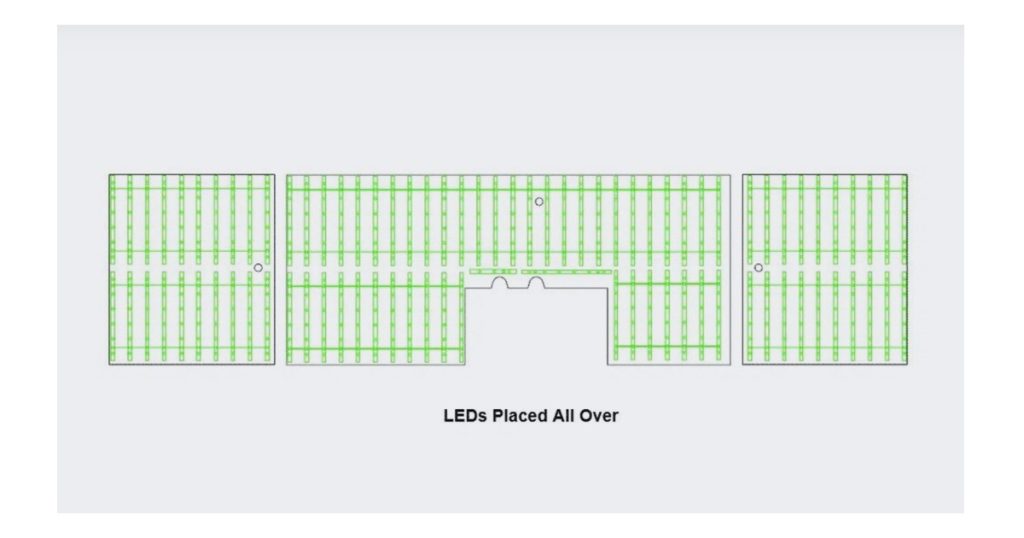
3. Add LEDs to the Drawing in Their Optimal Positions
Once you have a clear idea of the backlighting product that would work best with your project, it’s time to add LEDs to the initial drawing. This helps people involved in the project to understand how the stone surface will be illuminated.
4. Position & Mount the Light Panel Product on the Countertop (Before Placing Stone)
If there are multiple mounting options available for your chosen backlighting product, choose the one that would be best suited for your project. Let’s say you go with the “Standoff” mounting option. Next, follow instructions in your product installation guide, or have a backlighting expert mount the product. If you’ve chosen a light engine that can be customized onsite, such as a flexible light sheet, make any adjustments to suit your surface and knockouts.
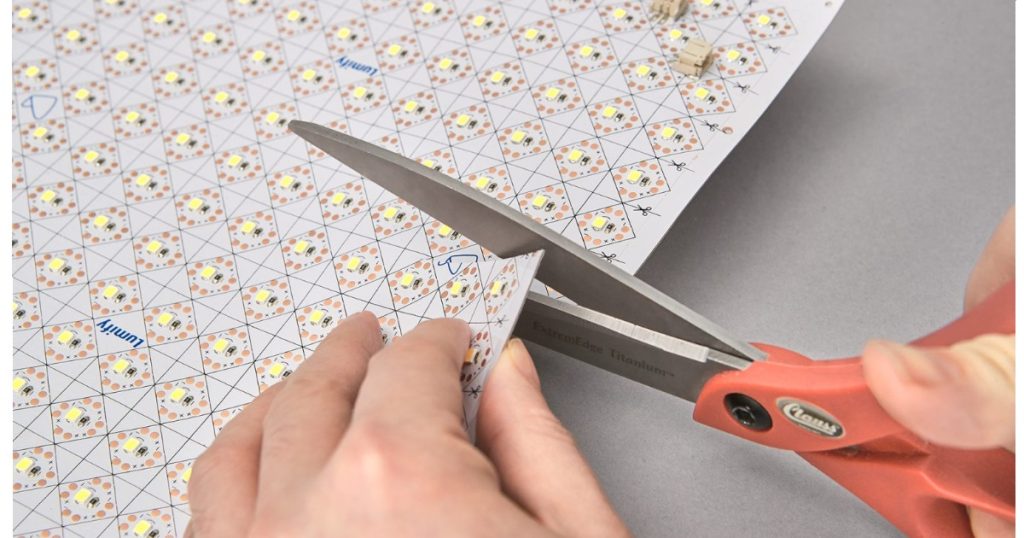 Cutting Matrix Easily On-site
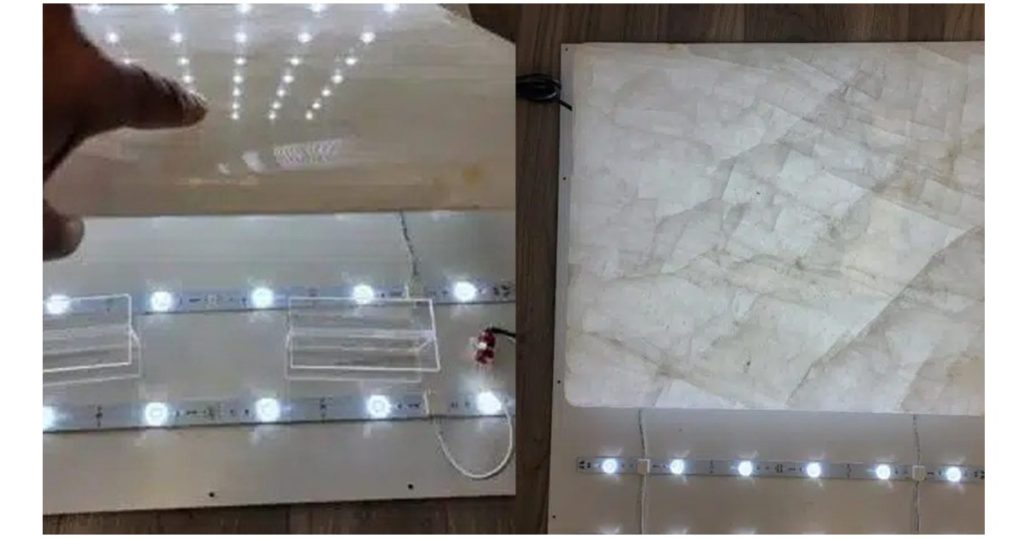 During Installation
5. Connect the Power Supply
Hardwire power supplies and metal enclosures are usually included with light engines for backlight projects. If you want the light engine to be dimmable, that’s one of the considerations to keep in mind when ordering your backlighting product or solution. If you choose a product that is dimmable, it should come with a dimmer as well.
The power supply is installed inside the metal enclosure, and then placed in an accessible and well-ventilated location, and the light engine is connected to the power supply. Omnify recommends that an electrician helps with this part of the installation.
6. Install the Stone on Top of Backlighting
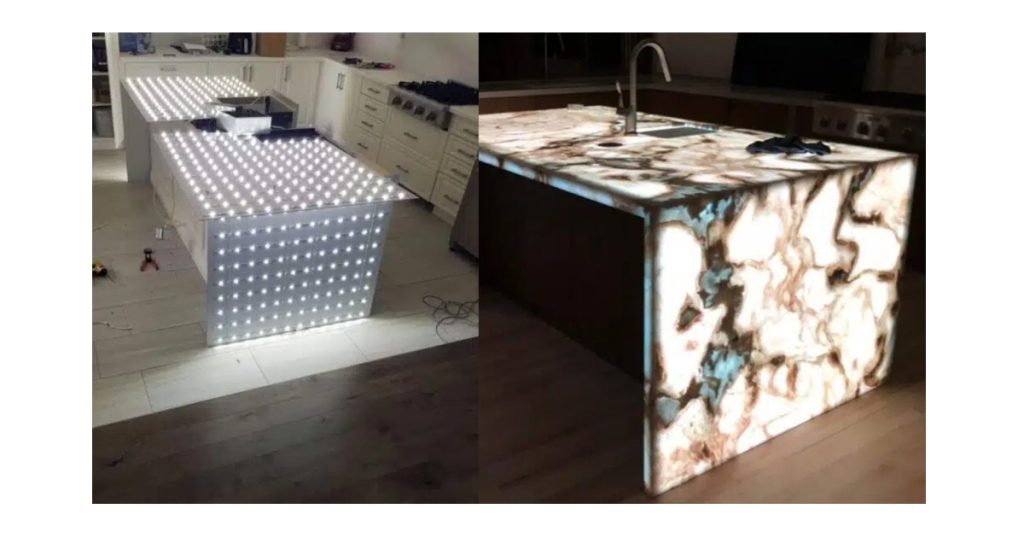
Conclusion
In the world of interior design, backlit wall art has evolved. Now, backlit surfaces such as walls, ceilings and floors have become attractive for project designers, especially in commercial buildings, retail, restaurants and hospitality. Backlighting surfaces combines artistry and technology, and has the power to make spaces more charming and functional. Along with this alternative to classic backlit wall art comes opportunities to backlight surfaces such as onyx and glass, which opens up even more design possibilities.
If you’re interested in exploring design possibilities, either with backlit wall art or backlit surfaces, get all your questions answered by an Omnify backlighting expert. Contact Omnify HERE
For more information on Omnify lighting solutions HERE


Backlit Wall Art Backlit Wall Art Backlit Wall Art Backlit Wall Art Backlit Wall Art Backlit Wall Art Backlit Wall Art Backlit Wall Art Backlit Wall Art Backlit Wall Art Backlit Wall Art