The Non-Technical Language of Light: General Diffuse Lighting
By Robert Lanteigne
December 6, 2023
The past, present, and future of general diffuse lighting in the industry

Photo Credit: Amine Frigui
Light is everywhere, filling up our world in its purest natural form! From the Sun’s ginormous beams to the tiny glow of a lightning bug, general lighting flourishes all around us through space. It starts as raw, uncontrolled brightness before we sometimes shape it for use.
Our mighty Sun looks like a giant blaze in the sky, blasting its intense blaze to warm Earth. The sunlight shines equally powerfully in all directions from the solar surface without any diffusers or filters altering it first. Just essential light flowing freely makes plants grow and days bright.
Similarly, fireflies create their organic light inside their stomachs to blink in the dark woods. The firefly glow isn’t focused into a beam – it’s created as a bare miniature bulb shining simple and pure, fluttering through the night.
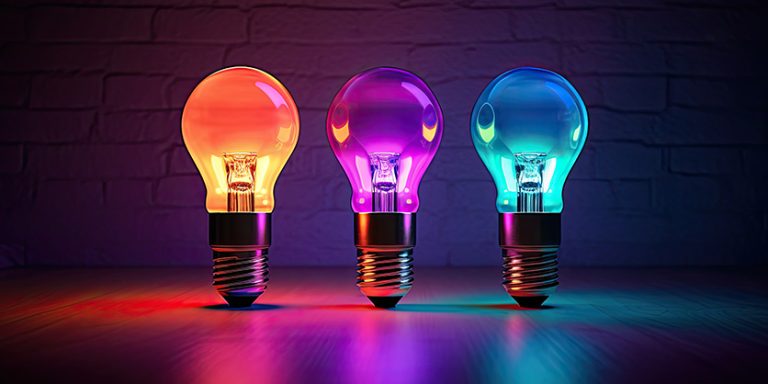
Human-made lighting often mimics these omnipresent natural light traits. Historic light bulbs work by passing electricity through wire-thin tungsten filaments to get them glowing hot, releasing uncontrolled brightness. Early bulbs emitted light every which way without lenses or shades to direct it first.
So whether generated a million miles away from stars, through chemical mixes inside an insect’s belly, or even inside early handmade bulbs – light starts unprocessed, doing its own thing! Of course, we manipulate light to do helpful tasks later. But at its origin, pure general light washes our worlds awesomely untamed and brilliant!
First Steps Towards General Diffuse Lighting
Edison’s pioneering bulbs overcame the challenge of producing new technologies that remain artless in their emission of general diffuse light. Early incandescent bulbs like Edison’s used simple air-filled glass envelopes to protect scorching tungsten wire elements from which raw, unrestrained light released. More so than focusing directional beams, the priority involved sustaining basic bulbs bright enough for room lighting without frequent burnout.
Some later enhancements enhanced the diffusivity of incandescent bulbs even as their efficiency and longevity improved. The inside of bulbs were filled with inert nitrogen and argon gas mixtures, and adding gases increased particle collisions spreading the flow of photons. New coiled filaments augmented overall light diffusion.
So while largely still omnidirectional sources, modern incandescent bulbs foreground wide, even lighting distribution rather than narrow intensity.
Fluorescent tube lighting revolutionized interior lighting across institutions and workplaces for much of the 20th century starting in the late 1930s. Lengths of glass tubing coated with white phosphor powder, then ionized with mercury vapor to sustain luminescence, blast office ceilings with flat planes of wide-wash ambient lighting. Unshaded four to eight-foot tubes or u-shaped variants mount recessed to glow in all directions, eschewing glare yet capable of fully replacing sunlight indoors.
Towards Heightened Efficiency and Flexibility
Today’s LEDs outmode most older means of lighting through vastly heightened efficiency and flexibility. Yet when initially incorporated into bulbs replacing traditional models, LED arrays still cast their high-energy photons outwards without overt manipulation.
More recently has the notion of emission directionality infused LED light source construction as variation across applications grows. Signage, headlamps, fiber-optic lighting…directed LED applications thrive thanks to research around substrate materials and chip faceting.
But at the heart of this progression remains a tendency towards unrestrained general lighting as the default, ever ready to flood spaces with brightness. Fixtures evenly wash out rather than target objects. We rarely notice this subtle phenomenon of broadly radiating illumination from diverse technologies old and new alike.
Only when applications require more precise directional control does the modulation of light distribution come to the fore. For most lighting history, emission starts diffuse rather than delineated.
Follow us with Directional Lighting in the next article.
About the Author
Robert Lanteigne AKA Lightbob is a successful entrepreneur, born in Canada, established in the United States, business consultant, coach, chef, electrician and mentor with decades of experience in the fields of lighting design and creative coaching. He is the founder and CEO of Lightbob.Com, a premier lighting design company that provides services worldwide, and RobertLanteigneCoach.com is a high-level coaching service that offers creative solutions to specialized consultants looking to expand their practice. Through his coaching services, Bob provides expert guidance and support to consultants who want to take their practice to the next level.
Whether they are looking to increase their revenue, expand their client base, or develop new skills, and offer personalized coaching programs that are tailored to the unique needs and goals of each client. Bob’s expertise in lighting design and creative coaching has earned him a reputation as a leading expert in both fields. His work has been featured in numerous publications, including Architectural Digest, Interior Design, and Trade Magazines, and has been a guest speaker at industry events around the world. Bob is also a past member
Related Article
Lighting Design and Technology: Illuminating My First Decades in Lighting: From Halogen to LEDs and Beyond
Over my first decade in the lighting industry, I witnessed tremendous technological advancements, from halogen to LEDs and beyond. While embracing each evolution, I made it my mission to push innovation further through product development, education, and applications. My journey has shown me that no matter how far technology progresses, success lies in mastering the fundamentals of lighting design.