Robotic Lighting System Gives Surgeons Clearer View in Operating Theatres
March 8, 2017
A team at the Research Centre for Biomedical Engineering (CREB) of the Universitat Politècnica de Catalunya (UPC) has developed an innovative smart lighting system for operating theatres. Equipped with LED luminaires, the new system allows users to efficiently control the direction and intensity of the light beam projected onto the surgical field as required during an operation. It has generated two patents and is now at the stage of being placed on the market.
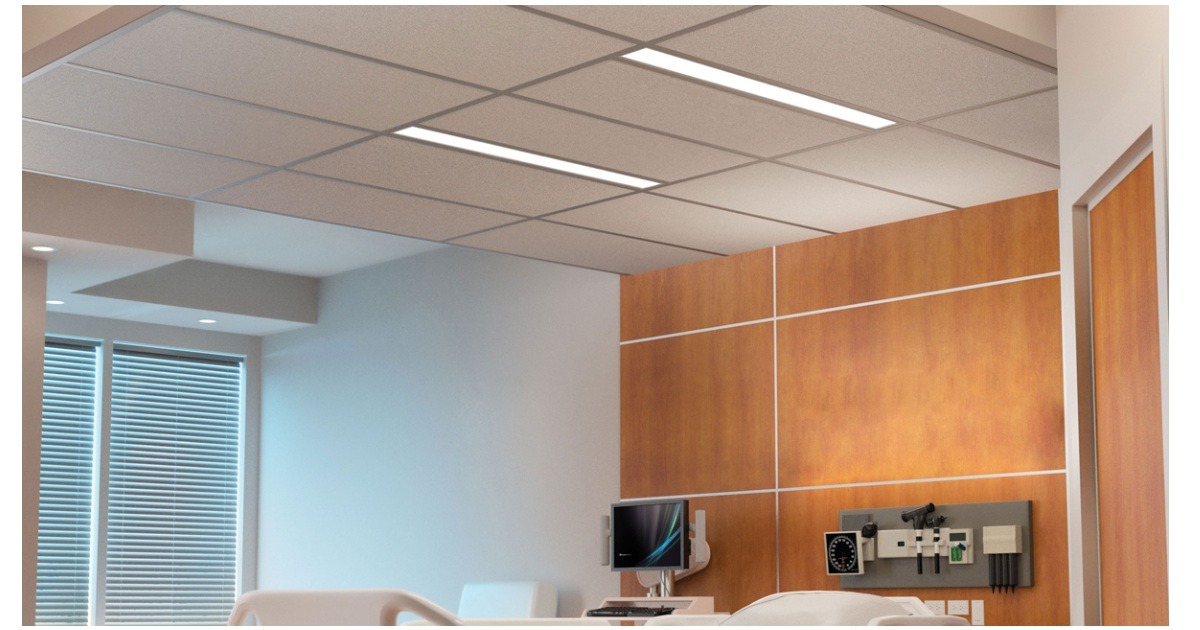
Lighting in hospital operating theatres plays an important role in any surgical procedure. Operating lights must be directed toward various points at different intensities to provide an optimal view. They must also adapt to the movements of the surgical team and of the tools used in each operation.
“An operating theatre is a very tricky space to light. You have various people moving around the patient, equipment suspended from the ceiling, moments when a very powerful light needs to be directed at a specific area, and other points when the lighting must be dimmed and come from a different direction to avoid having the surgeon cast a shadow,” says Alícia Casals, the researcher who heads the Robotics and Vision Area of CREB, a research centre that is part of the Innovation and Technology Centre (CIT), and a professor at the UPC.
With the aim of improving lighting during surgical procedures, Casals has led a team of researchers at the UPC’s Research Centre for Biomedical Engineering to develop a robotic system for operating theatres that harnesses the latest technology and can incorporate laminar flow diffusers. The system generates an airflow that sweeps pathogens and other particles floating in the air down to floor level. It also features a smart system, monitored and controlled by the surgeon, that improves the precision and orientation of lighting.
The system consists of an overhead light and two oblique light sources. Thanks to the way they are positioned, the lights eliminate shadows in the working area while also minimizing infrared and ultraviolet radiation. Other advantages over traditional lamps are a reduction in the risk of hospital infections, higher energy efficiency, and a significant improvement in working conditions for medical staff.
The lighting system, which has already generated two patents and is at the stage of being placed on the market, could have additional uses in spaces where light and airflow need to be controlled, including delivery rooms and other facilities, and even non-medical settings.
From first prototype to reality
CREB researchers first began developing the system 20 years ago, after Dr Enric Laporte, a surgeon at the Parc Taulí Health Corporation Consortium (CCSPT) in Sabadell, contacted the UPC research centre.
The CREB, which conducts research in several areas, including robotics, designed an initial prototype for a ceiling-mounted platform with a series of halogen lamps that could provide selective illumination. However, because light was only projected vertically, the first model did not solve the problem of lighting angles.
Working in collaboration with professionals at the CCSPT, UPC researchers made improvements to the initial model. This led to a second prototype which incorporated rows of LED lights that can turn in different directions to illuminate the entire length and breadth of a patient’s body. The surgeon used arm movements to activate a remote control and illuminate specific areas as required. The first patent was registered based on this prototype.
Progressive improvements have been made to the new system. One is the incorporation of next-generation LED lights that are smaller and more powerful (with an intensity of up to 160,000 lux). The guidance system has also been improved, and the surgeon no longer needs to point at the ceiling to activate lights. He or she simply aims a handheld controller at the area of the patient’s body that needs to be illuminated and the system provides light at the required intensity and from the appropriate angle.
After testing the system and improving all its components, the developers set up a consortium with Luxiona (a company that specialises in industrial lighting) and Telstar (a supplier of technological equipment for the biomedical sector) to place the product on the market. The system has been presented at several international trade fairs, including Light Middle East, Dubai (October 31 to November 2 in the United Arab Emirates) and ArabHealth (an event that focuses on the health sector, held in Dubai in late January). It is now at the stage of being placed on the market and has been installed in three hospitals.