Lighting Design International Calls for Greater Sustainability Across Lighting Design Projects
February 19, 2024

Leading lighting design consultancy, Lighting Design International (LDI) has been raising awareness of the need for greater sustainability across the built environment. LDI’s Associate, Arianna Ghezzi, shared these principles as part of a panel discussion at the recent and most successful Surface Design Show.
The talk focused on Circularity in Lighting, and Arianna spoke alongside Nigel Harvey, Recolight Chief Executive; David Clements, FUTURE Designs Chief Executive; Gary Thornton, Director at Nulty; and Colin Ball, Lighting Director at BDP.
The discussion looked at the benefits of stepping away from linear economy and adapting a circular economy which follows the 3R approach of “reduce, reuse, and recycle” as a method of circularity. Although recycling would be the very last resource. The importance of this is supported by the evidence that to create a tonne of steel you have to dig up 1.6 tonnes. The associated carbon usage is incredibly high, so not starting again where it is avoidable has a clear environmental benefit.
Panellists used real-life examples to bring the discussion to life, with Arianna reflecting on the use of TM66 principles in LDI’s recent project, for example a renowned historic British retailer. LDI was supported by the lighting manufacturers involved in the project to achieve the requirements. This led the panel to discuss that UK manufacturers are leading the way in meeting the TM66 values, and it is harder to find equivalents from non-UK companies.
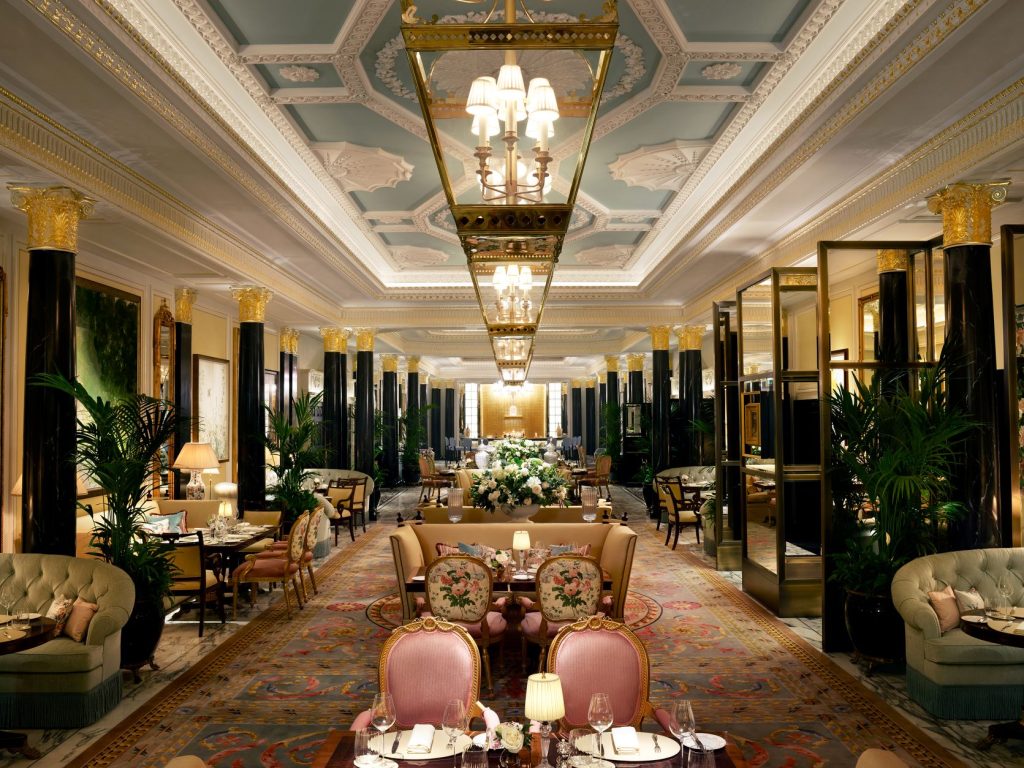
Heritage projects provide a good opportunity to restore and reuse the existing, and often iconic, lighting fixtures. LDI’s work at The Dorchester hotel is a strong example of this, where the team were able to restore the existing lanterns in the promenade, carried out with the manufacturer’s support. LDI approached the project with a clear vision of circularity and remanufacturing, before considering what new fittings might be needed.
The panel discussed the idea that, as specifiers, there is a growing role for them to focus on sustainability. The challenge remains there are too many occasions where they are brought into a project too late, for example in historic buildings when the original fittings have been stripped out. In these cases, it is important to ensure fittings can be reused in the future. For example, LDI try to use modular fixtures that can be adapted to the installation.
Manufacturers also need to play a part and provide a duty of care, by replacing elements of the fittings that need refreshing.
Other actions highlighted by Arianna that LDI have committed to include the limited number of samples that the consultancy order. These fixtures have a one-time purpose and are rarely re-used after; by sharing them across the different teams and reducing the quantities ordered by having a consolidated library, this is helping to reduce wastage.
Also on the topic of waste, the panel looked at the opportunities to donate older fittings that are removed from one project, to charities or buildings with limited funding for renovations.
The issue of lighting levels is another guiding principle that LDI use to achieve greater sustainability. There are still a number of projects that request very high lighting levels that simply are not needed. LDI only recommend light where it is required, which lowers the carbon impact. When combined with re-using existing fittings, this has the ability to deliver a much more environmentally-friendly project.
Summarising the panel discussion and LDI’s commitment to TM66 and sustainability, Arianna said: “As lighting designers, we have a responsibility to educate the client to show them what are their options. We also need to explain what actions can be taken in the future once fittings have been installed for several years and may need refreshing.
“As designers, we walk away from the project once it is completed and we can’t control what happens in the next 20-30 years. We can however make the best recommendations, and a maintenance plan including providing the client with a contact for the manufacturers. They have the road ahead of them that unfortunately we cannot control, but we do have the power to educate the client and provide as much information as possible to help them make ecologically-sound decisions.”
For more information on LDI, visit www.lightingdesigninternational.com.