Lighting Systems — An Introduction to ANSI C137.1
February 6, 2017

Roy Harvey

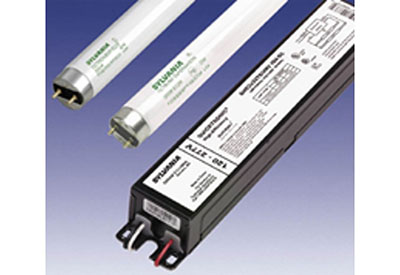
The recently formed ANSI C137 Lighting Systems Committee created a working group to develop a standard for a zero-to-10 volt analog interface between dimmable LED drivers, fluorescent ballasts and dimming controls. At present, there is no widely accepted industry standard for analog dimming of LED sources. The new standard, C137.1, will enhance interoperability of drivers and dimming controls and improve the uniformity of output of multiple drivers operating on the same control circuit.

Photo credit: Osram Sylvania

The standard is based on the 0-10 V fluorescent dimming interface specified in ANSI C82.11 Annex A, which is similar to the interface specified in IEC 60929 Annex E. C137.1 adds several new features and specifies the interface in more detail.

The main new feature is a standby or “electronic off” mode. This optional mode disables the driver’s output power while its control circuitry remains awake. This feature can eliminate a relay used to disconnect the driver’s output and an extra pair of wires to control the relay. Standby mode is entered when the control signal drops below about 0.5 V. C137.1 also adds specifications for dynamic response, the time to start up or change from one level to another.

However, the standard covers more than drivers and ballasts; it also has requirements for dimming controls and system wiring. Like C82.11, C137.1 specifies that the driver or ballast supply current that the control unit sinks and uses to generate the control voltage. C137.1 requires that the control unit manufacturer declare how much current the control unit can sink. This gives a lighting system designer information needed to help ensure that the control unit can handle the current sourced by the driver(s) connected to it. C137.1 also specifies that multiple controls, such as a wall dimmer and a daylight sensor, can connect to the same control wires without damaging each other.

Finally, C137.1 requires that the voltage drop caused by control wiring resistance be no more than 0.3 V. This helps ensure adequate noise margin and uniform operation (light levels) of many drivers sharing control wires. Requirements on tolerances for the endpoints of the dimming range further contribute to uniform operation.

The working group has been developing the standard since February 2015. A draft is being prepared for public review according to the ANSI process. The standard is expected to be published in early 2017, but some of the above information may change, so it is best to check the published edition.

If you have questions regarding these new regulatory requirements or need immediate testing to ensure that your products are in compliance, please contact UL to discuss testing, advisory or training needs at PerformanceLighting@ul.com.


Roy Harvey is SSL Electronics & Infrastructure Standards Manager at Osram Sylvania. He is also Vice-chair of ASC C137 and Head of C137.1 Ad Hoc Group.

 

Related Articles


Changing Scene

  • Jan 29, 2026 - SATCO Announces Debby Hite as New Brand Loyalty Marketing Manager

    SATCO Announces Debby Hite as New Brand Loyalty Marketing Manager

    SATCO is pleased to announce the appointment of Debby Hite as their new Brand Loyalty Marketing Manager. Debby is an industry veteran with more than a decade of experience helping manufacturers and distributors strengthen channel relationships through strategic engagement and program development. Hite brings extensive experience connecting business strategy with execution, creating initiatives that support… Read More…

  • Jan 29, 2026 - Leviton - Certolux Visioneering (Viscor) Announces Zain Ul Abdin as a New Quotation Specialist

    Leviton – Certolux Visioneering (Viscor) Announces Zain Ul Abdin as a New Quotation Specialist

    Leviton – Certolux Visioneering (Viscor) is excited to announce Zain Ul Abdin as a new Quotation Specialist team member! With over a decade of experience in customer service, quotations, and production coordination in Lighting and Electrical industry, Zain brings a wealth of operational expertise, a dynamic skill set and a customer-centric approach to his role.… Read More…


Design

  • Solar-Integrated Lighting: The Next Big Shift for Outdoor & Public Spaces

    Solar-Integrated Lighting: The Next Big Shift for Outdoor & Public Spaces

    For years, solar lighting was treated as a niche – useful, but not quite ready for large-scale outdoor applications. That perception has officially changed. Today, advancements in LED efficiency, battery performance, and smart control technologies are pushing solar-integrated lighting into mainstream adoption. And for manufacturers, system integrators, and solution providers, this shift is opening one… Read More…

  • Stanpro: Why & How to Adjust Lighting with Seasonal Changes

    Stanpro: Why & How to Adjust Lighting with Seasonal Changes

    Natural light varies from one season to the next, whether referring to brightness, slant or radiant periods. For instance, does your staff add more luminaires or extra light sources to work well in their environment during shorter days of the year? At home, do you close your curtains against the onset of intense radiance at… Read More…


New Products

  • Magic Lite: New 4 Zone RGB+CCT Remote

    Magic Lite: New 4 Zone RGB+CCT Remote

    Magic Lite’s new 4-Zone RGB+CCT Remote is a professional-grade lighting control solution that enables precise management of multi-zone RGB+CCT LED systems. Built with 2.4GHz RF wireless technology, it offers seamless control with a range of up to 30 meters. Designed for both commercial and residential applications, it supports brightness, colour temperature, saturation, and speed adjustments,… Read More…

  • RENO Lighting Introduces STRATOS — Tri-Illumination Translucent Vertical Pendant

    RENO Lighting Introduces STRATOS — Tri-Illumination Translucent Vertical Pendant

    STRATOS redefines vertical lighting with a clean, architectural presence and a uniquely balanced approach to illumination. Designed to deliver glare-free task lighting, its translucent dot-matrix light-guide plate distributes light evenly, creating a soft, ambient glow. The result is illumination that feels natural and comfortable—echoing the brightness and atmosphere of daylight—while adding modern elegance to any… Read More…